
REVIEW · MALTA
Malta Multi Pass
Malta’s best sights are scattered across a small but crowded island, and this pass brings many of them under one ticket. You can cruise the Grand Harbour, ride open-top buses, visit Knights-era forts, and walk through prehistoric temples built thousands of years ago.
I like the broad choice: a six or seven day pass can cover major museums, archaeological sites, and historic forts, while the four or seven day versions can add a ferry day to Comino and Gozo. I also like the value if you plan to visit several paid sites rather than simply use the buses.
The main caution is the transport. CitySightseeing buses can be slow, infrequent, and affected by Malta’s traffic, with some services ending shortly after 4 p.m. You also need to activate the QR code correctly and use the specified red buses and boats, not similarly colored services that are outside the pass.
In This Review
- The Malta Multi Pass at a glance
- Choosing the right number of days
- Starting with the Grand Harbour cruise
- Using the CitySightseeing Malta buses
- Ancient temples on Malta’s southern coast
- Valletta’s Knights, art, and wartime museums
- Mdina, Roman remains, and underground burial sites
- Forts and museums in the Three Cities
- Għar Dalam, Ta’ Bistra, and the older island
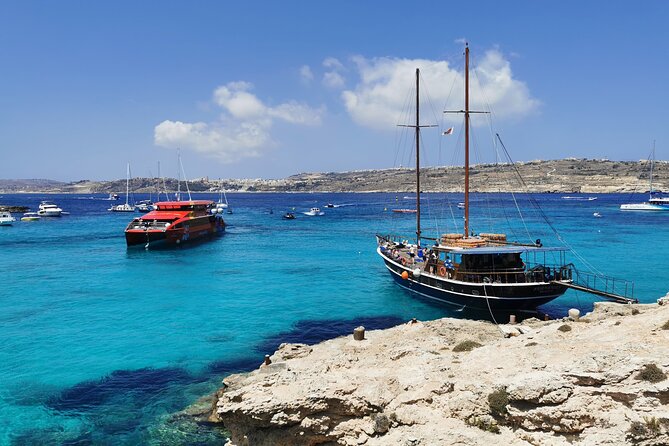
- Comino and Gozo by Captain Morgan ferry
- Family stops and coastal extras
- Is the $88.72 price good value?
- Who should book the Malta Multi Pass?
- FAQ
- How many days is the Malta Multi Pass valid?
- Is the Grand Harbour cruise included?
- Does the pass include Gozo and Comino?
- Are Malta’s regular city buses included?
- Which pass includes the major Heritage Malta sites?
- Is Mdina Cathedral included?
- Are all attractions currently open?
The Malta Multi Pass at a glance
- Two natural harbours in one 90-minute cruise: See Valletta, the Three Cities, forts, creeks, and battlements from the water.
- Up to 20 Heritage Malta sites: Longer passes include museums, catacombs, prehistoric temples, and fortresses.
- Ancient temples older than the pyramids: Ħaġar Qim, Mnajdra, Tarxien, Ta’ Ħaġrat, Skorba, and Ġgantija bring Malta’s prehistoric past to life.
- Comino and Gozo by ferry: Four and seven day passes include one round trip to the Blue Lagoon and Gozo.
- Gozo can be a full museum day: The optional Gozo Heritage Pass adds buses and several sites around the Cittadella and island.
- Best for an active itinerary: The pass pays off when you plan several admissions, not when you want a relaxed beach holiday.
Choosing the right number of days
The pass is available in several versions, listed as three, four, six, or seven consecutive days. The supplied information also describes it as a three to six day product in places, so check the exact option and inclusions shown at booking before you pay. The headline price is $88.72 per person, but the value depends heavily on the number of days and the package selected.
All pass versions include the CitySightseeing Malta North and South routes and Captain Morgan’s Grand Harbour cruise. The three day option also includes selected attractions such as The Malta Experience, the Sacra Infermeria tour, the National Aquarium, and Esplora Interactive Science Centre.
The four day pass adds one round trip on Captain Morgan’s ferries to Comino and Gozo. It can also include the optional one day Gozo Heritage Pass, with Gozo sightseeing buses and a group of museums and historic sites.
The six and seven day versions are the strongest choices for history fans. They include entrance to up to 20 Heritage Malta sites, including the major museums in Valletta, Fort St. Angelo, Fort St. Elmo, the Inquisitor’s Palace, Malta’s prehistoric temples, St. Paul’s Catacombs, and Għar Dalam.
The seven day pass adds Mdina Cathedral and Museum. It also includes the Gozo Heritage option. If you want both island-hopping and a serious museum schedule, this is the version to examine first.
Other Malta days people book alongside this one:
- Malta: Gozo & Comino Islands, Blue Lagoon & Seacaves Tour
★ 4.5 · 15,672 reviews - Comino: Blue Lagoon, Crystal Lagoon, and Seacaves Tour
★ 4.6 · 5,673 reviews - Malta: Blue Lagoon, Beaches & Bays Trip by Catamaran
★ 4.7 · 5,496 reviews
Starting with the Grand Harbour cruise
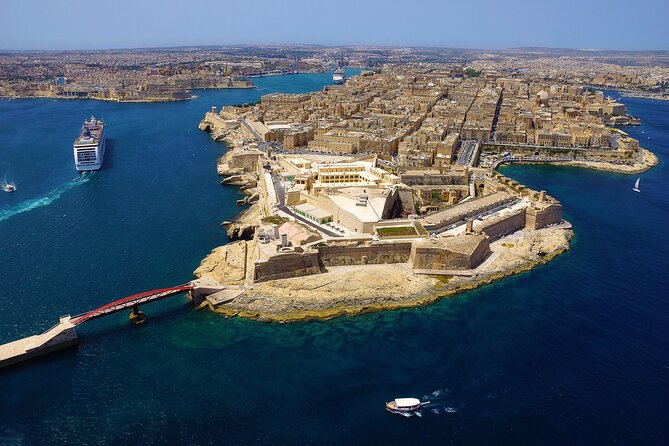
The 90-minute harbour cruise is one of the easiest parts of the pass to use and one of its most worthwhile introductions to Malta. The boat travels through Grand Harbour and Marsamxett Harbour, the two waterways on opposite sides of Valletta.
From the water, you get views that are hard to match from city streets: the fortified walls of Valletta, the Three Cities, old bastions, narrow creeks, and harbor-front skylines. This is especially useful early in your stay, because it helps you understand how Malta’s defensive walls fit together.
Live commentary covers the Great Siege of 1565 and the events of 1942. The cruise information says commentary is provided in English and German, while the pass itself is offered in English. You can sit outside for the views or inside in air-conditioned comfort.
The catamaran is 20 meters long and described as eco-friendly. It has restrooms, free WiFi, and vending machines for food and drinks. Daily departure times give you some flexibility, but check the schedule rather than assuming you can board at any hour.
I would use this cruise as a gentle first or second day activity, not as a substitute for visiting the forts. From the deck, you see the grand shape of Malta’s defenses. Inside Fort St. Angelo and Fort St. Elmo, you learn how those defenses actually worked.
Using the CitySightseeing Malta buses
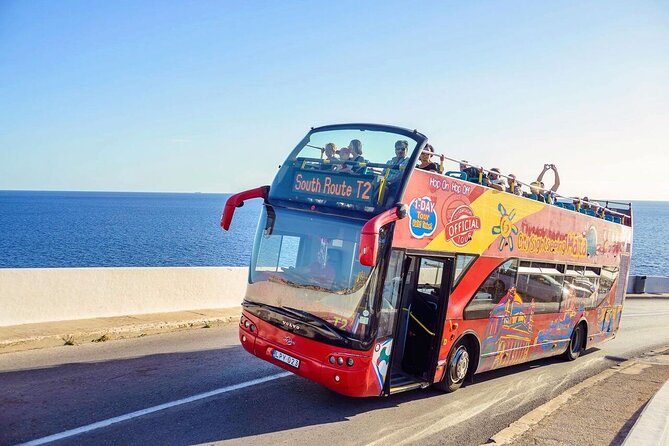
The open-top buses cover North and South routes from Valletta Harbour, with more than 30 stops and about 40 points of interest. The routes include Mdina, Mosta, San Anton Presidential Gardens, Ta’ Qali Crafts Village, the Three Cities, Marsaxlokk, and the Blue Grotto area during the April to October season.
There are more than 12 multilingual commentary channels. When the audio works, the ride gives useful orientation and lets you see a lot without planning every local bus connection.
The practical problem is time. Malta’s roads can be heavily congested, and the sightseeing buses may run about an hour apart. Long waits and traffic can turn a short transfer into a major part of your day. Some services finish shortly after 4 p.m., which is too early if you are relying on the bus to return from a distant stop.
Use the sightseeing buses as sightseeing rides and as occasional links to included sites, not as your only transport plan. The pass does not include Malta’s regular city buses, so you may need separate public transport for more dependable travel. One useful tip is to keep a screenshot of your QR tickets in your phone’s photo gallery. It is quicker than searching through email each time you enter a site.
The bus pass is most useful when you stay near a stop. One practical booking consideration is to choose accommodation close to a CitySightseeing pickup point if you expect to use the routes often.
Ancient temples on Malta’s southern coast
The archaeological sites are the heart of the longer pass. They give Malta a character that is easy to miss if you only visit Valletta and the beaches.
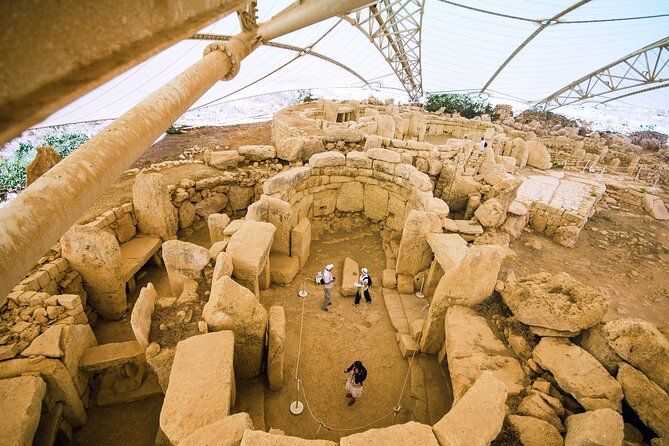
At Ħaġar Qim, a hilltop setting looks over the sea and the islet of Filfla. The temple dates from roughly 3800 to 2200 BC and includes enormous limestone blocks, including one about 5.2 meters high and another estimated at close to 20 tonnes.
A chamber contains an opening aligned with the sunrise at the summer solstice. The visitor center adds helpful displays, which matter because the bare stones can otherwise be difficult to interpret.
Nearby Mnajdra has three buildings around an oval forecourt. Its South Temple aligns with the solstices and equinoxes, giving you a clear sense that these were carefully planned ceremonial places, not random piles of stone.
The setting is exposed, and the southern coast can feel hot and bright. Bring water and allow time for the visitor centers. The pass covers both sites on the six and seven day options.
At Tarxien Temples, you see four structures built and reused over many centuries. Relief carvings, an oracle hole, cremation evidence, and the lower section of a large skirted statue make this site more visually varied than some of the simpler temple remains.
An elevated walkway lets you look down onto the remains. That viewpoint helps you read the plans of the buildings without walking over fragile ground.
Borġ in-Nadur is less polished and less famous, but its location between valleys near St. George’s Bay gives it a strong sense of place. It shows the change from Malta’s Temple Period into the Bronze Age.
Ta’ Ħaġrat and Skorba, near Mġarr, are smaller sites. Ta’ Ħaġrat is known for its monumental entrance and local Upper Coralline Limestone. Skorba is important for its domestic remains, including huts that reveal something about daily life before and during the temple period.
These sites are not all dramatic in the same way. Some have limited remains and require imagination. Taken together, though, they create a useful picture of Malta’s early communities and building skills.
Same islands, a completely different day out:
- Malta: Gozo, Comino, Blue & Crystal Lagoon, & Caves Cruise
★ 4.6 · 5,092 reviews - From Malta: Full-Day Gozo UTV Tour with Lunch and Boat Ride
★ 4.6 · 4,408 reviews - From Sliema: Comino, Crystal Lagoon, and Blue Lagoon Cruise
★ 4.5 · 3,792 reviews - From Sliema: Gozo, Comino and Blue Lagoon Cruise
★ 4.5 · 3,461 reviews
Valletta’s Knights, art, and wartime museums
Valletta’s included museums make a longer pass worthwhile because you can spread visits over several days rather than rushing through them.
The Palace Armoury displays armor and weapons connected with the Knights of St. John, including suits associated with Grand Masters Alof de Wignacourt and Jean de La Valette. The collection shows that armor was protection, but also a public sign of rank and wealth.
The Palace State Rooms are temporarily closed until further notice, so do not count them when calculating your savings. When operating, they include Great Siege paintings, French Gobelins tapestries, Baroque ceilings, and a portrait gallery of Malta’s rulers.
The National Museum of Archaeology, housed in the Auberge de Provence, is one of the best places to prepare for the prehistoric sites. Its collection runs from the Neolithic period to the Phoenician era, with objects such as the Sleeping Lady, the Venus of Malta, Bronze Age daggers, and a Phoenician pendant featuring Horus and Anubis.
MUŻA, the national community art museum, takes a different approach. Its displays place old masters, modern art, objects, videos, and interactive material side by side. Works by Mattia Preti, Victor Pasmore, and Antonio Sciortino give the museum a distinctly Maltese focus.
The National War Museum at Fort St. Elmo combines military objects with excellent harbor views. The star-shaped fort played a major role in the Great Siege of 1565. Exhibits include armor, Ottoman weapons, Roosevelt’s Jeep Husky, the George Cross, and the Gloster Sea Gladiator N5520 Faith.
The Fortifications Interpretation Centre is temporarily closed, so check before making a special trip. The center normally explains Malta’s defensive buildings with interactive displays.
At the former Holy Infirmary, Reliving the Sacra Infermeria offers a 30-minute guided tour in English. The Great Ward was once 155 meters long and held hundreds of beds. This stop gives you a needed reminder that the Knights were not only soldiers. Their medical work helped earn Malta the title Nurse of the Mediterranean during the First World War.
The Malta Experience is a 45-minute audio-visual presentation covering 7,000 years of Maltese history. It runs in 17 languages and works well near the start of your visit, before you tackle the museums and fortresses.
Mdina, Roman remains, and underground burial sites
The old capital of Mdina and its surrounding sites offer a quieter change from Valletta.
At the Domvs Romana, surviving mosaics and household objects show how an affluent Roman family lived. The display covers clothing, education, meals, entertainment, and family roles. A rare highlight is a set of marble statues of Emperor Claudius and his family found in a private home.
St. Paul’s Catacombs lie outside the ancient city because Roman law did not allow burials inside city walls. The underground complex includes more than 30 hypogea, with connected passages, tombs, and two circular Agape tables used for commemorative meals.
At Mdina Cathedral and Museum, available with the seven day pass, you can see the cathedral’s marble floor, painted ceiling, altarpieces, woodwork, silver objects, and stained glass. The museum includes rare coins, prints and engravings by Albrecht Dürer, paintings, and Maltese decorative pieces.
The seven day option is the clearest choice if Mdina is central to your plan. The shorter passes still provide several ways to explore the old capital, but you may need to pay separately for the cathedral museum.
Forts and museums in the Three Cities
Across the harbor, the Three Cities offer some of Malta’s strongest historic experiences.
Fort St. Angelo occupies a commanding position at the entrance to Grand Harbour. Control of this site meant control of the islands, and the fort served as the headquarters of the Knights after 1530. Its terraces provide broad views of Valletta, the harbor, and the fortified towns.
The Inquisitor’s Palace in Birgu is a more intimate visit. You move through reconstructed domestic rooms, the piano nobile, tribunal spaces, prison areas, and a torture chamber. The building also houses displays on Malta’s religious customs and the Inquisition.
The Malta Maritime Museum, in an old naval bakery, covers 7,000 years of seafaring. Its collection includes Roman anchors, ship models, cannons, boats, a Napoleonic figurehead, and a working 1950s marine steam engine. This is a strong choice if you want to understand why Malta’s position in the Mediterranean shaped nearly every period of its past.
Għar Dalam, Ta’ Bistra, and the older island
At Għar Dalam, a cave and museum trace Malta’s natural and human past. Displays include bones from small elephants and hippopotamuses that lived on the islands during the Ice Age. The cultural layer provides evidence of human presence dating back about 7,400 years.
Ta’ Bistra Catacombs are less central and less familiar, but they form the largest accessible group of tombs outside the ancient city area. Their location between Melite and the old harbor at Salina adds useful context to Malta’s Roman burial customs.
These sites reward a pass holder because admission is already covered. You can visit them without feeling pressured to justify a separate entrance fee, though transport planning matters since the sightseeing bus is not always the fastest way to reach outlying locations.
Comino and Gozo by Captain Morgan ferry
The Comino and Gozo day is included once with the four and seven day passes. You can travel from Sliema or Bugibba on a 33-meter catamaran, with indoor air-conditioned seating and outdoor areas.
At Comino’s Blue Lagoon, you have free time to swim, sunbathe, relax, or walk around independently. The water is famous for its clear blue-green color, but the main practical point is timing. You must return to the Comino boarding point at least 15 minutes before departure.
You can visit Gozo first and Comino second, or reverse the order. The standard plan allows about two hours on each island, though you can choose to spend about four hours on one island only. Crew members provide the afternoon ferry schedule and any changes, so photograph the times before leaving the morning boat.
A cash bar sells drinks and snacks, and toilets are available. This is a long day, not a quick sightseeing transfer. If you want to explore Gozo in depth, the ferry schedule will not give you enough time by itself.
The optional Gozo Heritage Pass adds CitySightseeing Gozo routes, with stops at Victoria, Dwejra, Ta’ Pinu, Xlendi, Marsalforn, Ramla, Nadur, and the Ġgantija Temples. It also includes the Gozo Museum of Archaeology, Gozo Nature Museum, Gran Castello Historic House, Cittadella Visitors’ Centre, Ġgantija Archaeological Park, Ta’ Kola Windmill, and the Old Prison.
Gozo’s sites are compact but varied. Ġgantija’s temples are more than 5,500 years old. Ta’ Kola shows how a Knights-period windmill worked. The Old Prison preserves graffiti scratched by inmates, including boats, names, dates, crosses, and games.
Family stops and coastal extras
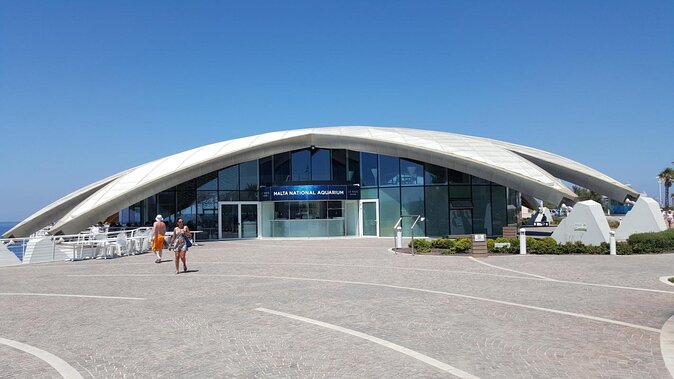
The Malta National Aquarium in St. Paul’s Bay is a sensible addition for families. Its 41 tanks include Mediterranean species, reptiles, insects, amphibians, and a large main tank with sharks, rays, eels, and other fish. A glass tunnel lets you watch fish pass overhead and around you.
At Esplora Interactive Science Centre in Kalkara, more than 200 exhibits, workshops, science shows, outdoor areas, and a planetarium provide a change from churches, forts, and archaeological remains. The planetarium uses a 10.7-meter dome and 4K projection.
These are not essential if your time is short and your main interest is history. They are useful on a hot afternoon, for families, or when you need a break from stone buildings and exposed archaeological sites.
Is the $88.72 price good value?
The pass can save money, but only if you use it with purpose. The individual costs cited in the supplied information put CitySightseeing at about €20 per day, many museum admissions near €10, and the two-island ferry around €50. Several admissions plus the cruise can quickly approach the pass price.
The strongest value comes from a four, six, or seven day plan that includes several museums and the Comino and Gozo ferry. The three day version can still work if you combine the bus, cruise, Malta Experience, aquarium, Sacra Infermeria, and Esplora.
The pass is poor value if you mainly want ordinary buses, beaches, or a few free churches. Local public transport is not included, and the sightseeing buses should not be treated as a dependable island-wide bus network.
Activation deserves attention. Keep the QR code ready on your phone, and make sure it has been activated before visiting sites. Confusion at some outlets has caused missed entries in the past, especially when older pass packages and newer packages were being handled at the same time.
Free cancellation is available up to 24 hours before the local start time. Changes made inside that period are not accepted, and poor weather may lead to a new date or a full refund.
Who should book the Malta Multi Pass?
Book it if you want a busy Malta itinerary built around forts, museums, temples, catacombs, cruises, and one island ferry day. History fans can get particularly good value from the six or seven day versions.
Families may prefer the aquarium and Esplora, while first-time visitors can use the harbour cruise and Malta Experience to get oriented. A hotel near a sightseeing bus stop also makes the pass easier to use.
Skip it if you want flexible local transport, dislike fixed ferry schedules, or plan to visit only two or three paid attractions. In that case, buying individual admissions and using Malta’s regular buses may be simpler.
My practical choice would be the four day pass for a short, active visit with Comino and Gozo, or the seven day pass for a serious archaeological and museum itinerary. Keep a backup transport plan, save your QR code as a phone screenshot, and check temporary closures before setting out.
FAQ
How many days is the Malta Multi Pass valid?
The pass is offered in three, four, six, or seven consecutive day versions. The exact choices and inclusions should be checked at booking because the supplied details describe the product in slightly different ways.
Is the Grand Harbour cruise included?
Yes. Captain Morgan’s 90-minute Grand Harbour and Marsamxett Harbour cruise is included with all pass versions.
Does the pass include Gozo and Comino?
The four and seven day passes include one round trip by Captain Morgan ferry to Comino and Gozo. You can visit both islands in one day or spend about four hours on one island.
Are Malta’s regular city buses included?
No. The pass includes CitySightseeing Malta North and South route buses, but not Malta’s ordinary city bus network.
Which pass includes the major Heritage Malta sites?
The six and seven day passes include entrance to up to 20 Heritage Malta sites, including museums, forts, catacombs, and prehistoric temples.
Is Mdina Cathedral included?
Mdina Cathedral and Museum is included with the seven day pass. It is not listed among the inclusions for the shorter passes.
Are all attractions currently open?
No. The Palace State Rooms and the Fortifications Interpretation Centre are temporarily closed according to the supplied information. Some sites may also close for refurbishment, so check schedules before visiting.
Just added around Malta
- Malta: 5 hr Vintage Bus Tour – Mdina & Blue Grotto inc. food★ 5.0 · 22 reviews
- Wakeboarding Adventure in Malta: Learn to Ride★ 5.0 · 4 reviews
- World War II Malta Full-Day Walking Tour★ 4.3 · 18 reviews
- Valletta Street Food & History Tour With Private Transfers★ 4.5 · 15 reviews
- Victoria, Gozo: Sunset Walking Food and Drink Tour★ 5.0 · 6 reviews
- Valletta & Mdina: Private Tour★ 4.5 · 16 reviews
- Valletta: Private Maltese Cuisine Walking Tour★ 4.8 · 8 reviews
- Valletta: Private Massage from a world renowned masseuse★ 4.6 · 9 reviews