
REVIEW · PREHISTORIC TEMPLES TOURS
Malta Prehistoric Temples Tour
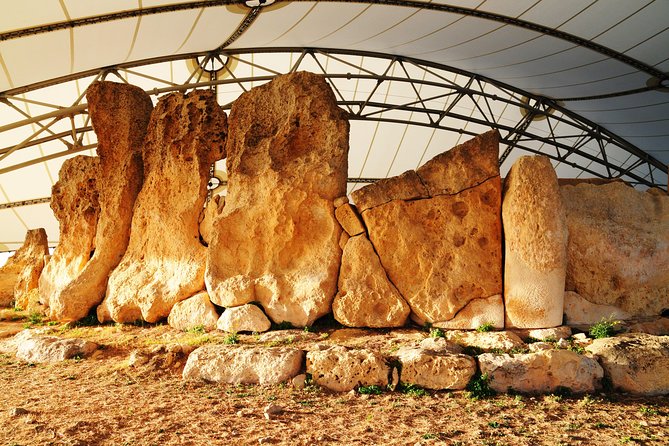
Malta’s oldest story begins underground. At Ghar Dalam Cave, you can see where archaeologists found animal bones and traces of human activity in layers built up over thousands of years. Then the tour moves to the great megalithic temples of Hagar Qim and Mnajdra, built about 5,500 years ago, long before the pyramids of Giza and Stonehenge.
I like the way this tour combines a cave museum with two open-air temple sites, giving you both archaeological background and grand ruins. I also like that the $59.91 price includes admission to all three places, hotel pickup in selected areas, and a guide such as Mario or Mark who can make the prehistoric past easier to understand.
The main drawback is time and transport. A half-day sounds generous, but some pickups involve bus changes and long stretches on the road. At busy times, a group of up to 40 people can make the temple visits feel rushed.
In This Review
- Key points to know before booking
- Why Malta’s prehistoric sites deserve a morning
- Ghar Dalam Cave: Malta’s story under the ground
- Hagar Qim: enormous stones with a human scale
- Mnajdra: the temple aligned with the sun
- A four to five hour schedule with real transport time
- What the $59.91 price really covers
- How to get the most from the morning
- Who will enjoy this Malta prehistoric temples tour
- Should you book it?
- FAQ
- How long does the Malta Prehistoric Temples Tour last?
- Which sites are included?
- What time does the tour start?
- Is hotel pickup available?
- Is food included?
- Can I cancel for a full refund?
Key points to know before booking
- Ghar Dalam comes first: See cave layers, animal bones, early human evidence, and a small museum before visiting the temples.
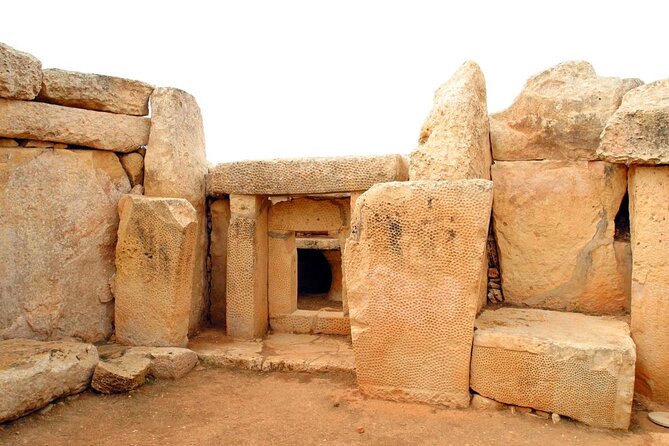
- Hagar Qim and Mnajdra are the stars: These 5,500-year-old limestone complexes are among the oldest religious sites on earth.
- Mnajdra has an astronomy connection: Its design aligns with the equinoxes and solstices.
- Pickup covers much of Malta: Listed pickup areas include Mellieha, Valletta, Sliema, St. Julian’s, St. Paul’s Bay, Bugibba, Qawra, Attard, Xemxija, Golden Bay, and Cirkewwa.
- Expect a shared coach: The group can reach 40 people, and some departures involve switching buses.
- Saturday is the only scheduled day: Plan around the 8:30 am start and your assigned pickup time.
Why Malta’s prehistoric sites deserve a morning
Most first-time visitors come to Malta for Valletta, harbor towns, and later military history. That is understandable, but the islands’ prehistoric remains reach much farther back. Hagar Qim and Mnajdra belong to a period when Malta’s builders were raising enormous limestone structures without the metal tools or wheeled equipment you might expect.
I find that fact changes the way you see the ruins. These are not simply old stones scattered around a field. They are carefully arranged buildings with entrances, chambers, altars, and a clear sense of design. Their builders planned spaces for ritual use and, at Mnajdra, incorporated the movement of the sun into the architecture.
The tour works well because it places the temples in a wider story. Ghar Dalam shows the evidence in layers below ground. Hagar Qim gives you the large, solid form of a megalithic complex. Mnajdra adds a more intimate and carefully aligned group of structures.
You will not get a full archaeological course in four or five hours. You will get a useful introduction, enough to help you understand why Malta is important to prehistoric archaeology and why these sites are more than quick photo stops.
More prehistoric temples tours in Mellieha:
- Gozo Full Day visiting Ggantija Temples, Salt Pans, Dwejra
★ 3.0 · 53 reviews - Discovering Gozo Full Day incl. Guide, Train & Ggantija Temples
★ 3.0 · 45 reviews - Southern Malta: Blue Grotto, Hagar Qim, and Marsaxlokk Tour
★ 4.7 · 35 reviews
Ghar Dalam Cave: Malta’s story under the ground
The first stop is Ghar Dalam Cave and Museum, with about an hour set aside for the visit. The name means Cave of Darkness, and the site offers a different experience from the open-air temples later in the morning.
The archaeological value comes from the cave’s layers. Scientists excavated through deposits containing animal remains and evidence of human activity. The material helps explain changes in Malta’s animal life, climate, coastline, and early settlement.
The tour information places traces of human activity at about 7,400 years ago. The cave also contains animal bones described as the earliest evidence connected with human presence on Malta. You can see bones in display cases, while some remains and layers are still visible in the cave itself.
I would pay close attention to the guide’s explanation here. Without some context, a cave wall can look like a cave wall. The meaning is in the layers and what they reveal about changing conditions on the island. The supplied information also connects the site with major changes in Mediterranean sea levels before and during the last ice age.
A small museum accompanies the cave. It helps put the excavated finds into order, though the cave itself may be the more memorable part. One account found the cave less impressive than the temples, so set your expectations correctly. This is an archaeological stop, not a dramatic underground attraction with elaborate lighting or a long walk through caverns.
There is also a nearby garden planted with indigenous species and trees. That makes the stop a little more rounded, especially if you appreciate the connection between archaeology and Malta’s natural setting.
The one-hour schedule should allow you to see the cave, museum, and garden, but not linger over every display. If prehistoric archaeology is your main interest, you may wish the schedule gave Ghar Dalam more time. If the temples are your priority, the compact visit keeps the morning moving.
Hagar Qim: enormous stones with a human scale
After Ghar Dalam, the coach continues to the Hagar Qim and Mnajdra Archaeological Park on Malta’s southern edge. The park is set high on a hill, and the open setting makes the first view of Hagar Qim memorable.
Hagar Qim is a megalithic temple complex built from huge blocks of limestone. The scale is impressive, but I also recommend looking for the smaller details: doorways, shaped stones, chambers, and the way the builders organized movement through the structure.
The site is often described as one of the oldest religious places on earth. It predates the pyramids of Giza and Stonehenge, a comparison that helps place its age in perspective. Malta’s temples are not a minor side note to European prehistory. They belong to one of the earliest known monumental building traditions.
You get about an hour for the Hagar Qim portion. That is enough to walk through the main area, hear an explanation, and take photographs if the group moves on schedule. It is not enough for a slow study of every stone or for a long museum visit afterward.
A practical point matters here: the open-air setting means you should be ready for sun and exposure. The tour data calls for moderate physical fitness, and there is walking between the temple sites. Wear shoes that are comfortable on uneven ground and bring protection from the sun. Food and drinks are not included, so carry something to drink and a snack for the morning.
The guide can make a large difference at Hagar Qim. Mario is described as a former history teacher who explains the subject with confidence. Mark is also singled out for giving useful background before allowing time to explore independently. Those are good guide qualities at a site like this: enough explanation to give the stones meaning, followed by space to look for yourself.
Mnajdra: the temple aligned with the sun
Mnajdra is a short distance from Hagar Qim, with another hour scheduled for the visit. The two sites are often grouped together, but they do not feel identical. Hagar Qim gives you the broad impact of massive construction, while Mnajdra feels especially thoughtful in its arrangement.
The most interesting detail is the alignment with the equinoxes and solstices. The position of the sun interacts with the temple at important points in the year, showing that the builders paid close attention to the sky. You do not need to be an astronomy specialist to appreciate the idea. The building itself becomes a marker of time.
I would make Mnajdra the place where you slow down mentally, even if the schedule does not let you slow down physically. Look at the position of the entrances, the curves of the limestone walls, and the way light enters the structure. The site rewards observation more than a quick checklist.
Some people arrive expecting complete, untouched ruins. That can lead to disappointment because parts of the sites have been reconstructed or protected. The buildings are authentic prehistoric archaeological sites, but preservation work and reconstruction affect what you see. The advantage is that the surviving forms are easier to understand. The tradeoff is that the result may not look as raw as an unprotected ruin.
An electric car may be available at the park, and one account described it as especially helpful. Do not treat that as guaranteed, though. The tour specifically expects a moderate level of fitness and includes walking between Hagar Qim and Mnajdra.
Same islands, a completely different day out:
- Mellieha: Popeye Village Entry Ticket
★ 4.6 · 2,070 reviews - Mellieha: Popeye Village Malta Filmset Entry Ticket
★ 4.6 · 1,802 reviews - Comino & Gozo: Blue & Crystal Lagoons Cruise with Sea Caves
★ 4.8 · 1,536 reviews - Malta National Aquarium Entrance Ticket
★ 4.0 · 643 reviews
A four to five hour schedule with real transport time
The tour starts early, with pickups listed from 8:30 am onward. The exact time depends on your area:
- Cirkewwa and Attard: 8:30 am
- Mellieha and Valletta: 8:40 am
- Xemxija, Golden Bay, and Sliema: about 8:50 to 8:55 am
- St. Paul’s Bay: 9:00 am
- Bugibba: 9:05 am
- Qawra and St. Julian’s: 9:10 am
These times make the tour practical if you are staying in one of the listed areas, but pickup is not the same as direct transportation to the first site. The coach may collect people at several hotels or meeting points, and some departures have involved a change to a larger bus.
That bus change is the biggest organizational concern. At times, people have waited around 30 to 45 minutes at a transfer point without clear instructions. Other departures have been orderly, with a confirmation message the night before and a smaller vehicle used for the return journey. The experience can vary, so arrive early, identify the driver or vehicle, and ask immediately if you are unsure where to wait.
The group limit is 40 people. That is not a small private tour, and you should expect a shared-coach format rather than a quiet archaeological walk. A larger group can make it harder to hear every word or find a clear view at the most popular points.
The guide usually provides commentary on board and may also explain the sites on location. The quality of presentation matters here. Mario, Mark, and Miriam received particular praise for clear and useful explanations. Other accounts found the commentary hard to follow or wished for a more connected story between the stops.
The return is to the original departure point. One useful possibility has been a drop-off in Valletta on the way back, but do not assume that option is always available. Ask the guide before the return journey if you hope to spend your afternoon there.
What the $59.91 price really covers
At $59.91 per person, this is a fair price for a guided half-day if you want transport and entry handled together. Admission to Ghar Dalam, Hagar Qim, and Mnajdra is included, as are local taxes, live commentary, and pickup and drop-off at a hotel or nearby point in the listed service areas.
That saves you from arranging separate transport to three archaeological sites. It also gives you a guide who can explain the age and purpose of the monuments instead of leaving you to piece together the story from signs.
The value is weaker if you are already staying close to the sites, prefer to travel independently, or want long, unhurried visits. The scheduled time at each stop is about one hour, and some of the morning can disappear into hotel collections, traffic, or bus transfers.
Food and drinks are not included. Water may be available for purchase on the coach, but I would bring your own drink and a small snack. There is no toilet on the bus, so use facilities at the sites when you can. A short restroom stop may compete with time for the museum or gift shop.
How to get the most from the morning
I would book this tour early if it fits your plans. It operates every Saturday and averages about 28 days of advance booking, so a last-minute place may not be available.
On the morning itself, be at your pickup point before the stated time. Keep your phone active in case the operator sends a message, and confirm which bus or minibus is yours. The main operational complaints have involved unclear vehicle identification, late pickups, and transfers rather than the archaeological sites themselves.
Wear comfortable shoes and expect outdoor walking. Bring water, sun protection, and a snack. If you need a longer museum visit, more time for sketching, or patient photography, tell yourself in advance that the tour is an introduction, not a full-day study trip.
The tour is offered in English, and some departures have used separate guides and commentary for two languages. If that matters to you, confirm the language arrangement when booking. A bilingual group can mean more waiting or less continuous commentary in English.
The cancellation terms are simple: you can cancel at least 24 hours before the start time for a full refund. Changes or cancellations inside that 24-hour window are not accepted for a refund. The operator may also cancel if the minimum number of participants is not reached, in which case you are offered another date or a full refund.
Who will enjoy this Malta prehistoric temples tour
I would choose this for a first visit to Malta if prehistoric archaeology interests you and you want the basic transport problem solved. It suits couples, families with older children, and anyone who prefers a guide to set the sites in context.
It is also a good fit if you have only a few days on the island. In one morning, you cover three major prehistoric places and can still have an afternoon for Valletta or another part of Malta.
I would hesitate if you dislike coach tours, need guaranteed quiet, or want to spend several hours at each site. The group may be large, the bus may change, and the schedule can feel tight. Independent visitors who are comfortable arranging transport may prefer more freedom.
Should you book it?
Book this tour if you want an efficient introduction to Malta’s prehistoric monuments, especially if admission, hotel pickup, and a guide are worth more to you than total flexibility. The temples are the real reward, and guides such as Mario and Mark can make their age, purpose, and astronomical details much easier to grasp.
Skip it if bus organization would cause stress or if you want a slow archaeological visit. Before paying, check your pickup area, prepare for the possibility of a transfer, and plan on roughly two hours of actual site time within a four to five hour morning. With those limits understood, the tour offers a useful and reasonably priced look at a part of Malta many short visits miss.
FAQ
How long does the Malta Prehistoric Temples Tour last?
The tour lasts approximately four to five hours, including transportation, hotel collections, visits, and the return to your original departure point.
Which sites are included?
The tour includes Ghar Dalam Cave and Museum, Hagar Qim Temples, and Mnajdra Temples. Admission tickets to all three sites are included.
What time does the tour start?
The first listed pickup is at 8:30 am. Exact pickup time depends on your area, with listed times ranging from 8:30 am in Cirkewwa and Attard to 9:10 am in Qawra and St. Julian’s.
Is hotel pickup available?
Pickup and drop-off are available from selected hotels or nearby points in areas including Mellieha, Valletta, Sliema, St. Julian’s, St. Paul’s Bay, Bugibba, Qawra, Attard, Xemxija, Golden Bay, and Cirkewwa.
Is food included?
No. Food and drinks are not included. Water may be available for purchase on the bus, but bringing your own water and a snack is sensible.
Can I cancel for a full refund?
Yes. You must cancel at least 24 hours before the experience start time for a full refund. Cancellations or changes made less than 24 hours before the start time are not accepted for a refund.
Just added around Mellieha
- Small Group Tour of Gozo with Victoria and Ggantija Temples★ 5.0 · 8 reviews
- North Malta Quad Bike Tour with Land or Sea Views and Swimming★ 5.0 · 7 reviews
- Rabat Mdina and San Anton Gardens Group Tour with St. Paul’s Catacombs★ 3.5 · 16 reviews
- Malta Private Full-Day Sightseeing Tour with Pickup★ 5.0 · 10 reviews
- Valletta, Mosta and Mdina Night Tour★ 3.5 · 15 reviews
- Malta: Private Tour with Video Guides & Driver (6 Hours)★ 4.5 · 35 reviews
- Malta Shore Excursion: Private Tour of Historic Palaces and Noble Homes★ 4.5 · 5 reviews
- Malta Private Half-Day Tour★ 4.0 · 22 reviews
Prehistoric Temples Tours, compared.

Prehistoric Temples, Limestone Heritage & Blue Grotto
Read our review →
Gozo Guided Day Trip Incl. Ggantija Temples and Lunch
Read our review →
Gozo Full Day visiting Ggantija Temples, Salt Pans & Dwejra
Read our review →Gozo Full Day visiting Ggantija Temples, Salt Pans, Dwejra
Read our review →
Discovering Gozo Full Day incl. Guide, Train & Ggantija Temples
Read our review →
Southern Malta: Blue Grotto, Hagar Qim, and Marsaxlokk Tour
Read our review →Browse the lists this tour appears in