
REVIEW · WALKING TOURS
Mdina and Rabat Walking Tour inc. Catacombs and St. Paul’s Grotto
Mdina and Rabat reveal Malta in layers: ancient streets above ground, burial chambers below, and a medieval citadel wrapped in sturdy walls. This two-and-a-half-hour walking tour links all three, including the Wignacourt Museum, St. Paul’s Grotto, and the old capital’s grand palaces.
I like the combination of underground sites and Mdina’s rampart views, and I like having guides such as Matthew, Mario, Carmel, and Dylan explain the names, rulers, customs, and local stories behind what you see. The main drawback is pace: some people find the guide’s detailed talks leave too little time to wander Mdina independently.
In This Review
- Key points at a glance
- Why the Mdina and Rabat pairing works
- Rabat’s streets and the Wignacourt Museum
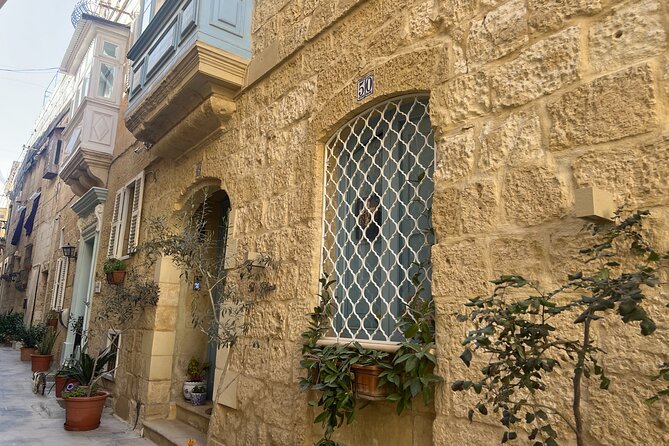
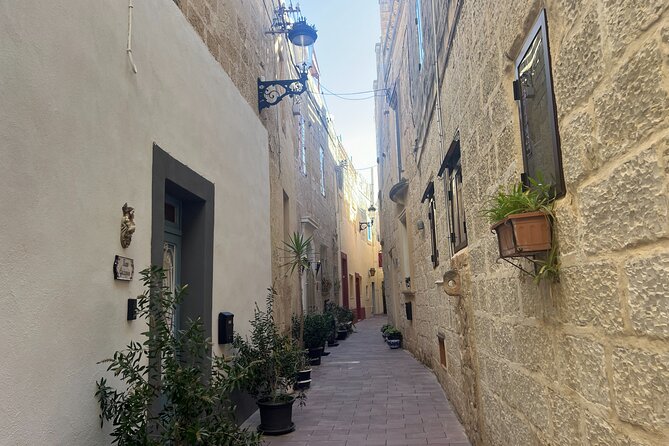
- Mdina’s palaces and quiet lanes
- The Cathedral of Saint Paul and details worth noticing
- Walls, gates, and the view from Mdina
- The pace: detailed talks or more freedom?
- Is $30.85 a fair price?
- Who will get the most from this walk?
- Should you book the Mdina and Rabat Walking Tour?
- FAQ
- How long is the Mdina and Rabat Walking Tour?
- What is included in the price?
- How much does the tour cost?
- Where does the tour start?
- Where does the tour end?
- Is hotel pickup included?
- Is the tour available in English?
- Are there stairs in the underground sites?
Key points at a glance
- Three underground experiences in one stop: Visit the catacombs, World War II shelters, and St. Paul’s Grotto at the Wignacourt Museum.
- A walk through Malta’s former capital: Mdina was inhabited from the Bronze Age and remained the island’s capital until the 16th century.
- Palaces, churches, and door knockers: See Palazzo Falzon, Palazzo Santa Sofia, the Cathedral of Saint Paul, and other historic buildings.
- A small group of up to 25 people: The size allows a more personal walking tour, though busy streets and outdoor noise can still affect what you hear.
- A practical central meeting point: Meet at Mdina Gate and finish near Greek’s Gate, with no hotel pickup or drop-off.
- Good value for history fans: At $30.85 per person, the price includes the professional guide and the Wignacourt Museum admission.
Why the Mdina and Rabat pairing works
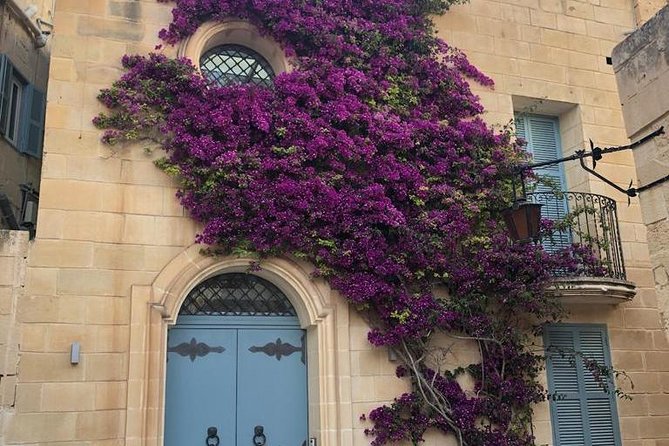
Mdina and Rabat sit side by side, but they offer different moods. Rabat is a lived-in town with churches, convents, and streets that lead toward Malta’s underground past. Mdina is the fortified old capital, quieter and more formal, with palaces and narrow lanes inside its walls.
I like this pairing because you are not seeing Mdina as a pretty shell in isolation. You first get a sense of the surrounding town and the religious and burial sites beneath it, then move into the medieval citadel. The result is a fuller picture of the area.
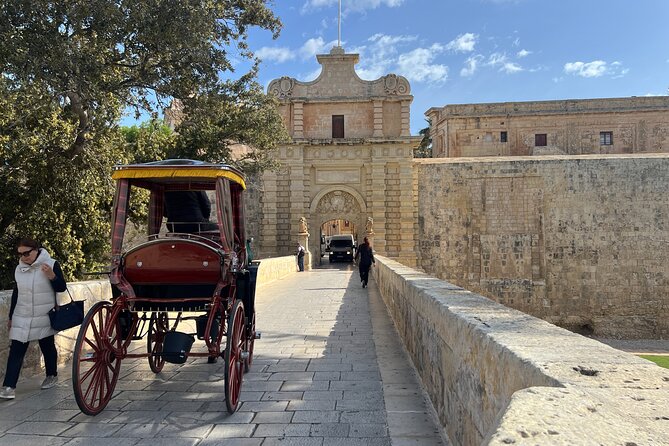
The tour begins at Mdina Gate, the ornate Baroque entrance. You spend only about five minutes meeting the guide and group, so arrive ready to walk. The group can include as many as 25 people. That is still a manageable size for a public tour, though you may need to stay close to the guide when the streets are busy or when several groups gather near a monument.
More mdina tours in Mdina:
- Malta: Highlights of Malta & Mdina Full Day Tour with Lunch
★ 4.4 · 2,688 reviews - Malta: Mdina and Rabat Walking Tour with Catacombs
★ 4.8 · 1,126 reviews - Malta: Mdina, Dingli Cliffs and San Anton Botanical Gardens
★ 4.3 · 991 reviews
Rabat’s streets and the Wignacourt Museum
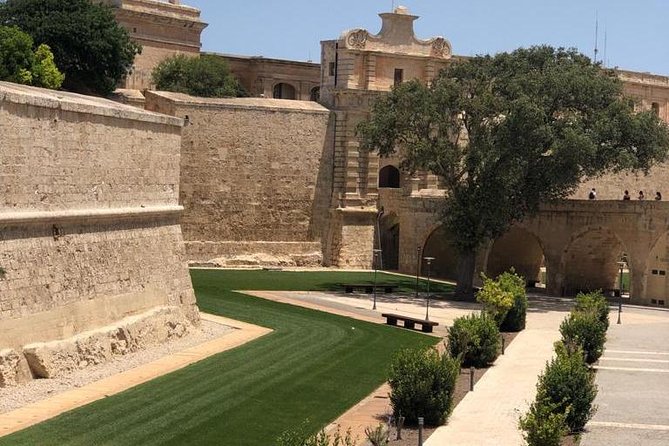
The Rabat portion lasts about 25 minutes. You walk past some of the town’s churches and convents before reaching the Wignacourt Museum. This part is less about checking off one grand sight and more about seeing how Rabat’s religious buildings and ordinary streets fit around the underground sites.
The museum visit takes around 30 minutes and includes three distinct parts:
- Catacombs
- World War II shelters
- St. Paul’s Grotto
The catacombs are one of the strongest reasons to choose this tour over a standard Mdina walk. They add a physical sense of the area’s past that polished façades cannot provide. You move through small underground spaces with uneven floors, so sturdy shoes and a steady step will help.
Expect stairs underground. The spaces can feel tight, and this is not the easiest part of the outing for anyone who dislikes confined areas or uneven ground. Service animals are allowed, and the tour information says most people can take part, but you should still consider your comfort with repeated stairs before booking.
The World War II shelters bring a different kind of context. Instead of ancient burial spaces, you see how people used the underground during a much more recent period of danger. St. Paul’s Grotto adds another layer of religious importance to the Rabat visit. A guide makes these places easier to understand because the chambers themselves do not tell the whole story.
Mdina’s palaces and quiet lanes
After Rabat and the museum, about 1 hour and 25 minutes are devoted to Mdina. This is the longest section of the tour, and it is where the city’s architecture gets the full treatment.
Mdina has been inhabited since the Bronze Age and served as Malta’s capital until the 16th century. You walk through streets shaped by that long role, passing palaces, convents, chapels, and defensive walls. The city is often called the Silent City, and the quiet atmosphere is part of its appeal, although the tour itself naturally adds conversation and movement.
Palazzo Falzon is one of the main architectural stops. This 13th-century palace gives you a look at the kind of private building that helped define Mdina’s upper-class character. Palazzo Santa Sofia is another highlight, with an elaborate façade and a claim to being one of the city’s oldest buildings.
You also pass Vilhena Palace, now home to the Natural History Museum. The tour does not include a separate museum visit there, so think of it as an architectural and historical stop rather than extra indoor sightseeing.
The Baroque Carmelite Priory adds a later style to the walk. Its elegant design helps you see that Mdina is not frozen in one medieval moment. Different rulers and periods left their mark, and guides often use these buildings to explain how Malta’s language, culture, and architecture changed over time.
At the Chapel of Saint Agatha, you pause at a smaller religious site. These brief stops matter because they break up the larger palaces and cathedral, giving you a sense of Mdina’s scale and daily devotional life.
The Cathedral of Saint Paul and details worth noticing
The Cathedral of Saint Paul is among the tour’s major Mdina landmarks. The guide’s role here is not simply to point at the building, but to connect it with the city’s wider religious and political story.
Pay attention to details that are easy to miss when walking alone. One guide, Mario, is especially praised for explaining how Malta’s different rulers shaped the island and what each period left behind. Guides also point out the distinctive door knockers found on Mdina’s houses, a small feature that adds personality to the grand streets.
This is the kind of information that makes a walking tour useful. You can photograph a palace without help, but you may not notice why its façade matters, how a place name developed, or how a local custom fits into Malta’s culture. Matthew is described as clear and engaging, while Carmel is praised for adding local legends and folklore. Dylan is noted for explaining the roots of names and words.
Guide quality can vary with the individual leading your group, but the experience has several guides with strong records for clear English and lively delivery. That matters because much of the tour’s value comes from the spoken explanation rather than admission to a large collection of objects.
A few more Mdina trips to weigh up
- Mdina and Rabat: Guided City Walking Tour
★ 4.8 · 549 reviews - Mdina and Rabat – City Walking Tour
★ 5.0 · 215 reviews - Mdina: Private Historical City Walking Tour with Rabat Town
★ 4.5 · 41 reviews - Mysteries and Histories of Mdina – Walking Tour
★ 5.0 · 29 reviews
Walls, gates, and the view from Mdina
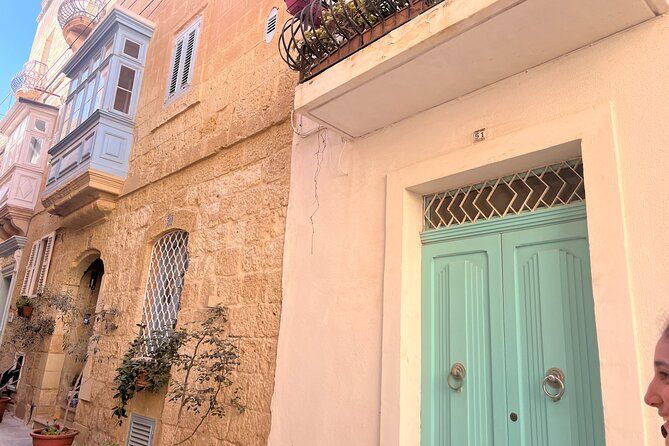
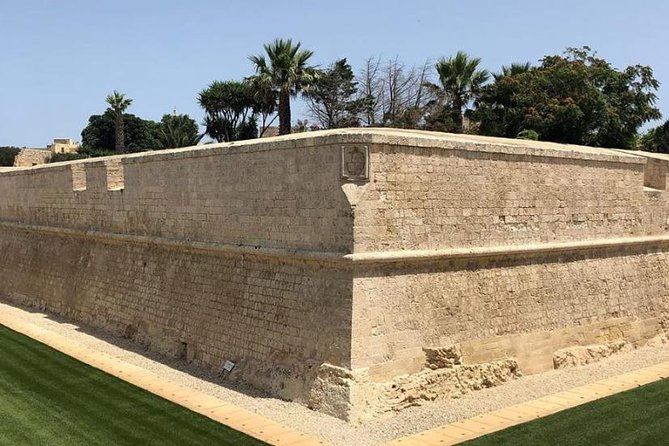
The final stretch takes you along Mdina’s medieval fortifications and includes the imposing Greeks Gate. You finish near Greek’s Gate, in the old city.
The walls provide one of the best visual moments of the tour. From the ramparts, you can look across a broad section of Malta. Clear weather makes a real difference. Rain can soften the view, and hot weather can make the exposed sections tiring, although guides have been praised for finding shaded places when stopping to speak.
The Greeks Gate is also a useful ending point because it reinforces Mdina’s defensive purpose. This was not simply a collection of noble homes and churches. It was a fortified capital, and the gates and walls explain how the city controlled movement into its center.
The official timing gives only about five minutes for the final Mdina Old City stop. That does not mean your Mdina experience lasts only five minutes. Most of the 1 hour and 25 minutes in the city comes immediately before it. Still, the tour ends in central Mdina rather than leaving you with a long period for independent exploration.
The pace: detailed talks or more freedom?
This is a guide-led history walk, not a quick photo circuit. Matthew, Mario, Carmel, Ian, and Dylan are all praised for explaining Malta’s past, culture, geography, language, architecture, and folklore. If you enjoy context, the steady commentary gives you much more than a self-guided stroll.
The trade-off is time. One person found there was too much talking and not enough walking, and left the group partway through to cover more of the catacombs and Mdina independently. Another person felt the tour was excellent but wished it lasted longer because the explanations were so engaging.
That tells you how to choose. If you want a broad orientation and clear explanations, stay with the guide and accept that you will not inspect every lane at your own speed. If you mainly want photographs, quiet wandering, or time inside Mdina’s museums, you should plan extra time before or after the tour.
Rain and heat can also affect the pace. A wet afternoon made Mdina less enjoyable for one group, while another tour went smoothly despite very hot weather. Wear shoes suited to stone streets and underground floors, and carry water. The information provided does not include a food or drink stop, so bring what you need.
Is $30.85 a fair price?
At $30.85 per person, this is a solid price for a 2-hour-30-minute guided experience, especially because the Wignacourt Museum entrance is included. You are paying for the guide, the catacombs, the World War II shelters, St. Paul’s Grotto, and a structured walk through two of Malta’s most important historic areas.
The value is strongest if you are visiting Mdina and Rabat for the first time. You get an introduction to the city’s main palaces, churches, fortifications, and gates without having to work out the route yourself. The underground admission also gives this tour more substance than a walking tour that stays entirely outdoors.
The value is weaker if you already know the area or prefer to set your own pace. You will still need to pay for your own food and drinks, and there is no hotel pickup or drop-off. The central meeting point makes the tour easier to combine with public transportation, but you must arrange your own way to Mdina Gate.
With a maximum of 25 people, this is not a private tour. It is small enough to feel more personal than a large coach excursion, but you may not always hear perfectly in open spaces. One person wished the guide had used a sign or a clearer identifying feature at the meeting point, while another received excellent help from the company after arriving late. Arrive early and look carefully for the guide at Mdina Gate.
Who will get the most from this walk?
I would choose this tour if you want Malta’s history explained in plain language while you walk. It suits first-time visitors, architecture fans, people interested in religious sites, and anyone curious about how ancient burial spaces and wartime shelters fit into the same town.
It is also a good fit if you want an overview before returning to Mdina on your own. The guide can point out places worth a closer look, including the Cathedral of Saint Paul, Palazzo Falzon, Palazzo Santa Sofia, the Carmelite Priory, Vilhena Palace, Saint Agatha’s Chapel, and the fortifications.
You may want a different plan if you have limited mobility underground, dislike stairs, or do not enjoy extended explanations. The catacombs include small spaces, uneven floors, and stairs, while the outdoor walk takes place over historic streets and fortifications. Most people can participate, but the tour is not built around sitting or avoiding underground access.
English is the stated tour language. Confirmation arrives when you book, and free cancellation is available up to 24 hours before the start time. Cancellations or changes made inside that window are not accepted for a refund.
Should you book the Mdina and Rabat Walking Tour?
Book it if you want an efficient introduction to Mdina’s walls, palaces, and churches, paired with Rabat’s underground sites. The included catacombs, World War II shelters, and St. Paul’s Grotto make this a better choice than a simple old-city walk, and the price is reasonable for the admission and guide service.
I would reserve extra time in Mdina before or after the tour. That solves the main weakness: the scheduled walk gives you information and orientation, but not much freedom to linger. Choose this experience for explanation, structure, and a strong first look at the area. Choose a self-guided visit instead if wandering slowly is your main goal.
FAQ
How long is the Mdina and Rabat Walking Tour?
The tour lasts approximately 2 hours and 30 minutes.
What is included in the price?
The price includes a professional guide and admission to the Wignacourt Museum, including the catacombs, World War II shelters, and St. Paul’s Grotto.
How much does the tour cost?
The listed price is $30.85 per person.
Where does the tour start?
The tour starts at Mdina Gate in Mdina, Malta.
Where does the tour end?
The tour ends near Greek’s Gate in Mdina’s old city.
Is hotel pickup included?
No. Hotel pickup and drop-off are not included.
Is the tour available in English?
Yes. The experience is offered in English.
Are there stairs in the underground sites?
Yes. The catacombs, World War II shelters, and St. Paul’s Grotto are underground, and you should expect stairs. The catacombs also have small spaces and uneven floors.
Just added around Mdina
- Malta: 5 hr Vintage Bus Tour – Mdina & Blue Grotto inc. food★ 5.0 · 22 reviews
- Valletta & Mdina: Private Tour★ 4.5 · 16 reviews
- Shore Excursion: Private Full-Day Tour of Valletta & Mdina★ 5.0 · 4 reviews
- Private Tour in Malta Prehistoric Temples & Mdina★ 5.0 · 4 reviews
- Rabat Mdina and San Anton Gardens Group Tour with St. Paul’s Catacombs★ 3.5 · 16 reviews
- Valletta, Mosta and Mdina Night Tour★ 3.5 · 15 reviews
- Malta Shore Excursion: Private tour of Valletta and Mdina★ 4.5 · 8 reviews
- Malta Private tour: 5hr Mosta Dome, Mdina, Dingli Cliff’s & Blue Grotto★ 4.5 · 36 reviews
Walking Tours, compared.


Guided Walking Tour with Optional Cathedral Tour
Read our review →
The Valletta Street Food and Culture Walking Tour
Read our review →Browse the lists this tour appears in