REVIEW · TOURS
The Grand Tour of Valletta
Valletta is compact, but its golden streets are packed with stories. This walking tour takes you from Triton Fountain through the city’s grand gates, gardens, squares, courts, and back streets, ending at the façade of St. John’s Co-Cathedral. Along the way, you hear about the Knights of St. John, political power, local gossip, and the people who broke the rules.
I especially like the Upper Barrakka Gardens, where you get one of the best views across the Grand Harbour, and the guide’s storytelling style, which goes beyond dates and building names. Guides such as Liala, Rafa, and Jeremy Grech have been praised for keeping a steady pace and making the past easy to follow.
The main thing to remember is that this is an outdoor walking tour, not an interior sightseeing package. You do not enter St. John’s Co-Cathedral, and Valletta has hills and long streets, so comfortable shoes matter.
In This Review
- Key points at a glance
- Starting at Triton Fountain and entering Valletta
- Upper Barrakka Gardens and the Grand Harbour view
- Merchant Street and Valletta’s grand buildings
- The Courts of Justice and Valletta below street level
- St. George’s Square and the Grand Master’s Palace
- Back streets, scandals, and the Knights’ rules
- Finishing at St. John’s Co-Cathedral
- Pace, hills, and the two-hour format
- What the $24.19 price gets you
- Who should book this Valletta walk?
- My verdict on the Grand Tour of Valletta
- FAQ
- Where does the Grand Tour of Valletta start?
- What time does the tour begin?
- Where does the tour finish?
- Is entry to St. John’s Co-Cathedral included?
- How long does the tour last?
- How many people can join the tour?
Key points at a glance
- Start at Triton Fountain: Meet at 10:00 a.m. near the House of Tours logo, just outside Valletta.
- See the Upper Barrakka Gardens: Pause for wide views over the Grand Harbour.
- Hear the city’s less polished stories: The guide covers scandals, punishment, power struggles, and people who challenged the Knights.
- End at St. John’s Co-Cathedral: The tour finishes in the center of Valletta, close to food, drinks, and shops.
- Expect a small to medium group: The maximum group size is 30 people.
- Pay about $24.19 per person: For a two-hour introduction with a professional guide, the price is reasonable, especially if you are new to Malta.
Starting at Triton Fountain and entering Valletta
The meeting point is Triton Fountain at Vjal Nelson, in Il-Furjana. Your guide will look for you near the House of Tours logo. The 10:00 a.m. start gives you a useful first look at the approach to Valletta before the day gets too far along.
This location also works well if you are visiting Malta from a cruise ship. The meeting point is described as an easy walk from the port, which makes the tour practical as a shore excursion. You will still want to allow enough time to find Triton Fountain, gather your group, and reach the meeting spot without rushing.
The tour begins with a short introduction to the Knights of St. John and the creation of Valletta. That opening matters because the city can otherwise feel like a series of handsome limestone buildings with unfamiliar names. Once you understand who built the city and why, the auberges, churches, palaces, and defensive structures begin to make more sense.
Your guide then leads you through the main entrance and into Valletta. The focus is not just on architecture. You hear stories about daily life, power, social rules, and the people who crossed the Knights. That human angle gives the walk more life than a standard procession of dates.
Other Malta days people book alongside this one:
- Malta: Gozo & Comino Islands, Blue Lagoon & Seacaves Tour
★ 4.5 · 15,672 reviews - Comino: Blue Lagoon, Crystal Lagoon, and Seacaves Tour
★ 4.6 · 5,673 reviews - Malta: Blue Lagoon, Beaches & Bays Trip by Catamaran
★ 4.7 · 5,496 reviews
Upper Barrakka Gardens and the Grand Harbour view
After passing through the main Valletta gate, the route heads toward the Upper Barrakka Gardens. The stop lasts about 15 minutes, which is enough time to pause, take in the view, and listen to the explanation without turning the tour into a long photography session.
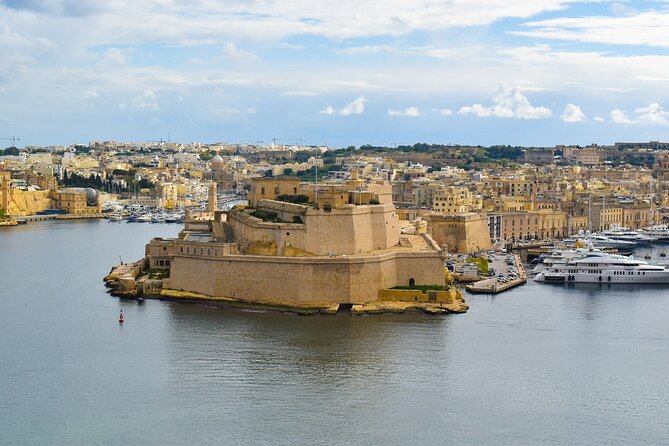
The gardens offer one of the finest panoramic views of the Grand Harbour. This is one of the tour’s most valuable stops because it helps you understand Malta’s position and the importance of Valletta’s harbor. The view is also a welcome change from narrow streets and stone walls.
You should bring a phone or camera if you enjoy taking pictures, but do not expect a long free period. The guide has a two-hour route to cover, and the group needs to keep moving. If the gardens make you want a slower look, you can return later on your own.
Merchant Street and Valletta’s grand buildings
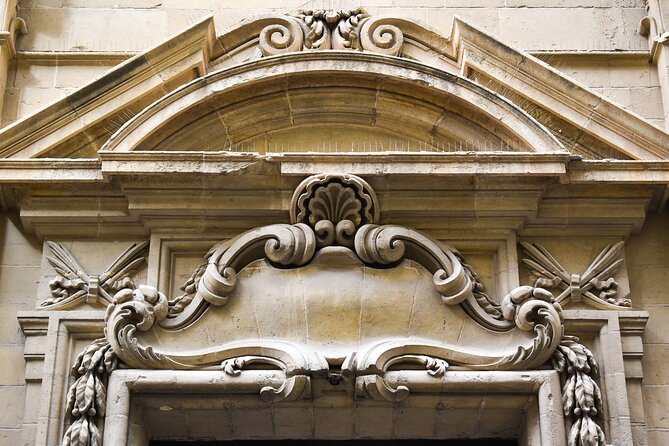
Merchant Street gives the tour a chance to slow down and look closely at Valletta’s historic buildings. The street contains former auberges, attractive façades, and other structures connected with the city’s ruling orders and institutions.
The guide points out details that are easy to miss when you walk through Valletta alone. This is where the storytelling style matters most. A building becomes more memorable when you know who used it, what it represented, and how it fitted into the city’s social order.
The stop is listed at about 15 minutes. That is enough for a focused explanation, but not enough to inspect every doorway or museum along the street. I see this as a useful orientation rather than a full architectural study. If Merchant Street catches your attention, make a note of it and return after the tour.
The route also passes historical houses, churches, museums, and monuments. You get a broad introduction to the city instead of spending the full morning inside one attraction. That makes the walk a good first activity in Valletta, especially if you want help deciding where to spend the rest of your day.
The Courts of Justice and Valletta below street level
The Courts of Justice are a brief stop, listed at about five minutes. The building is a Neo-Classical feature of the square, and the surrounding coffee shops give the area a more everyday feel than the grandest parts of the city.
Near the courts, you also see one of the entrances to Valletta’s underground passageways. The tour does not take you through the passageways, but the mention adds another layer to the city. Valletta is not only a city of balconies, churches, and ceremonial squares. Some of its story sits below street level.
Because this stop is short, it is best viewed as a quick explanation rather than a full visit. You will not have time to explore the courts or underground routes as part of the walking tour. Still, it is a useful reminder that Valletta’s military and civic past shaped both its visible streets and its less obvious spaces.
Same islands, a completely different day out:
- Malta: Gozo, Comino, Blue & Crystal Lagoon, & Caves Cruise
★ 4.6 · 5,092 reviews - From Malta: Full-Day Gozo UTV Tour with Lunch and Boat Ride
★ 4.6 · 4,408 reviews - From Sliema: Comino, Crystal Lagoon, and Blue Lagoon Cruise
★ 4.5 · 3,792 reviews - From Sliema: Gozo, Comino and Blue Lagoon Cruise
★ 4.5 · 3,461 reviews
St. George’s Square and the Grand Master’s Palace
The route continues toward St. George’s Square, one of Valletta’s central public spaces. Queen Victoria is part of the stop, and the Grand Master’s Palace looks over the square.
The guide uses the setting to explain the people and institutions that controlled Valletta. This is a good place to connect the city’s impressive public spaces with the authority of the Grand Masters. Valletta was designed to project order and power, and the square makes that idea easy to see.
The stop lasts about eight minutes. That keeps the tour moving, but it also means the visit is focused on the square and its story rather than a full palace visit. If you want to see the palace interiors, you will need to plan that separately. The same is true for museums and churches passed along the way.
I like this part of the route because it gives you a clear sense of Valletta as a working capital, not just a historic setting. The square is also a useful reference point for exploring on your own later.
Back streets, scandals, and the Knights’ rules
The most distinctive part of the walk comes in Valletta’s back streets. Here, the guide moves beyond official history and tells stories about gossip, punishment, social rules, and people who stepped out of line with the Knights.
That material is especially helpful if you find traditional lectures tiring. Rafa, one of the guides associated with the experience, has been noted for keeping the pace brisk and avoiding long stretches of uninterrupted explanation. Liala has also been praised for combining humor, personal warmth, and useful detail. Jeremy Grech is described as keeping the route moving while still making time for questions.
Guide assignments can change, so you should not book on the assumption that one named guide will lead your walk. Still, the repeated strength of the guide team is important. A two-hour city walk depends heavily on the person holding the group together, choosing what to explain, and knowing when to move on.
The back-street stories also make the tour feel more connected to real people. You hear about the consequences of disobedience and the less polished side of life under the Knights. That balance keeps the tour from becoming a parade of heroic monuments.
Finishing at St. John’s Co-Cathedral
The walk ends at St. John’s Co-Cathedral in the heart of Valletta. The tour discusses the exterior façade only, and the entrance ticket is not included.
That limitation is worth understanding before you book. St. John’s is one of Valletta’s major sights, and many people will want to go inside after the walk. You can treat the tour as a useful introduction, then make a separate visit when you are ready to spend more time there.
Ending here is convenient. You are close to cafés, restaurants, cold drinks, and shops, so you can continue your day without arranging another transfer. The central location also makes it easy to use the cathedral as a landmark while exploring the rest of Valletta.
One practical point comes from the experience of a visitor who wished the guide could have moved the group through the cathedral queue more quickly. Since the tour does not include admission and focuses on the façade, do not expect skip-the-line access. If entering the cathedral is a priority, plan that as a separate part of your schedule.
Pace, hills, and the two-hour format
The advertised duration is about two hours. The route covers several parts of Valletta, with short stops ranging from five to 15 minutes and a steady walk between them. A separate timing note for the first section lists two hours and 30 minutes, so you should allow some flexibility rather than planning a tight connection immediately afterward.
The walking itself is manageable for most people, but Valletta is not perfectly flat. One account specifically notes the city’s hills while also describing the walk as comfortable. That is a fair way to think about it: this is not an extreme hike, but it is still a city walk over stone streets and inclines.
Wear shoes you can use comfortably for two hours. You should also consider the weather, since the tour takes place outdoors and includes open gardens and public squares. The route has regular stops, but there is no promise of long indoor breaks.
The maximum group size is 30 people. That is not a private tour, and a full group may make it harder to hear in a busy square. On the other hand, the group size is still limited enough to keep the experience more personal than a large coach tour.
What the $24.19 price gets you
At about $24.19 per person, the tour is priced as an affordable introduction to Valletta. The fee covers a professional guide, not admission to St. John’s Co-Cathedral or other attractions along the route.
I think the value is strongest if this is your first visit to Valletta. You receive a clear route, background on the Knights of St. John, an explanation of major public buildings, a Grand Harbour viewpoint, and stories you might not find in a basic guidebook. You also finish in a useful central location.
The price is less compelling if you already know Valletta well or prefer to explore at your own speed. The stops are short, and you will not enter the cathedral or underground passageways. A self-guided walk can give you more time at each site, but it will not provide the same live storytelling or easy route planning.
The tour has a recorded rating of five out of five from 121 ratings, with 99 percent recommending it. The strongest pattern is clear: the guide’s personality and ability to explain Malta make the experience work. That is more important here than a long list of included attractions.
Who should book this Valletta walk?
I would recommend this tour to first-time visitors, cruise passengers, families, and anyone who wants the basic shape of Valletta before exploring alone. The guides have managed to keep children aged nine, 13, and 15 interested for the full walk, which suggests that the stories are accessible rather than aimed only at serious history fans.
It also suits you if you like history but do not enjoy a guide who talks without pause. The route keeps moving, and the best accounts describe a steady pace with room for questions.
This is less suitable if you need step-free sightseeing, want to spend a long time inside each attraction, or have only a narrow window before another booking. Service animals are allowed, the tour is near public transportation, and most people can participate, but the route is still on foot and includes hills.
You receive confirmation when you book. Free cancellation is available until 24 hours before the start time. Cancellations or changes inside that window are not accepted for a refund, and the tour requires a minimum number of participants. If that minimum is not reached, House of Tours offers another date or experience, or a full refund.
My verdict on the Grand Tour of Valletta
Book it if you want a lively introduction to Valletta, especially on your first morning in the city. The combination of the Grand Harbour view, major squares, historic streets, and stories about the Knights gives you a useful framework for later exploring.
The best reason to choose it is the guide-led storytelling. Liala, Rafa, and Jeremy Grech are among the guides associated with especially warm and engaging tours, though the guide on your date may be different. The main trade-off is that you see the outside of St. John’s Co-Cathedral and do not receive attraction admission.
For about $24.19, that is a fair deal for a well-paced two-hour orientation. Arrive ready to walk, wear sensible shoes, and save time after the tour if you want to enter the cathedral or revisit the places that catch your eye.
FAQ
Where does the Grand Tour of Valletta start?
The tour starts at Triton Fountain, Vjal Nelson, Il-Furjana, Malta. Look for the House of Tours logo near the meeting point.
What time does the tour begin?
The scheduled start time is 10:00 a.m.
Where does the tour finish?
The walk ends at St. John’s Co-Cathedral on Triq San Gwann in Valletta.
Is entry to St. John’s Co-Cathedral included?
No. The tour discusses the cathedral façade, but admission to the interior is not included.
How long does the tour last?
The advertised duration is approximately two hours. One itinerary note lists a two-hour-and-30-minute period for the main route, so allow some flexibility in your schedule.
How many people can join the tour?
The maximum group size is 30 people.
Just added around Malta
- World War II Malta Full-Day Walking Tour★ 4.3 · 18 reviews
- Malta: 5 hr Vintage Bus Tour – Mdina & Blue Grotto inc. food★ 5.0 · 22 reviews
- Wakeboarding Adventure in Malta: Learn to Ride★ 5.0 · 4 reviews
- Valletta Street Food & History Tour With Private Transfers★ 4.5 · 15 reviews
- Victoria, Gozo: Sunset Walking Food and Drink Tour★ 5.0 · 6 reviews
- Valletta & Mdina: Private Tour★ 4.5 · 16 reviews
- Valletta: Private Maltese Cuisine Walking Tour★ 4.8 · 8 reviews
- Valletta: Private Massage from a world renowned masseuse★ 4.6 · 9 reviews
Tours, compared.
Gozo & Comino Islands, Blue Lagoon & Seacaves Tour
Read our review →
Blue Lagoon, Crystal Lagoon, and Seacaves Tour
Read our review →
Highlights of Malta & Mdina Full Day Tour with Lunch
Read our review →
The Three Fortified Cities Tour including Boat Trip
Read our review →
Gozo, Comino & The Blue Lagoon Boat & Bus Tour
Read our review →
Comino, Gozo, Blue Lagoon, Crystal Lagoon and Caves Tour
Read our review →