

REVIEW · MUSEUMS
Aviation Museum, Mosta Church, WWII Shelters inc. Platter
The most unusual part of this Malta tour is the ride itself. You travel in a restored Xarabank, one of the colorful buses that once served Maltese villages, rather than in a plain modern coach. The bus makes the route feel connected to everyday Malta, even though these old vehicles now appear mainly at weddings and special events.
I like the way the four-hour outing links three very different sights: aircraft at Ta’ Qali, the huge dome at Mosta, and the cramped wartime shelters below the church. I also like that the price includes entrance fees, hotel pickup, and a Maltese platter. The main drawback is time. You may feel rushed at the Aviation Museum or Mosta Church, especially if you enjoy reading every display.
In This Review
- Key points to know
- Riding Malta’s old Xarabank
- Ta’ Qali Aviation Museum and Malta’s aircraft
- Mosta Rotunda and the famous wartime bomb
- Hand-cut shelters beneath Mosta
- The Maltese platter at the finish
- What the $57 price really covers
- Who will enjoy this four-hour route
- How to prepare for the day
- Should you book the Xarabank tour?
- FAQ
- How long does the tour last?
- What transport is used?
- What is a Xarabank?
- Which language is the tour conducted in?
- Which attractions are included?
- Does the tour include entrance fees?
- Is hotel pickup available?
- When will I receive my pickup details?
- Is food included?
- Can I cancel for a full refund?
Key points to know

- The Xarabank is part of the attraction: These brightly decorated buses preserve an old Maltese transport tradition, complete with chrome, painted lettering, flags, and good-luck symbols.
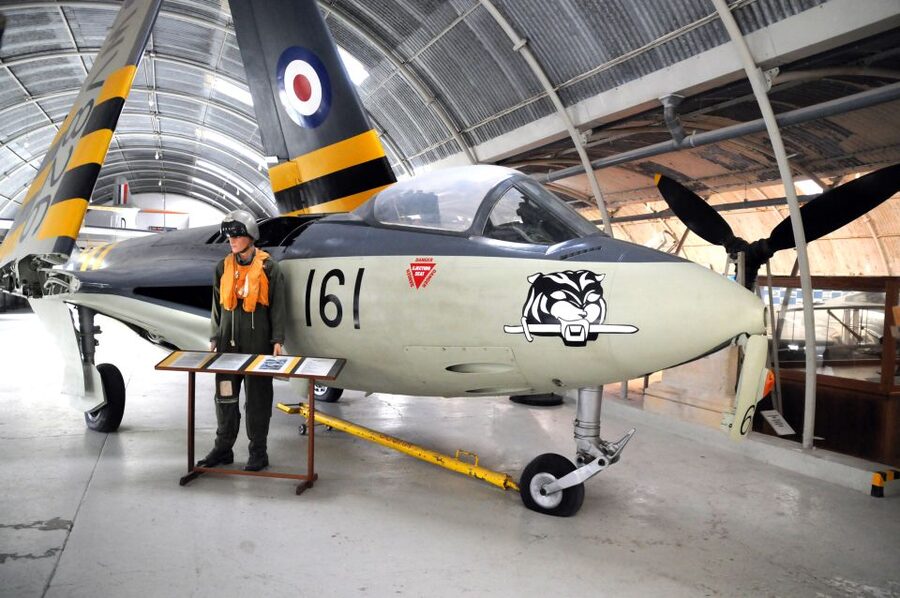
- Ta’ Qali covers Malta’s aviation story: The museum occupies three hangars on a former Royal Air Force airfield and focuses heavily on wartime and postwar aircraft.
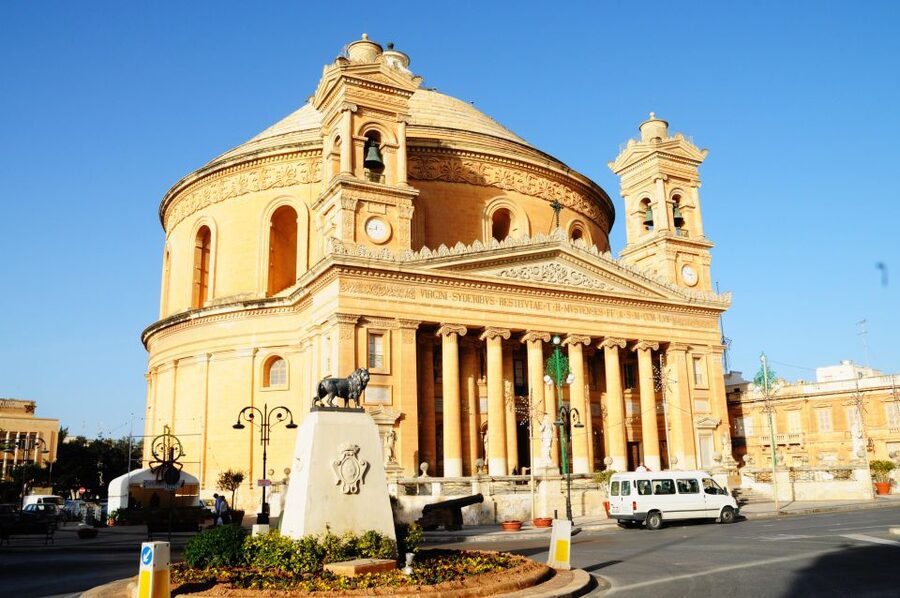
- Mosta’s dome is the visual high point: The church has the world’s third-largest unsupported dome and includes access to the portico, bell tower, and inner gallery.
- The wartime shelter is hand-cut: Fifteen skilled workers dug the Mosta shelter by hand in 1940 for families seeking safety during air raids.
- Food comes at the end: A Maltese platter, coffee, and water give you a quick taste of local savouries, though the portion may feel modest.
- Allow for a brisk pace: The tour covers a lot in four hours, so it suits you best if you prefer a focused introduction over long, unhurried visits.
Riding Malta’s old Xarabank
The bus sets the tone before you reach any museum. Maltese bus builders produced these traditional vehicles from the 1950s through the 1970s, and each one could look different depending on the locality it served. Colors once helped people who could not read identify their route. Red, purple, blue, and other shades carried more meaning than a route number.
The decoration was never plain. Painted designs, bold lettering, passenger messages, saint names, song lyrics, slogans, flags, chrome fittings, and lucky symbols all found their way onto the buses. You get a moving piece of local popular culture, not just transport from one stop to another.
The vehicle used for the outing is described as a traditional vintage bus. One family outing called it a 1930s vintage bus, while the general history of the Xarabank tradition places these buses mainly in the 1950s to 1970s. The practical point is simple: expect an old-style bus with character, not a modern air-conditioned coach.
That matters for comfort. You should wear comfortable clothes and be prepared for a ride that may feel less smooth than ordinary sightseeing transport. The bus is best understood as part of the experience. If you need a very easy ride or have mobility limitations, this outing is not suitable.
A driver named David has handled the bus on at least one departure, and Paul has led the guiding on another. Names and staff can change, but the tour includes a licensed English-speaking guide. The guide gives the stops a common thread, which is useful because the subjects range from aircraft restoration to church architecture and civilian life during wartime.
A few more Valletta trips to weigh up
- Casa Rocca Piccola Palace and Museum Entrance Ticket
★ 4.7 · 116 reviews - Casa Rocca Piccola palace & museum entrance ticket
★ 4.5 · 42 reviews - Malta Classic Car Collection Museum Entry Ticket
★ 4.9 · 247 reviews
Ta’ Qali Aviation Museum and Malta’s aircraft
The first main stop is the Malta Aviation Museum at Ta’ Qali. The museum occupies three hangars on the site of a former Royal Air Force airfield, giving the collection a direct connection to Malta’s aviation past.
The displays cover the island’s aviation story, with particular attention to the Second World War and the years after it. Aircraft preservation and restoration are central to the museum’s work. Some of the aircraft have been restored to flying condition, which adds a sense of working history rather than a collection of objects simply placed behind barriers.
You should expect a compact museum visit rather than a full day at a major aviation complex. The tour includes admission and allows enough time to see the main displays, but the schedule may not satisfy you if aircraft are your main reason for booking. One account of the outing found the Aviation Museum excellent but felt there was not enough time to look around.
That is the key tradeoff. The museum provides context you would miss on a sightseeing drive, and the guide can help you understand why particular aircraft matter. At the same time, the group must continue to Mosta, so you may need to move at a steady pace.
If you want to make the most of this stop, decide in advance what interests you most. Aircraft restoration, wartime aviation, and postwar displays are all part of the museum, but you may not have time to study every label. Keep your attention on the aircraft themselves and listen for the guide’s explanations.
Mosta Rotunda and the famous wartime bomb

Mosta Church, also called the Mosta Rotunda, is dedicated to the Assumption of Our Lady. Its design draws on the Pantheon in Rome, and its dome is the church’s defining feature. At its widest point, this is an enormous interior space, and the dome is described as the third-largest unsupported dome in the world.
The church is Malta’s largest and best-known church, but its importance is not only architectural. On April 9, 1942, during World War II, a German aerial bomb pierced the dome and fell into the church while Mass was taking place. It failed to explode. The Maltese interpreted the event as a miracle, and the church now displays a replica of the bomb.
The visit includes more than a quick look across the main floor. You can see the sacristies, objects of prestige, a large-scale model of the church, and the bomb replica. The tour also takes you up to the portico and bell tower and into the church’s inner gallery.
Those upper areas change your view of the building. From below, you notice the scale of the dome. From above, you gain a closer look at the structure and a better sense of how the rotunda is arranged. This is one reason I would not treat Mosta as a simple photo stop.
The limitation is again the clock. One outing felt that the church visit was rushed, even though the building itself was considered beautiful. If you like church art, architectural details, or quiet time inside religious buildings, four hours may not give you as much freedom as you want.
Dress comfortably and remember that this is an active Catholic church, not only a museum. The supplied information does not set out a specific dress code, so sensible, respectful clothing is the safe choice.
Hand-cut shelters beneath Mosta
The final historical stop takes you below the church’s parvis, or forecourt. The Mosta World War II Shelter was opened recently and was dug by hand in 1940 by 15 highly skilled workers. Families used it during the frequent air raids that threatened Malta.
The shelter gives the war a human scale. Aircraft at Ta’ Qali show the machinery of conflict, and the bomb at Mosta shows how close danger came to a place of worship. In the shelter, you see the kind of underground space families relied on for protection.
This is not a polished set built only for display. Its value comes from the physical evidence of labor: rock cut by hand, narrow passages, and a place shaped for urgent civilian use. You may find the experience more affecting than a standard military exhibit because it focuses on ordinary people trying to stay safe.
The shelter complex also includes an exhibition of tools and implements connected with old trades. That addition helps place wartime life within a wider picture of Maltese working traditions. It is a small but useful reminder that Malta’s past is not only about battles, aircraft, and churches.
The practical warning is important. The experience is not suitable for people with mobility impairments. The shelter environment and the church’s upper areas may involve movement that is difficult for some visitors. If stairs, uneven surfaces, or confined spaces are a concern, ask before booking.
Same islands, a completely different day out:
- From Malta: Full-Day Gozo UTV Tour with Lunch and Boat Ride
★ 4.6 · 4,408 reviews - The Original Valletta Walking Tour
★ 5.0 · 2,719 reviews - Valletta: 3-Hour Walking Tour
★ 4.7 · 1,605 reviews - From Malta: Full-Day Gozo Quad Tour with Lunch and Boat Ride
★ 4.8 · 1,419 reviews
The Maltese platter at the finish
At the end, you receive local savouries with coffee and water. The platter is not a full meal, and one outing found it basic and small, but it gives you a chance to sample traditional Maltese food without arranging a separate restaurant visit.
I see the platter as a pleasant closing detail rather than a reason to book the tour by itself. It works well after several hours of sightseeing, particularly if you want a quick taste of local food before returning to your hotel. If you arrive hungry, do not count on it replacing lunch.
Because the meal is included, you know the main cost up front. The food also gives the tour a more local finish than ending at a gift shop or parking area. Just keep your expectations modest: think savouries, coffee, and water, not an extensive tasting menu.
What the $57 price really covers
The price is $57 per person. That includes hotel pickup or pickup at the nearest available point, transport on the traditional bus, a licensed English-speaking guide, admission to the Aviation Museum, admission to Mosta Dome, admission to the World War II Shelters, and the Maltese platter with coffee and water.
For a four-hour outing, that is a fair package if you value convenience. You avoid arranging transport between Ta’ Qali and Mosta, and the entrance fees are handled for you. The old bus also adds something you would not receive from a basic taxi transfer or ordinary public bus route.
The value is strongest for a first visit to Malta or for anyone with limited time. In one morning or afternoon, you cover aviation, church architecture, wartime civilian history, and local food. The English-speaking guide helps connect those subjects instead of leaving you to work out the links alone.
The value is weaker if you want long museum visits or independent wandering. You pay for a guided route with a fixed timetable, not for unlimited time at each stop. At $57, I would book it for the transport, access, and unusual bus rather than expecting a slow, specialist tour of the Aviation Museum.
Free cancellation is available up to 24 hours before the tour, and you can reserve now and pay later. Pickup details are sent by email one day before the excursion, so include your hotel name when booking and watch for the confirmation with the pickup point and time.
Who will enjoy this four-hour route
I would recommend this tour to you if you want a compact introduction to central Malta and like unusual transport. Families can find it especially appealing because the bus adds fun to the historical stops, and one family with two adults and a 10-year-old completed the route comfortably.
It also suits anyone interested in World War II but who does not want a full military day. The Aviation Museum presents the aircraft side, Mosta preserves the story of the bomb, and the shelter shows how civilians lived with repeated air raids.
You may want another option if you have limited mobility, dislike vintage vehicles, or prefer to set your own pace. The upper parts of Mosta and the underground shelter require physical movement, while the schedule may feel tight for serious museum fans.
The tour is conducted in English. If you need another language, this experience does not offer that option according to the available details.
How to prepare for the day

Wear comfortable clothes and sensible shoes. The old bus is the star of the transport, but it is not designed to provide the same ease as a modern sightseeing coach.
Include your hotel name at the time of booking. A pickup location and time are sent one day before departure, and the pickup may be at your hotel or at the nearest practical point.
Keep the four-hour schedule in mind. Listen closely during the guided portions, take your main photographs early, and do not assume you can return to a display later. The most common criticism is not poor content, but too little time at the Aviation Museum and Mosta Church.
I would also plan a proper meal later unless your schedule places the tour just after breakfast. The included platter is a useful tasting portion, not a guaranteed substitute for lunch.
Should you book the Xarabank tour?
Book it if you want a friendly, tightly planned Malta history outing with a memorable ride. The traditional bus, Mosta’s huge dome, and the hand-cut shelter give the experience a character that a standard coach tour would lack.
Book with caution if you want to study aircraft in detail, linger inside Mosta Church, or avoid stairs and underground passages. The tour earns its $57 price through included admissions, pickup, guiding, and an unusual vehicle, but its brisk pace is part of the bargain.
For most first-time visitors who have only half a day, I think it is a sound choice. Go in expecting a sampler of Malta’s central sights, not a specialist museum visit or a long food tour, and the four hours should feel well used.
FAQ
How long does the tour last?
The tour lasts four hours.
What transport is used?
You travel on a traditional Maltese bus known as a Xarabank.
What is a Xarabank?
A Xarabank is a traditional Maltese bus. These buses were built by Maltese bus builders from the 1950s through the 1970s and were often decorated with colors, painted designs, lettering, chrome, flags, and good-luck symbols.
Which language is the tour conducted in?
The tour is conducted in English with a live English-speaking guide.
Which attractions are included?
The tour includes the Malta Aviation Museum at Ta’ Qali, Mosta Dome, and the Mosta World War II Shelters.
Does the tour include entrance fees?
Yes. Admission to the Aviation Museum, Mosta Dome, and Mosta World War II Shelters is included.
Is hotel pickup available?
Yes. Pickup and drop-off at your hotel or the nearest pickup point are included.
When will I receive my pickup details?
You will receive the pickup time and location by email one day before the excursion. Include your hotel name when booking.
Is food included?
Yes. The tour includes a Maltese platter, coffee, and water.
Can I cancel for a full refund?
You can cancel up to 24 hours in advance for a full refund. You can also reserve now and pay later.
Just added around Valletta
- World War II Malta Full-Day Walking Tour★ 4.3 · 18 reviews
- Malta: 5 hr Vintage Bus Tour – Mdina & Blue Grotto inc. food★ 5.0 · 22 reviews
- Valletta & Mdina: Private Tour★ 4.5 · 16 reviews
- Valletta: Private Maltese Cuisine Walking Tour★ 4.8 · 8 reviews
- Valletta : Highlights & Hidden Gems Walking Tour★ 3.1 · 5 reviews
- Afternoon Harbours Cruise with Guide and Roundtrip Transfers★ 3.4 · 11 reviews
- Valletta: Guided Walking Tour★ 3.8 · 5 reviews
- Valletta: Food and Culture Private Tour★ 4.9 · 10 reviews
Museums, compared.

Malta Classic Car Collection Museum Entry Ticket
Read our review →
Skip the Line: Malta Classic Car Museum Admission Ticket
Read our review →
Casa Rocca Piccola Palace and Museum Entrance Ticket
Read our review →
St. Paul’s Cathedral and Mdina Museum Entrance Ticket
Read our review →
Casa Rocca Piccola palace & museum entrance ticket
Read our review →
Palazzo Falson Historic House Museum entrance ticket
Read our review →Browse the lists this tour appears in