
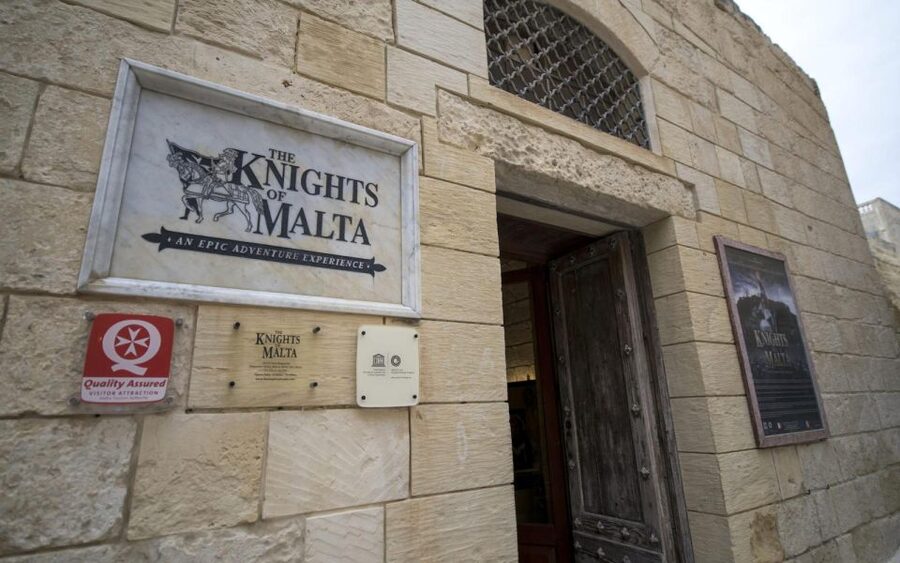
REVIEW · MUSEUMS
Mdina: The Knights of Malta Museum Entry Ticket
The most striking part of this Mdina attraction is its mix of full-size historical tableaux and theatrical light and sound. You begin with a 3D audio-visual presentation, then walk through scenes showing the Knights of Malta at war, in council, serving the sick, and dealing with disasters such as the 1693 earthquake.
I like the short, self-contained format, which fits neatly between Mdina’s cathedral, palaces, and city walls. I also like the 13-language audio commentary, especially for families and mixed-language groups. The main drawback is that the display can feel more like a staged history show than a detailed museum, and its approximate 40-minute length may leave serious history fans wanting more.
In This Review
- Key points to know
- A theatrical introduction to Malta’s Knights
- Casa Magazzini and the 34 historical scenes
- From piracy and siege to the 1693 earthquake
- The Knights’ hospitals, buildings, and public role
- How the 40-minute visit unfolds
- Is the $8 ticket good value?
- Who will enjoy this Mdina attraction?
- How to fit the museum into a Mdina day
- What the experience gets right, and where it falls short
- Should you book the Knights of Malta Museum?
- FAQ
- How long does the Knights of Malta Museum visit take?
- What does the museum ticket include?
- Which languages are available for the audio guide?
- Can I use the ticket on any day?
- Is the museum open every day?
- Is the museum wheelchair accessible?
- Is the museum suitable for visitors with hearing impairments?
Key points to know
- 34 full-size scenes recreate moments from the Knights’ 200-year rule over Malta.
- A 3D audio-visual introduction sets the scene before you enter the walk-through display.
- Thirteen audio languages are available, including English, Maltese, Japanese, Russian, and several European languages.
- An open ticket lets you visit on any day during the museum’s opening hours, but entry is for one visit only.
- The museum is not wheelchair accessible, and strollers cannot be taken inside.
- The visit takes about 40 minutes, making it an easy add-on to a day exploring Mdina.
A theatrical introduction to Malta’s Knights
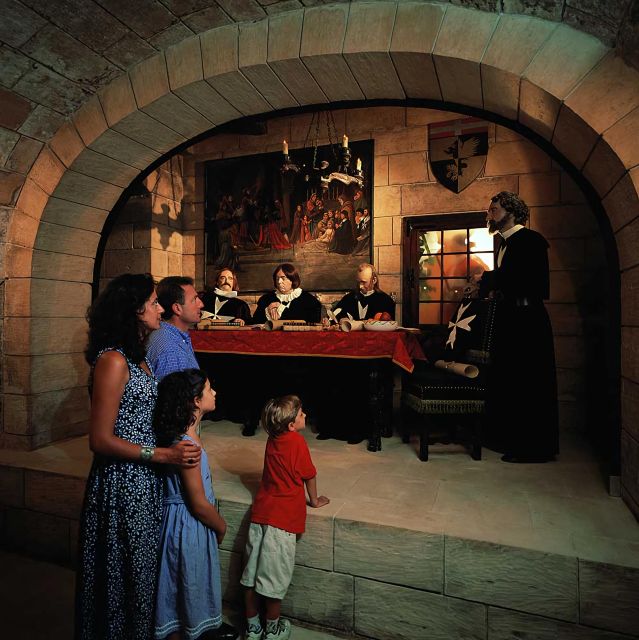
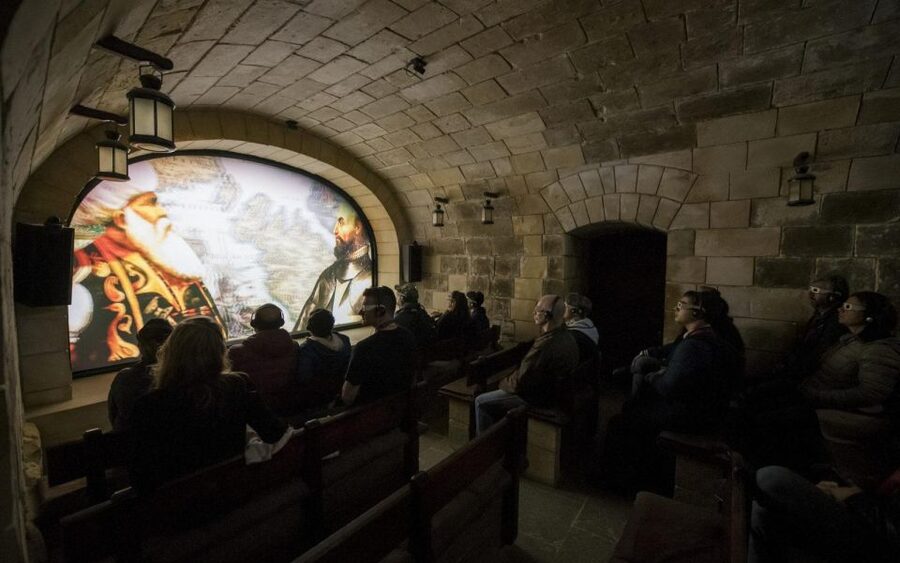
The Knights of Malta Museum begins with a short digital presentation designed to place you in the world of the Crusader Knights. The story reaches back through Malta’s long past, with the attraction presenting a broad account of roughly 7000 years of triumphs, conflict, and change.
The focus soon narrows to the Knights of St. John and their rule over Malta. In 1530, Grand Master L’Isle Adam entered Mdina, and that moment provides an important starting point for the museum’s story. The presentation uses sound, lighting, and three-dimensional effects rather than relying on rows of written panels.
I find this opening useful because it gives you a basic outline before the walk-through begins. If you know little about the Knights, you can follow the main story without first reading a textbook. If you already know Malta’s past, the presentation works more as a dramatic refresher than a new historical study.
The audio commentary is available in English, German, French, Dutch, Spanish, Italian, Russian, Greek, Swedish, Danish, Norwegian, Japanese, and Maltese. You listen as you move through the experience, so you are not tied to a live guide’s pace.
More mdina tours in Mdina:
- Malta: Highlights of Malta & Mdina Full Day Tour with Lunch
★ 4.4 · 2,688 reviews - Malta: Mdina and Rabat Walking Tour with Catacombs
★ 4.8 · 1,126 reviews - Malta: Mdina, Dingli Cliffs and San Anton Botanical Gardens
★ 4.3 · 991 reviews
Casa Magazzini and the 34 historical scenes
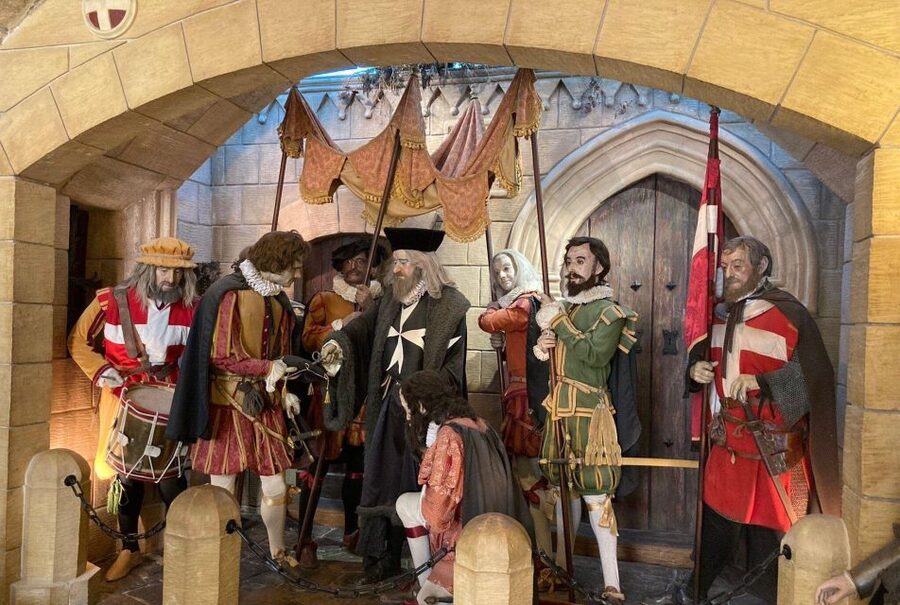
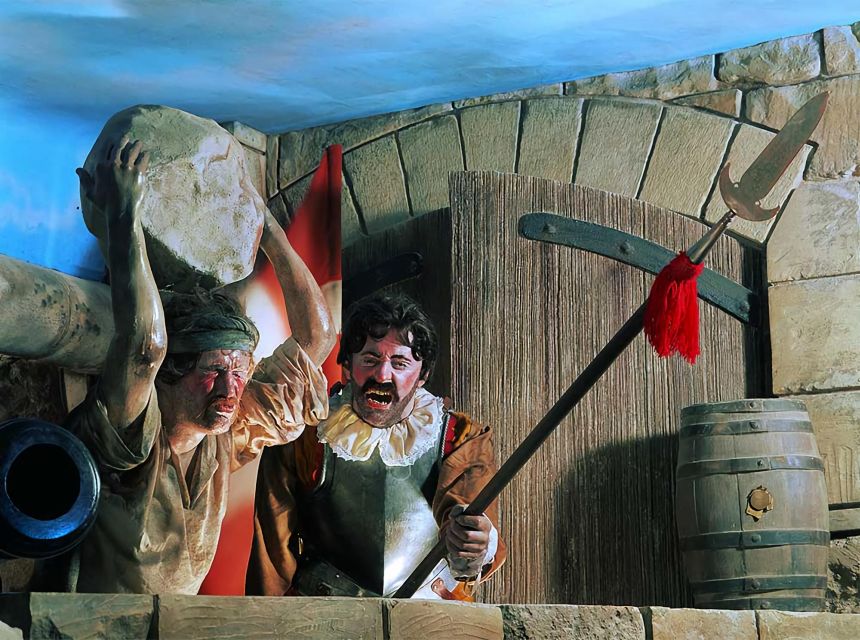
The museum is located at Casa Magazzini, where the display recreates interiors and scenes from the Knights’ era. The figures are full-size, and the arrangement gives the attraction a still-life pageant quality. You see Knights and Grand Masters in formal meetings, military settings, religious and charitable work, and moments alongside ordinary people.
The scenes cover the full span of the order’s 200-year rule over the islands. Rather than showing only famous leaders and major battles, the display also tries to show daily life and the pressures faced by people living through war, disease, piracy, and natural disaster.
That range is one of the better features of the museum. You are not shown only polished portraits of powerful men. The scenes also touch on the order’s hospital work and its role in caring for the sick. This helps explain why the Knights mattered to Malta beyond their military reputation.
The museum also presents the Ottoman enemy and the threat of siege. Malta’s position in the Mediterranean made conflict a regular part of life, and the attraction uses battle scenes, dramatic lighting, and sound to make that danger clear.
You should expect a staged presentation rather than an archaeological collection. There are no promised hands-on activities, extensive object displays, or live demonstrations. The value comes from the combination of visual storytelling and narration.
From piracy and siege to the 1693 earthquake
A good part of the experience deals with the hardships that shaped Malta’s history. Piracy and siege were not distant ideas for people living on the islands. The display presents these threats through dramatic scenes intended to make the danger understandable to both adults and children.
The 1693 earthquake in Mdina is another memorable subject. The museum shows how disaster affected the city, adding a reminder that Malta’s story was shaped by nature as well as armies and rulers.
I appreciate this wider view. The Knights are often remembered for fortifications, uniforms, and battles, but the earthquake scene and hospital scenes point to the less glamorous work of governing a population. You get a sense of a society coping with emergencies, disease, military threats, and the demands of public life.
The presentation does not appear designed for a specialist audience. Some information may feel simplified, and one part of the experience can seem repetitive if you already know a great deal about the Knights. A critical French-language assessment described the presentation as repetitive and approximate, which is a fair warning for history experts seeking precise detail.
For most people, though, the broad approach is part of the attraction’s purpose. You can understand the main themes without spending hours in a lecture. Think of it as a compact introduction to Malta under the Knights, not a final word on the subject.
The Knights’ hospitals, buildings, and public role
The Knights’ story is not limited to war. The scenes also show the order offering medical services to the sick, an important part of its identity and public role. This section gives the display a human side and helps explain why the order left such a strong mark on Malta.
You also see the Knights in conference and at work with architects and artists. Their building program changed Malta’s cities, especially Valletta, which the attraction presents as a city designed for gentlemen. The museum connects the Knights’ vision with the grand buildings and monuments they commissioned.
This is a useful connection to make before you explore the rest of Malta. When you walk through Valletta later, the attraction’s discussion of architecture and patronage can give those stone streets more context. You begin to see the buildings not simply as attractive backdrops, but as part of a deliberate political and cultural project.
The display cannot show every building or explain every Grand Master in detail. Its strength is the overview. It links military power, hospital care, civic planning, and artistic ambition in a single short visit.
I would give the audio commentary your full attention here. The figures are visually clear, but the narration supplies much of the historical explanation. Without listening, you may see an appealing series of scenes but miss the reason each one matters.
A few more Mdina trips to weigh up
- Mdina: St. Paul’s Cathedral and Mdina Museum Entrance Ticket
★ 4.5 · 89 reviews - Palazzo Falson Historic House Museum entrance ticket
★ 4.7 · 22 reviews - Malta Classic Car Collection Museum Entry Ticket
★ 4.9 · 247 reviews - Skip the Line: Malta Classic Car Museum Admission Ticket
★ 5.0 · 174 reviews
How the 40-minute visit unfolds
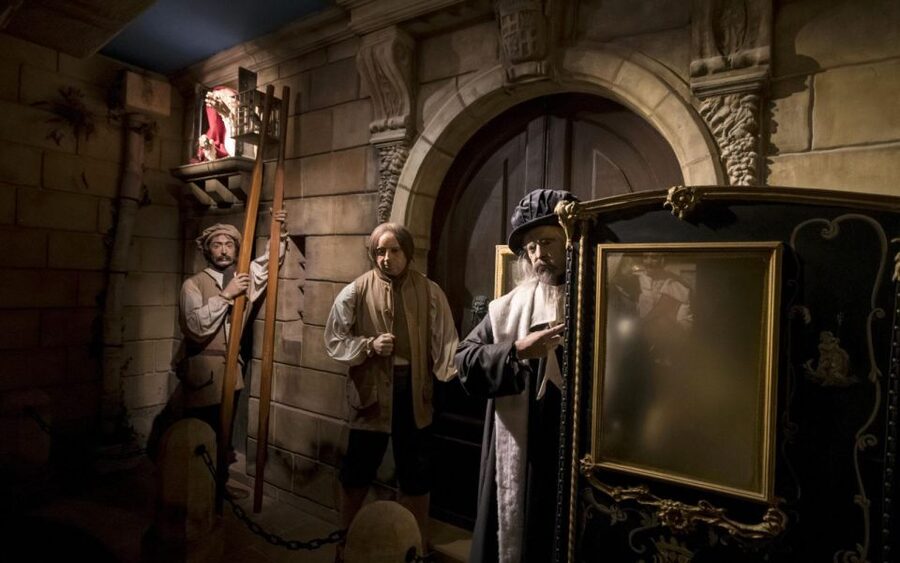
The total visit lasts about 40 minutes and includes the introductory 3D show plus the walk-through display. The format is easy to manage during a day in Mdina because it does not require half a day or a fixed guided schedule.
You first check in at the reception area. From there, the digital introduction provides the broad historical frame. The walk-through follows, with lighting, sound, reconstructed interiors, and full-size figures carrying the story from one scene to the next.
Because the ticket is open, you can use it on any day during the museum’s opening hours. That flexibility matters in Mdina, where you may want to adjust your visit around the cathedral, churches, palaces, meals, or hot afternoon weather.
The ticket is valid for one entry only. You cannot leave and come back in later, so plan to complete the experience in one go. The museum is open every day of the year except Christmas Day, although opening hours can change. Check the current hours during your stay before setting out.
The experience has an English-speaking host or greeter, but it is not a private guided tour. The historical explanation comes through the recorded audio commentary, available in the 13 listed languages.
Is the $8 ticket good value?
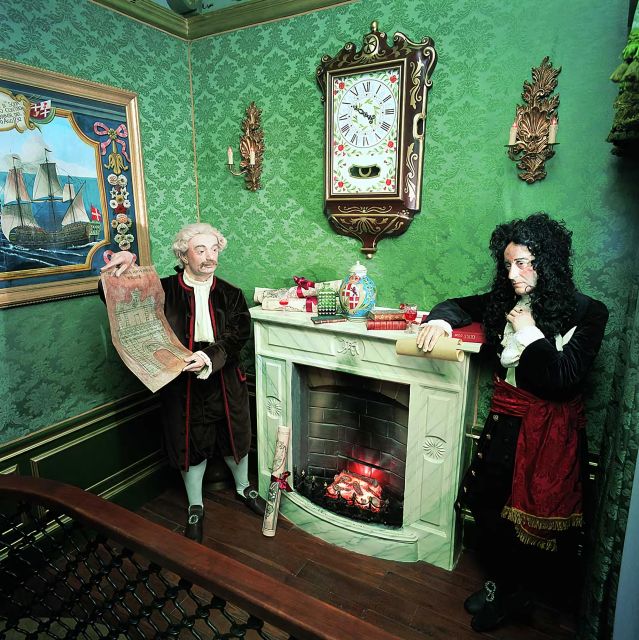
At $8 per person, this is a modestly priced Mdina attraction. The question is not simply how much time you get, but how easily the visit fits into your day and how much historical background you need.
I consider the price reasonable if you want a quick introduction to the Knights and prefer visual storytelling to a long museum visit. The 40-minute format gives you a clear subject, a set route, and multilingual narration without a major time commitment.
The value is less convincing if you are mainly looking for original artifacts, detailed labels, or a large museum collection. The attraction is built around reconstructed scenes and special effects. That makes it accessible, but it also limits the level of detail.
For families, the theatrical approach may make the Knights easier to understand than a traditional display of documents and objects. Children can see battles, meetings, hospitals, and disasters represented at full scale. Very young children may need extra care, since strollers are not allowed inside.
The flexible open ticket adds practical value. You can fit the museum around your Mdina plans rather than arranging your whole day around a timed entry. Just remember that the ticket cannot be used for re-entry.
Who will enjoy this Mdina attraction?
I would recommend the museum most strongly to first-time visitors who want a quick orientation to Malta’s Knights. It also suits families, casual sightseers, and anyone who likes audio-visual attractions with a clear beginning, middle, and end.
It is particularly useful if you are planning to visit Valletta after Mdina. The scenes about the Knights’ public works, architecture, and military ambitions give you a framework for understanding the cities and fortifications you see elsewhere on the island.
The attraction is less suited to visitors who want a quiet, scholarly museum. The story is simplified, the effects are theatrical, and some material may feel repetitive. You should also know that the museum is not suitable for people with hearing impairments, since the audio element is central to the experience.
The venue is not wheelchair accessible. Infants are allowed, but the space is not stroller accessible. A secure storage place is provided for strollers, and an infant harness is advised for families with very young children.
Pets are not allowed.
How to fit the museum into a Mdina day
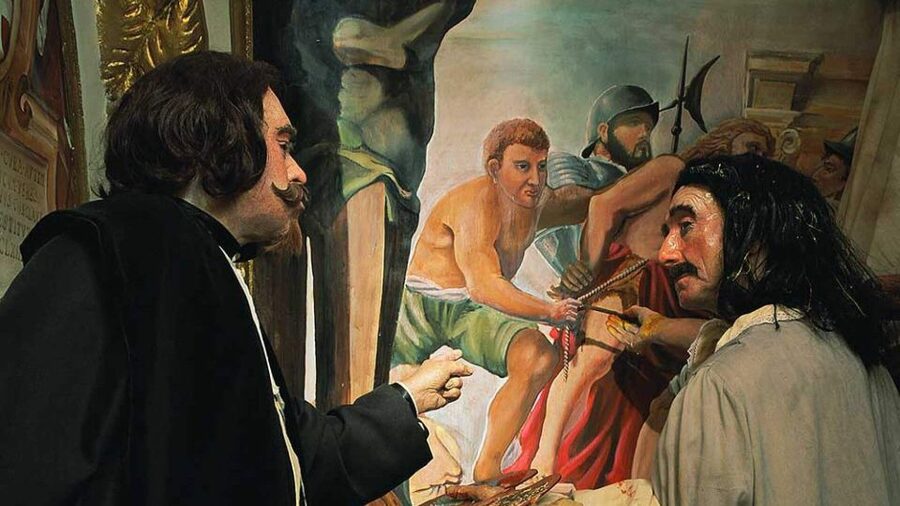
The museum works best as one stop among several in Mdina, rather than the sole reason to visit the city. Its short length leaves time for the rest of the old city, and the open ticket lets you choose the moment that suits your schedule.
You might use it early in the day to learn the basic story before seeing Mdina’s historic streets. Or you might visit later, when you want an indoor break from walking. Since the attraction includes darkened scenes, projected images, sound, and dramatic lighting, it offers a change of pace from outdoor sightseeing.
Give yourself enough time to check in and listen to the full presentation. Rushing through the scenes would reduce the benefit of the narration. The museum is not a place to wander in and out casually, since the ticket is for one-time entry.
If you are visiting with children, explain that the figures are part of a historical display and that the battle and disaster scenes may be dramatic. The attraction is intended for all ages, but young children may respond differently to the lighting and sound.
What the experience gets right, and where it falls short
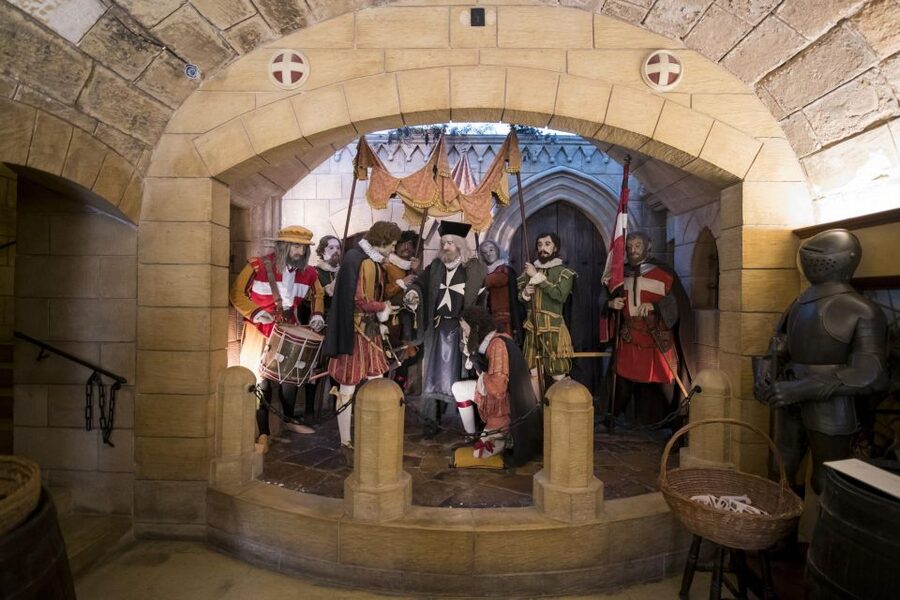
The museum gets the basics right by telling a large story in a short space. It connects the Knights with warfare, hospitals, architecture, leadership, and ordinary life instead of presenting them as only armored soldiers.
Its 13-language audio guide is another real strength. You can choose the language that lets you follow the story most comfortably, and groups with different language needs can still visit together.
The 34 scenes also give the attraction a clear visual identity. The full-size figures and reconstructed interiors make the visit feel more immediate than a simple room of text panels. The use of lighting and sound adds drama without requiring a live performance.
The limits are just as clear. The museum does not offer a detailed academic account, and the storytelling can be approximate. The short running time means that major subjects receive only brief treatment. If you want exact dates, long explanations, or original historical objects, you will need to pair this visit with other museums and historic sites in Malta.
I see that as a matter of expectations rather than a fatal flaw. Treat the attraction as a compact history show. It can help you understand the broad role of the Knights, but it should not replace a serious study of Malta’s past.
Should you book the Knights of Malta Museum?
Book it if you want a 40-minute introduction to the Knights, value multilingual narration, and enjoy historical scenes brought to life with lighting and digital effects. At $8, it is an easy addition to a day in Mdina, especially for families and first-time visitors.
Skip it if your main goal is original artifacts, detailed scholarship, or a fully accessible venue. The presentation may feel repetitive to people who already know the subject, and the hearing and mobility restrictions are important considerations.
For most visitors, the best reason to go is practical: the museum gives you a readable overview before you encounter Malta’s fortresses, hospitals, churches, and grand buildings elsewhere. Go with modest expectations, listen to the commentary, and allow the attraction to serve as a short historical primer rather than a full museum day.
FAQ
How long does the Knights of Malta Museum visit take?
The full experience takes approximately 40 minutes, including the introductory 3D digital audio-visual presentation and the walk-through display.
What does the museum ticket include?
The ticket includes admission to the Knights of Malta Museum and the audio-visual introduction with recorded commentary in 13 languages.
Which languages are available for the audio guide?
The audio commentary is available in English, German, French, Dutch, Spanish, Italian, Russian, Greek, Swedish, Danish, Norwegian, Japanese, and Maltese.
Can I use the ticket on any day?
Yes. The ticket is open and can be used on any day during the museum’s opening hours. It allows one-time entry only, with no re-entry.
Is the museum open every day?
The museum is open Monday through Sunday throughout the year, except on December 25. Opening hours may change, so confirm them during your stay in Malta.
Is the museum wheelchair accessible?
No. The venue is not wheelchair accessible, and strollers are not permitted inside. A secure storage place is available for strollers.
Is the museum suitable for visitors with hearing impairments?
The experience is not suitable for people with hearing impairments because the audio commentary is a central part of the presentation.
Just added around Mdina
- Malta: 5 hr Vintage Bus Tour – Mdina & Blue Grotto inc. food★ 5.0 · 22 reviews
- Valletta & Mdina: Private Tour★ 4.5 · 16 reviews
- Shore Excursion: Private Full-Day Tour of Valletta & Mdina★ 5.0 · 4 reviews
- Private Tour in Malta Prehistoric Temples & Mdina★ 5.0 · 4 reviews
- Rabat Mdina and San Anton Gardens Group Tour with St. Paul’s Catacombs★ 3.5 · 16 reviews
- Valletta, Mosta and Mdina Night Tour★ 3.5 · 15 reviews
- Malta Shore Excursion: Private tour of Valletta and Mdina★ 4.5 · 8 reviews
- Malta Private tour: 5hr Mosta Dome, Mdina, Dingli Cliff’s & Blue Grotto★ 4.5 · 36 reviews
Museums, compared.

Malta Classic Car Collection Museum Entry Ticket
Read our review →
Skip the Line: Malta Classic Car Museum Admission Ticket
Read our review →
Casa Rocca Piccola Palace and Museum Entrance Ticket
Read our review →
St. Paul’s Cathedral and Mdina Museum Entrance Ticket
Read our review →
Casa Rocca Piccola palace & museum entrance ticket
Read our review →
Palazzo Falson Historic House Museum entrance ticket
Read our review →
Aviation Museum, Mosta Church, WWII Shelters inc. Platter
Read our review →Browse the lists this tour appears in