
REVIEW · WORKSHOPS
Maltese Tile – Souvenir painting workshop with local
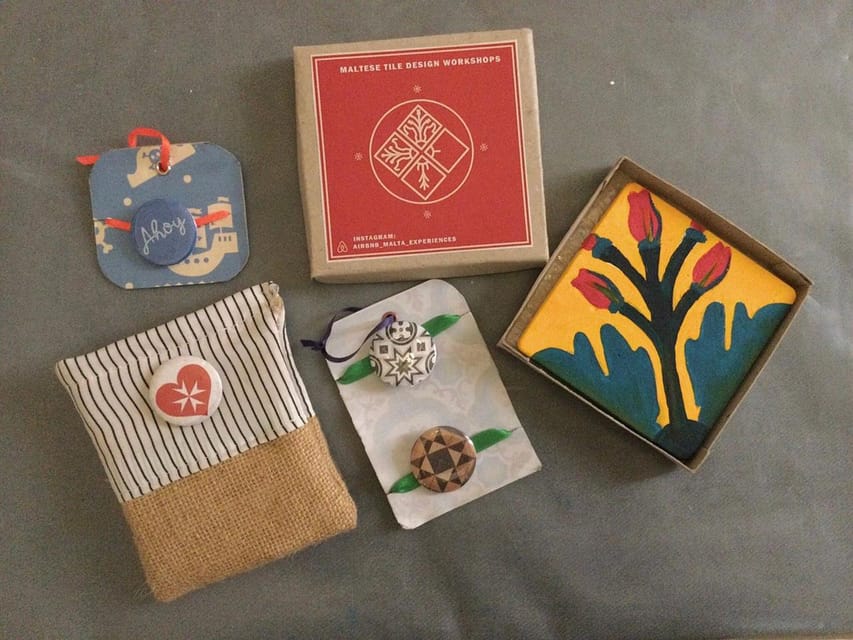
Maltese tile making gives you something better than a shop-bought keepsake: a small piece of Malta that you design and paint yourself. In Clive’s traditional townhouse studio, you learn the basic story of Maltese tiles, make a white cement tile, transfer a pattern, and paint it before taking it home.
I like the personal teaching and the chance to work in a real home being turned into a living arts space. I also like the useful souvenir: your 10 x 10 cm tile is ready to carry away, with no kiln visit or waiting period. The main consideration is that two hours usually allows for one tile, so anyone hoping to make a large set will need extra time and pay €4 for each additional tile.
In This Review
- Key points to know before you book
- A small Maltese craft with a personal result
- Entering Clive’s townhouse studio
- From white cement to painted tile
- Why the teaching makes a difference
- A good break from Malta’s outdoor heat
- What the $41 price really buys you
- Who will enjoy this most
- Practical planning for your two hours
- Extra browsing after the tile
- Should you book the Maltese Tile workshop?
- FAQ
- How long does the Maltese Tile workshop take?
- What will I make during the workshop?
- Can I take my tile home immediately?
- Is the workshop suitable for beginners?
- Are children allowed to join?
- What is included in the price?
Key points to know before you book
- You meet Clive in a traditional Maltese townhouse, not a large commercial craft studio.
- The workshop combines a short cultural introduction with hands-on making, so you learn how the tile moves from idea to finished object.
- You design or choose a pattern, transfer it to the mold, and paint your own 10 x 10 cm white cement tile.
- Your tile goes home with you immediately, packed in one of Clive’s handmade boxes.
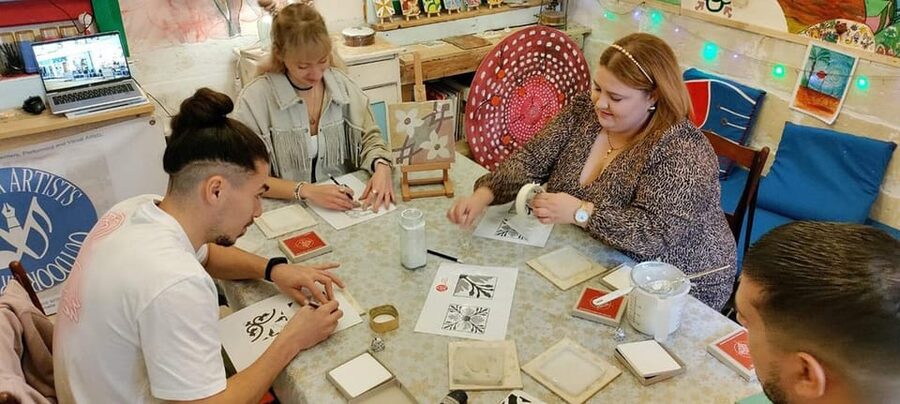
- Groups are limited to six, which leaves room for patient help and conversation.
- Tea, coffee, or water is included, and extra tiles cost €4 each. Take-home kits begin at €5.
A small Maltese craft with a personal result
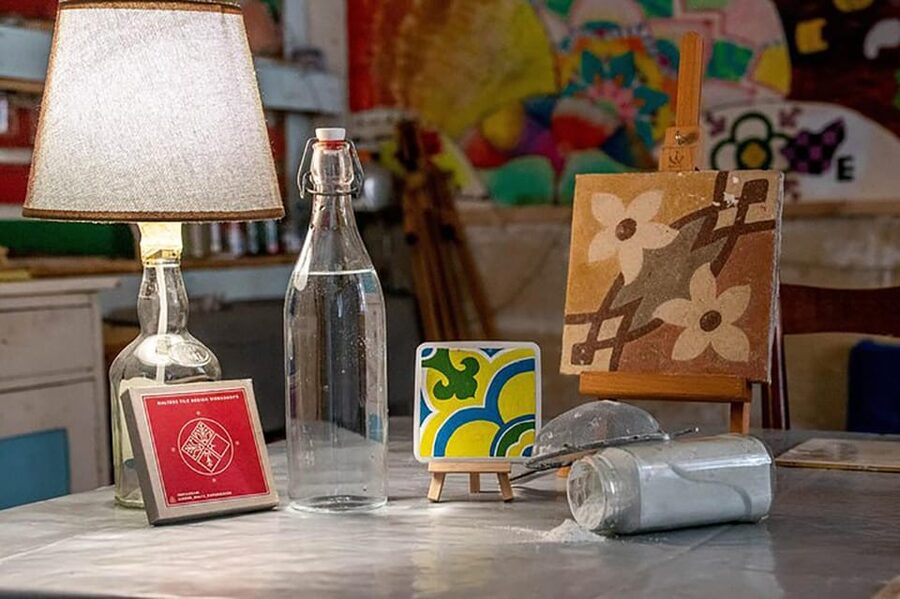
The appeal here is simple. You spend two hours making something that carries a clear connection to Malta, rather than buying another generic magnet or postcard. The finished tile is coaster-sized, practical, and personal, even if your painting skills stop at neat lines and simple shapes.
Clive introduces you to the Maltese tile before you pick up a brush. That short background matters because the design is not just decoration. Maltese tiles form part of the island’s visual culture, and the workshop gives you enough context to understand why patterns and handmade surfaces matter.
This is not a formal art course. You do not need training, a steady artist’s hand, or a finished idea before arriving. You can create your own pattern, or choose from designs already available. Clive then shows you how to move the idea onto the mold and complete the painting.
I would describe the pace as calm rather than rushed. The activity is designed to fill about two hours, with time to listen, ask questions, sketch, paint, and talk. That makes it a good counterpoint to Malta’s hot streets, crowded sightseeing areas, and long days of churches, fortifications, and museums.
A few more Malta trips to weigh up
- Malta: First Experience Scuba Diving Lesson
★ 4.6 · 415 reviews - Malta: Chocolate Making Workshop
★ 4.8 · 80 reviews - Malta: Truffle Making Master Class
★ 4.9 · 53 reviews
Entering Clive’s townhouse studio
You go directly to Clive’s place at number 23. Look for the brown and white door, the typical closed white Maltese balcony, and the house on a slightly sloped road. Since this is a private home and working studio, checking the door details before you set out is wise.
The studio sits in an Urban Conservation area, inside a traditional Maltese townhouse that Clive is converting into a living arts space. That setting gives the workshop a stronger sense of place than a standard activity room. You are not simply being handed materials at a craft table. You are entering the kind of old domestic setting that helps explain Malta’s built character.
The house also sets the mood. Feedback about the experience repeatedly points to the relaxed welcome, the attractive studio, and Clive’s easy conversation. He is described as patient, funny, friendly, and happy to answer questions about both tiles and Malta. Those details matter if you are booking alone or joining with people you do not know.
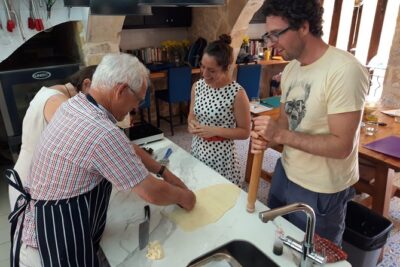
The group limit is six. That is small enough for Clive to look at your design, explain a tricky step, or help you correct a painting problem without leaving you waiting for long. It also keeps the social side manageable. You can chat with other participants, but the workshop should not feel like a crowded class.
From white cement to painted tile
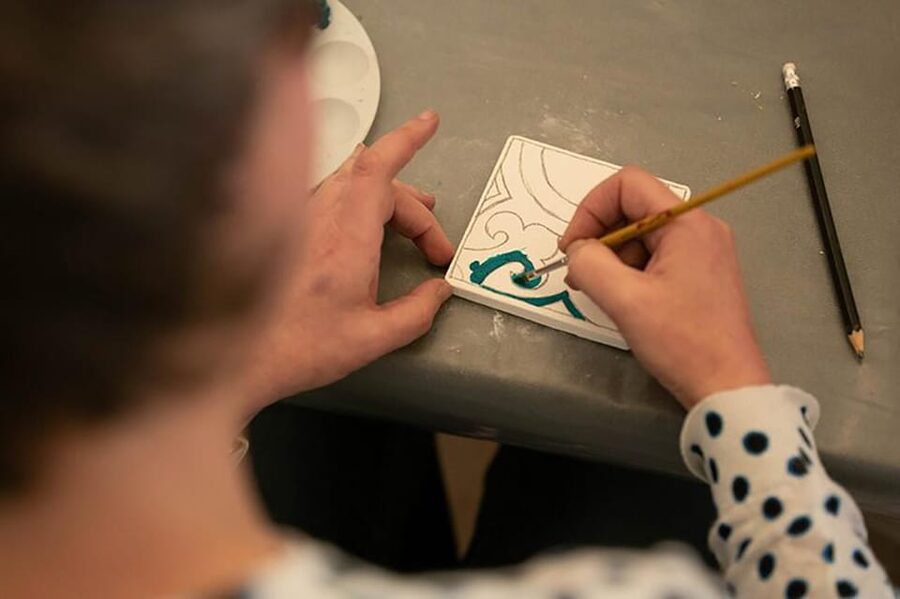
The making process has several clear stages. First, you receive a brief introduction to Maltese tiles and their place in local art and culture. Then you create the base for a coaster-sized tile from white cement. The finished piece measures 10 x 10 cm.
Next comes the design. You may work from a pattern you create yourself, or use one of the designs Clive has available. If you are not confident with drawing, this choice takes away much of the pressure. You still make the final decisions about color and painting, but you are not forced to start with a blank page.
Clive shows you how to transfer the pattern to the mold. This is a useful part of the class because it connects the visual idea with the physical object. You see how a design must fit the tile, how the shape guides the paint, and how a simple motif can become a finished Maltese souvenir.
The final step is painting. This is where the workshop becomes distinctly yours. Two people can begin with the same suggested pattern and finish with very different tiles. One may use careful, restrained colors, while another may make the design bright and bold. Neither approach requires advanced skill.
The tile does not need to be baked after the workshop. That practical point makes the experience especially convenient. You can paint it, let the process finish during the session, and take it away straight away in one of Clive’s handmade boxes. You do not need to return to the studio later or arrange shipping.
Why the teaching makes a difference
The strongest part of this activity is not simply the materials. It is the access to a local artist who also works as an educator and runs a non-profit organisation. Clive’s role gives the session a more human shape. You are learning from someone who can explain the craft, guide beginners, and keep the conversation moving.
Several people who enjoyed the workshop also appreciated the wider talk about Malta. Clive can answer questions beyond the tile itself, and some participants received ideas for the rest of their time on the island. That does not turn the activity into a sightseeing tour, but it adds value if you want conversation with a local rather than a short, scripted demonstration.
I would especially recommend this for anyone who says I am not artistic. The process is broken into manageable stages, and you can use a prepared design. A parent and child, two friends, a couple, or a solo participant can all work at their own level.
The activity is also suitable for team-building. A small group can make individual tiles while sharing the same table and teacher. The work is quiet enough for conversation, yet active enough to keep everyone involved.
Same islands, a completely different day out:
- Malta: Gozo & Comino Islands, Blue Lagoon & Seacaves Tour
★ 4.5 · 15,672 reviews - Comino: Blue Lagoon, Crystal Lagoon, and Seacaves Tour
★ 4.6 · 5,673 reviews - Malta: Blue Lagoon, Beaches & Bays Trip by Catamaran
★ 4.7 · 5,496 reviews - Malta: Gozo, Comino, Blue & Crystal Lagoon, & Caves Cruise
★ 4.6 · 5,092 reviews
A good break from Malta’s outdoor heat
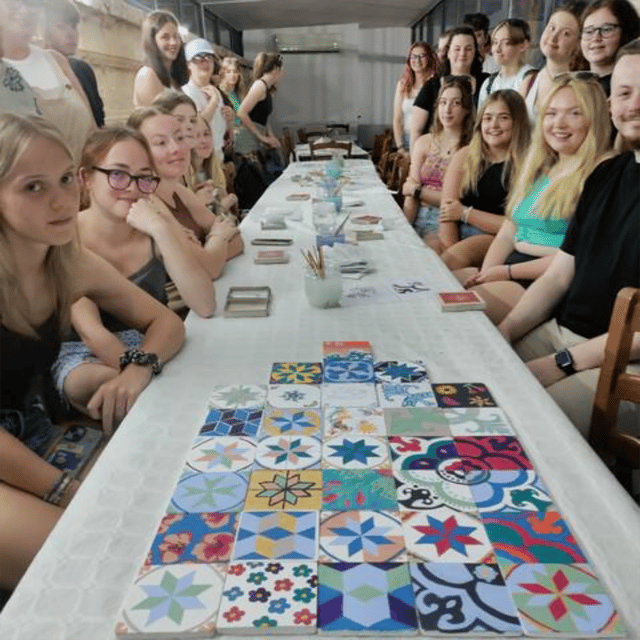
Malta rewards outdoor sightseeing, but the sun can make a long day tiring. This workshop gives you a cool, seated activity without asking you to spend two hours in another museum. The painting also creates a slower rhythm. You have time to focus on one small task instead of moving from one major sight to the next.
That makes the class useful on a very hot day, and one participant specifically found it a good choice when the weather became too warm outside. It can also work well near the start of a holiday, when you want a gentle introduction to Maltese culture, or near the end, when you would like to make a souvenir rather than shop for one.
Tea, coffee, or water is included. Clive may also offer simple refreshments such as tea and biscuits, as part of the welcoming studio atmosphere. Do not book this expecting a meal. The drinks are a thoughtful extra, not the reason to choose the activity.
Bring prescription glasses if you use them. The painting and pattern-transfer work involve small details, so clear vision will make the session easier and more comfortable.
What the $41 price really buys you
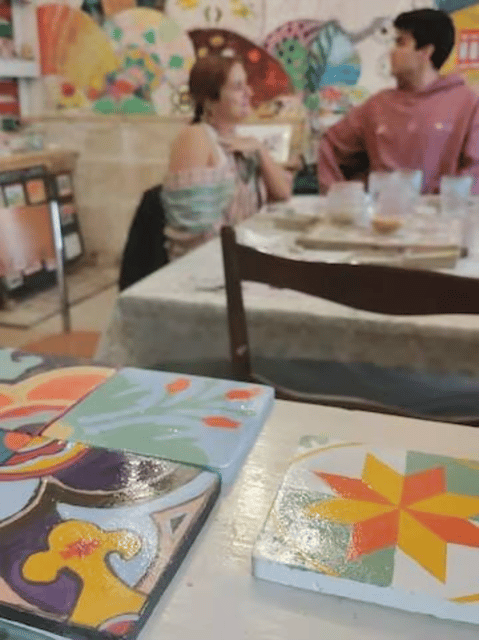
At $41 per person, this is not the cheapest way to fill two hours in Malta. Its value comes from the combination of instruction, materials, a local setting, and a finished object you take home.
You are paying for more than a blank tile and paint. The price includes the tutorial by a qualified teacher, all painting material, the cement tile activity, and a drink. You also receive guidance from concept through completion, plus the handmade box for carrying the tile.
A shop-bought tile may cost less, especially if you only want decoration. The workshop earns its price if you care about the process and the story behind the object. You leave knowing how the tile was made and having taken part in the design, which gives the souvenir more meaning.
If one tile is not enough, you can make more for €4 each. You can also buy a tile kit to take home, starting at €5. These options are useful for families or groups who want to make gifts, though the extra work may extend beyond the standard two-hour session.
The small group limit also helps the value. With no more than six participants, the class is unlikely to feel like a production line. If you prefer a large social event or a quick demonstration with little personal instruction, this may feel slower than you want. For most people choosing a hands-on craft class, the small scale is a benefit.
Who will enjoy this most
This activity suits you if you like local culture, making things with your hands, or bringing home a souvenir with a story. It is also a strong choice for solo visitors. The small group and Clive’s conversational teaching give you a natural way to meet people without signing up for a full-day group tour.
Couples can make matching or contrasting tiles. Families can share the design ideas, though children under six are not allowed. Older children can take part, and a 12-year-old has enjoyed the activity alongside an adult. Since the design can be simplified, a child does not need the same painting ability as the rest of the group.
It works for beginners and people with more art experience. Beginners receive structure and ready-made patterns. More confident painters can create a personal design and spend more time on color, detail, and finish.
I would be less likely to recommend it if you want a fast, purely historical presentation, or if you are looking for a major sightseeing stop. This is a seated craft workshop in a private studio. Its rewards are conversation, concentration, and the object you make, not famous architecture or sweeping views.
Practical planning for your two hours
Allow the full two hours. Making one tile normally takes that long, and the session includes the introduction, mold work, design transfer, and painting. Arriving with a simple idea can help, but you can also use one of the available patterns.
Wear something you can relax in while painting. The supplied information does not set out a dress code or promise stain-proof materials, so ordinary craft-session caution makes sense. Keep your design manageable for a 10 x 10 cm surface. Small tiles reward clear patterns more than overly complex drawings.
Find the exact house before your appointment. The meeting point is direct at number 23, with the brown and white door and closed white balcony as visual clues. The slightly sloped road is worth noting if you are watching your footing or carrying luggage.
The activity is taught in English. If you need another language, confirm before booking, since English is the stated teaching language. Dates and starting times depend on availability, and you are asked to contact Clive if your preferred date does not appear open.
Free cancellation is available up to 24 hours before the activity for a full refund. You can also reserve now and pay later, which helps if your Malta schedule is still changing.
Extra browsing after the tile
Clive’s studio may also have postcards and handmade items available to browse. That gives you another chance to find a small local object, though the main souvenir remains the tile you paint yourself.
The handmade box is a particularly useful touch. A wet or delicate craft can be awkward to carry through the rest of a holiday, but the box gives your finished tile some protection and makes it easier to pack. You still need to handle it with care, but you are not leaving with a loose painted square in your hand.
The experience also gives you a souvenir tied to a specific memory: the townhouse, the pattern, the conversation, and the time spent making it. That is a better fit for you if objects matter because of the story attached to them.
Should you book the Maltese Tile workshop?
Book it if you want a quiet, social, hands-on activity with a local artist and a finished Maltese keepsake. The strongest reasons are Clive’s patient teaching, the traditional townhouse setting, and the fact that you take your tile home immediately without waiting for it to be baked.
The $41 cost is fair for a two-hour guided workshop with materials, a drink, a small group, and a handmade box. It is less compelling if you only want the cheapest souvenir or if your Malta schedule is packed with major sights.
For a solo visitor, creative beginner, family with children over six, or couple looking for a shared activity, this is an easy choice. Bring your glasses if you need them, follow the address clues carefully, and arrive ready to make something small, useful, and unmistakably your own.
FAQ
How long does the Maltese Tile workshop take?
The activity lasts two hours. Making one tile usually takes about that long, including the introduction, design work, tile making, and painting.
What will I make during the workshop?
You will create and paint a 10 x 10 cm coaster-sized tile using white cement. You can design your own pattern or choose from patterns provided at the studio.
Can I take my tile home immediately?
Yes. The tile does not need to be baked, so you can take it with you after painting. It is placed in one of the host’s handmade boxes.
Is the workshop suitable for beginners?
Yes. The activity is suitable for beginners and advanced participants. A tutorial by a qualified teacher is included, and you can use an available pattern if you do not want to create your own.
Are children allowed to join?
Children under six are not permitted. The activity has been enjoyed by older children, including a 12-year-old.
What is included in the price?
The $41 price includes painting materials, instruction from a qualified teacher, and coffee, tea, or water. Additional tiles cost €4 each, and take-home tile kits start at €5.
Just added around Malta
- Malta: 5 hr Vintage Bus Tour – Mdina & Blue Grotto inc. food★ 5.0 · 22 reviews
- Wakeboarding Adventure in Malta: Learn to Ride★ 5.0 · 4 reviews
- World War II Malta Full-Day Walking Tour★ 4.3 · 18 reviews
- Valletta Street Food & History Tour With Private Transfers★ 4.5 · 15 reviews
- Victoria, Gozo: Sunset Walking Food and Drink Tour★ 5.0 · 6 reviews
- Valletta: Private Massage from a world renowned masseuse★ 4.6 · 9 reviews
- Valletta & Mdina: Private Tour★ 4.5 · 16 reviews
- Valletta: Private Maltese Cuisine Walking Tour★ 4.8 · 8 reviews
Workshops, compared.


Workshop: Maltese Souvenir Tile Design Experience
Read our review →
Browse the lists this tour appears in