
REVIEW · WORKSHOPS
Workshop: Maltese Souvenir Tile Design Experience
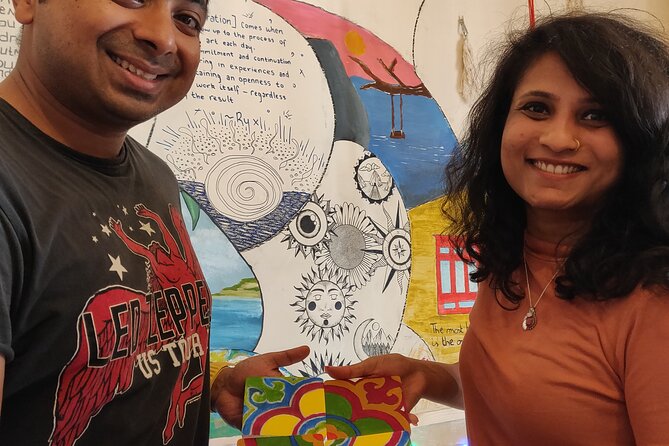
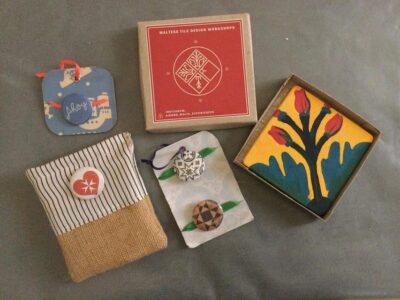
Maltese tile making gives you something many sightseeing stops cannot: a souvenir you make yourself. In Clive’s small art studio in Marsa, you learn about local tile traditions, create a 10-by-10-centimeter tile, and paint it as a coaster for your home.
I like the personal setting and the calm pace. Clive guides you from the first design idea through the mold and painting, while the traditional house adds character. I also like that beginners need no art background. The main consideration is that the tile is air-dried cement or plaster, not kiln-fired ceramic, so this is a craft keepsake rather than a museum-grade pottery piece.
In This Review
- At a glance: what makes this workshop worth your time
- Why a Maltese tile makes a better souvenir
- Entering Clive’s Marsa art studio
- From Maltese tile history to your first pattern
- Making the 10-centimeter tile
- Painting with quick-drying acrylics
- What Clive adds to the experience
- Who will enjoy this two-hour activity
- Price, timing, and what you take home
- A few practical limits to consider
- How this compares with typical Malta sightseeing
- Should you book the Maltese Souvenir Tile Design Experience?
- FAQ
- Where does the Maltese tile workshop take place?
- How long does the activity last?
- What will I make during the workshop?
- Do I need previous art experience?
- Is the tile fired in an oven?
- Can I make more than one tile?
- Is the workshop offered in English?
- What happens if the experience is canceled?
At a glance: what makes this workshop worth your time
- A handmade Maltese souvenir: You leave with the tile you designed and painted yourself.
- Clive’s personal instruction: The host explains the process, Maltese art, and local culture in a friendly, informal setting.
- A traditional Marsa house: The studio is on the ground floor of an eclectic house that Clive is gradually refurbishing.
- Suitable for all skill levels: You can use an available traditional pattern or create your own.
- A useful two-hour indoor break: The tile is small enough to become a coffee coaster and the studio offers shelter from Malta’s strong sun.
- A flexible extra: If time allows, you can make another tile for an additional €3.
Why a Maltese tile makes a better souvenir
Souvenir shopping in Malta often ends with the same question: where will I put this when I get home? A 10-by-10-centimeter tile gives you a practical answer. It can serve as a coaster, sit on a shelf, or become a small piece of wall decoration.
The better part is the personal link. You are not simply buying a pattern made in a factory. You are choosing or designing the pattern, transferring it to the tile, and painting it by hand. Small flaws become part of the memory. You will remember the afternoon in Marsa each time you put down a cup of coffee.
The workshop also gives you a little cultural context before the hands-on work begins. Clive provides brief historical information about Maltese tiles and explains how the traditional method works. That introduction helps you see tile patterns as more than pretty decoration. You begin to notice how design, color, and local craft connect.
This is not a long formal lecture. The information is there to support the activity, not take it over. If you want a full academic history of Mediterranean ceramics, this is not the right appointment. If you want enough background to understand what you are making, the balance is sensible.
A few more Malta trips to weigh up
- Malta: First Experience Scuba Diving Lesson
★ 4.6 · 415 reviews - Malta: Chocolate Making Workshop
★ 4.8 · 80 reviews - Malta: Truffle Making Master Class
★ 4.9 · 53 reviews
Entering Clive’s Marsa art studio
The meeting point is 23 Gizwiti, Il-Marsa MRS 1562. The activity takes place in a small art studio on the ground floor of a traditional house, not in a large commercial school or a polished visitor center.
That setting matters. The house has been described as eclectic and artistic, with Clive slowly refurbishing it. You get a glimpse of an artist’s working world rather than a standard tourist room. The atmosphere is part of the experience, though you should be comfortable with a personal studio that may feel informal and lived-in.
One practical warning is worth taking seriously: Google Maps may direct you to the wrong side of the street. There are several number 23 addresses in the area, so check the location carefully before setting out. The meeting point is also near public transportation, which helps if you are not using a car.
The activity begins and ends at the same address. It is a private experience, so only your own group takes part. That makes it easier to ask questions, work at your own pace, and get help with a design without competing for the instructor’s attention.
From Maltese tile history to your first pattern
Clive starts with a short explanation of Maltese tiles and their traditional use. The aim is not to load you with dates and technical terms. Instead, you get the context needed to understand the shapes and patterns available for your project.
You can research and design your own pattern, or choose one of the designs provided in the studio. This is an important choice. If you enjoy drawing, you have room to make the tile personal. If you would rather focus on painting and avoid staring at a blank surface, an existing Maltese pattern gives you a helpful starting point.
I would choose a pattern before trying to invent something too elaborate. The finished tile is small, and a design with clear shapes will be easier to transfer and paint cleanly. You can still make color choices and add your own character without creating a complicated drawing.
Clive helps you through the process and offers an opinion when asked. The instruction is practical rather than strict. You are not expected to copy a pattern perfectly, and the class is designed for both beginners and people with more experience.
Making the 10-centimeter tile
The workshop then moves from planning to construction. You make a replica tile from plaster or white cement, using plaster in the mold-making process. The design is transferred to the mold before the tile is painted.
This sequence gives the class more substance than a simple paint-and-take activity. You see how a pattern moves from an idea on paper to a physical form. The steps are manageable, but they also introduce you to a real craft process.
The tile measures 10 by 10 centimeters. That size is large enough for a visible design but small enough to finish in about two hours. It also makes the final piece easy to pack for the journey home.
You should dress comfortably. This is a hands-on art session, and you will be working with plaster or cement before moving on to acrylic paint. The information provided does not promise a kiln, firing, or a ceramic production process, so keep your expectations clear from the start.
Same islands, a completely different day out:
- Malta: Gozo & Comino Islands, Blue Lagoon & Seacaves Tour
★ 4.5 · 15,672 reviews - Comino: Blue Lagoon, Crystal Lagoon, and Seacaves Tour
★ 4.6 · 5,673 reviews - Malta: Blue Lagoon, Beaches & Bays Trip by Catamaran
★ 4.7 · 5,496 reviews - Malta: Gozo, Comino, Blue & Crystal Lagoon, & Caves Cruise
★ 4.6 · 5,092 reviews
Painting with quick-drying acrylics
Once the design is on the tile, you paint it with acrylics. The quick-drying medium suits a short workshop because you can make steady progress without waiting for a long firing or curing stage.
Acrylics also make the activity approachable. You can concentrate on color and brush control rather than complex ceramic glazing. Clive remains available to help, but the pace allows you to work independently when you feel ready.
Many people find repetitive painting relaxing, and this workshop gives you two hours away from Malta’s traffic, crowds, and bright outdoor heat. It is still connected to the place you are visiting, but it does not demand the constant movement of a sightseeing tour.
The finished item is not baked in an oven. It is air-dried and made with cement, as described for the experience. That means you should handle it as a handmade decorative object and coaster, not as a high-fired ceramic tile designed for heavy wear.
What Clive adds to the experience
Clive is central to the workshop. He teaches the tile process, answers questions about Maltese art and culture, and talks about his own artistic styles. The session therefore feels broader than a technical lesson.
His approach appears especially useful if you are unsure of your artistic ability. He helps with each step, gives an opinion when you ask for one, and allows you to paint at your own speed. That is the right combination for a class where people may arrive with very different levels of confidence.
The personal contact also creates room for questions that would not fit into a standard city tour. You can ask about Maltese art, local culture, or the tile tradition while your hands are busy. One of the pleasures of the workshop is that the conversation and the craft support each other.
The class is offered in English. Photos are included in the price, giving you a record of the process as well as the finished tile. That is a small but useful touch, especially if you want more than a single final snapshot.
Who will enjoy this two-hour activity
This workshop suits couples, families, solo visitors, and small private groups. It also works well across ages, since the process can be simplified or made more ambitious depending on the participant.
You do not need to call yourself an artist. The available patterns give you a safe route into the activity, and Clive provides help from design through painting. At the same time, experienced painters are not limited to a basic children’s craft. You can research your own design and make more personal choices.
It is particularly useful for a family group with mixed interests. Someone who dislikes long museum visits can work with their hands, while someone interested in Maltese art can ask questions and study the patterns. A teenager interested in crafts should find enough freedom to make the tile feel like their own.
I would also consider it on a hot afternoon. Malta offers plenty of outdoor attractions, but two hours in an indoor studio gives you a cultural activity without more sun exposure. The workshop still feels tied to Malta, so you are not giving up local interest just to rest.
Price, timing, and what you take home
The listed price is $35.95 per person for about two hours. For a private, instructor-led activity that includes the tile, materials, instruction, and photos, that is a fair price if you value a personal souvenir and active participation.
It is less attractive if you only want a cheap painted object. You are paying for Clive’s time, the studio setting, the cultural explanation, and the full process from pattern to finished piece. The value improves for people who enjoy learning a skill rather than simply collecting another item.
The standard experience includes one tile. If you move quickly and have enough time, you may be able to make an additional tile for €3. This is not guaranteed, so treat it as an option rather than part of the main plan.
Your tile goes home with you in a box, according to the practical details shared for the activity. Since it is air-dried, pack it with care. The small format helps, but a handmade cement or plaster piece can still chip if pushed loose into a suitcase.
The activity is often reserved about 20 days ahead. That pattern suggests you should book before your Malta trip if the dates matter to you, especially because the experience requires a minimum number of participants and may be canceled if that minimum is not met.
A few practical limits to consider
The cancellation terms are strict. The experience is non-refundable and cannot be changed for any reason once booked. If you cancel or request an amendment, you do not receive the money back.
There are exceptions when the operator cancels. Poor weather or failure to meet the minimum number of participants can lead to a new date, another experience, or a full refund. The weather condition may seem unusual for an indoor workshop, but it is part of the stated operating terms, so read them before paying.
Confirmation normally arrives at booking. If you book within two days of travel, confirmation may arrive within 48 hours and remains subject to availability. I would avoid leaving this one to the last minute if your schedule is tight.
Service animals are allowed, and the activity is near public transportation. Most people can participate. The information does not give detailed accessibility measurements for the traditional house, so if you have specific mobility needs, ask before booking.
How this compares with typical Malta sightseeing
Malta is full of boat trips, churches, archaeological sites, and museums. Those are worthwhile, but they often leave you with photographs and memories rather than something you made.
This workshop offers a different rhythm. You spend less time looking and more time doing. The historical explanation is short, the instruction is direct, and the painting gives you a quiet focus that can be welcome after a day of sightseeing.
The tradeoff is scale. You will not see several towns or major landmarks during these two hours. You will not receive a broad survey of Maltese history. What you get is narrower and more personal: one craft, one local host, one small studio, and one tile.
That narrow focus is exactly why I would add it to a trip already filled with churches and ruins. It gives you contact with contemporary Maltese creativity and a souvenir tied to your own effort. It is also a good way to slow down without wasting an afternoon.
Should you book the Maltese Souvenir Tile Design Experience?
Book it if you want a hands-on cultural activity and like the idea of bringing home an object you made in Malta. It is a strong choice for couples, families, craft lovers, and anyone who wants a quiet indoor break with a local artist.
Skip it if your schedule is so tight that you only want major sights, or if you specifically want a kiln-fired ceramic tile. The finished piece is air-dried plaster or cement, and the booking terms are strict.
For most visitors who enjoy making things, the price is reasonable for a two-hour private workshop with materials, photos, guidance, and a personal souvenir. Check the Marsa address carefully, book ahead, wear comfortable clothes, and let Clive guide you through the process. You may return home with more than a tile. You may also pick up a small craft you can use again.
FAQ
Where does the Maltese tile workshop take place?
The activity takes place at 23 Gizwiti, Il-Marsa MRS 1562, Malta, in Clive’s small art studio inside a traditional house. It ends at the same meeting point.
How long does the activity last?
The workshop lasts approximately two hours.
What will I make during the workshop?
You will make one 10-by-10-centimeter replica tile from plaster or white cement and paint it with acrylics. It can be used as a coffee coaster.
Do I need previous art experience?
No. The activity is designed for beginners and advanced participants. You can use one of the available patterns or create your own design.
Is the tile fired in an oven?
No. The tile is air-dried and made with cement, as described for the activity. It is not baked in an oven.
Can I make more than one tile?
You may be able to make an extra tile if time is available. The additional tile costs €3.
Is the workshop offered in English?
Yes. The activity is offered in English.
What happens if the experience is canceled?
If the operator cancels because of poor weather or because the minimum number of participants is not met, you will be offered a different date or experience, or a full refund. Personal cancellations and amendments are non-refundable.
Just added around Malta
- Malta: 5 hr Vintage Bus Tour – Mdina & Blue Grotto inc. food★ 5.0 · 22 reviews
- Wakeboarding Adventure in Malta: Learn to Ride★ 5.0 · 4 reviews
- World War II Malta Full-Day Walking Tour★ 4.3 · 18 reviews
- Valletta Street Food & History Tour With Private Transfers★ 4.5 · 15 reviews
- Victoria, Gozo: Sunset Walking Food and Drink Tour★ 5.0 · 6 reviews
- Valletta & Mdina: Private Tour★ 4.5 · 16 reviews
- Valletta: Private Maltese Cuisine Walking Tour★ 4.8 · 8 reviews
- Valletta: Private Massage from a world renowned masseuse★ 4.6 · 9 reviews
Workshops, compared.


Maltese Tile – Souvenir painting workshop with local
Read our review →
Browse the lists this tour appears in