
REVIEW · MALTESE FOOD TOURS
Medina, Rabat and the pastizzi experience
Mdina’s stone lanes lead into a quieter side of Malta, where a cathedral, medieval courts, art collections, Roman remains, and Christian catacombs fit into one compact walk. The final stop is wonderfully down-to-earth: a hot or cold drink and a pastizz, Malta’s flaky, inexpensive pastry snack, at Is-Serkin Crystal Palace Bar.
I like the small maximum group of six, which should make it easier to hear the guide and ask questions. I also like the mix of grand history and ordinary food culture, especially the shift from Mdina’s formal monuments to Rabat’s local café life.
The main caution is the weather. This is a walking activity with an outdoor route, and the experience requires good weather. Strong heat, wind, or rain can affect your comfort, so bring water, sun protection, and sensible shoes.
In This Review
- Key points to know before you book
- Why this walk works so well in Mdina and Rabat
- Starting at Saint Paul’s Cathedral
- Medieval government at the old law courts
- Art inside one of Mdina’s oldest houses
- Malta’s only Roman museum
- Rabat, Malta’s quieter neighbor
- Christian catacombs and Malta’s early faith
- Is-Serkin Crystal Palace Bar and the pastizzi finish
- What the $65 price really buys
- Heat, rain, and the practical side of the walk
- Who should choose this Mdina food and history tour
- Should you book Medina, Rabat and the pastizzi experience?
- FAQ
- Where does the tour begin?
- What time does the activity start?
- How long does the tour last?
- Where does the tour end?
- What is included at the food stop?
- How many people can join the tour?
- Is the Rabat portion included?
- Are catacombs part of the experience?
- Are service animals allowed?
- What happens if the weather is poor?
- What is the cancellation deadline?
Key points to know before you book
- Mdina Gate start: Meet at Mdina Gate at 2:30 pm, then return to the same meeting point.
- Five historic themes in one walk: See a major cathedral, medieval law courts, a fine art museum, a Roman museum, and Christian burial sites.
- Rabat adds a different mood: The suburb beside Mdina is tied to the Roman city of Melita and to the early Christian story of Malta.
- Pastizzi are included: Finish at Is-Serkin Crystal Palace Bar with pastizzi and your choice of tea, coffee, or beer.
- Small-group format: The activity accepts a maximum of six people, a useful advantage on narrow streets.
- Guide-led storytelling: Julia is noted for friendly, funny, personal explanations, while Silvia is also described as able to convey real feeling for Malta’s history.
Why this walk works so well in Mdina and Rabat

Mdina and Rabat sit side by side, but they offer different kinds of Malta. Mdina gives you the fortified, ceremonial side of the island. Rabat feels more connected to daily life and to the early Christian past.
That contrast gives this tour a clear shape. You begin among major religious and civic sites, then move through museums and Roman remains before ending with a cheap, beloved snack. I like that progression because it keeps the outing from becoming a string of stone façades with dates attached.
The walk lasts about two and a half hours. That is long enough for a proper introduction without taking up an entire day. You should still expect to spend much of the time on foot, so comfortable footwear matters more than dressing up for Mdina’s elegant setting.
A group capped at six is another strong point. Small numbers do not guarantee a perfect guide or a leisurely pace, but they usually make a walking tour more personal. You can hear explanations more easily, and the guide has a better chance to adjust the conversation to your interests.
More mdina tours in Malta:
- Malta: Highlights of Malta & Mdina Full Day Tour with Lunch
★ 4.4 · 2,688 reviews - Malta: Mdina and Rabat Walking Tour with Catacombs
★ 4.8 · 1,126 reviews - Malta: Mdina, Dingli Cliffs and San Anton Botanical Gardens
★ 4.3 · 991 reviews
Starting at Saint Paul’s Cathedral
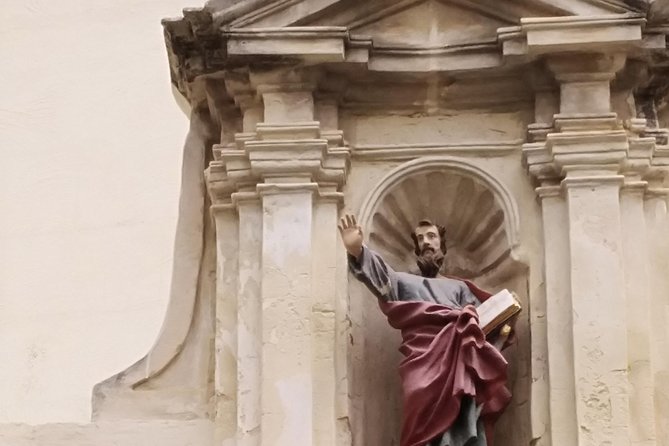
The tour begins at the Cathedral of Saint Paul, described as the most important church among Malta’s 365 churches. It is also the seat of the Diocese, giving the building an important place in the country’s religious life.
The site reaches back much further than the present church. The same spot has been occupied since the 9th century BC, so this is not simply a stop to admire a church façade. It gives the guide a chance to explain how one location can carry layers of Maltese history across ancient, medieval, and later periods.
You should pay attention to the sense of continuity here. Malta’s story is often presented through separate eras, but the cathedral site helps connect them. Ancient settlement, Roman Malta, medieval government, and Christian tradition all sit close together.
The available details do not state that an interior admission ticket is included, so you should treat this primarily as a guided exterior and historical stop unless the guide confirms otherwise. That is worth keeping in mind if entering the cathedral is a priority for you.
Medieval government at the old law courts
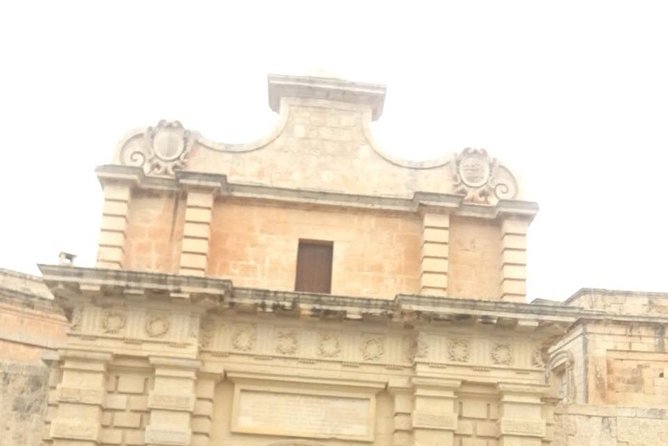
The next historical layer appears at the old law courts of the Universitas. In medieval Malta, the Universitas was the feudal government, so these buildings point to how law and administration worked before the modern state.
This stop is valuable because it moves beyond the usual church-centered story. You get a look at civic power, local government, and the machinery that shaped life in medieval Mdina.
I like stops such as this because they make the city easier to read. A pretty street becomes more meaningful when you know which buildings served religion, which served government, and which housed collections or public institutions.
The tour is not presented as a long formal lecture at each site. Its appeal is the way the guide connects several places in a short route. Julia, one of the guides associated with this experience, is described as friendly, attentive, funny, and especially good at making historical information feel approachable. That style suits this kind of compact walking tour.
Art inside one of Mdina’s oldest houses
One of Mdina’s oldest houses now holds a museum of fine art collections. This stop adds an indoor cultural note to the streets and ruins, and it gives you a chance to see how a historic residence can serve a new purpose.
The attraction here is the combination of building and collection. You are not only looking at art in a neutral gallery setting. You are also considering the age and character of the house that contains it.
The supplied details do not identify the museum by name or confirm an included admission ticket. Ask the guide at the start what access is planned that day. If the walk only covers the exterior, the stop still helps explain Mdina’s domestic and artistic side, but you should not book it solely for guaranteed museum entry.
That small uncertainty is one of the few points I would clarify before paying $65. The tour’s value rests mainly on the guide, the route, and the food stop, rather than on a promise of lengthy museum visits.
More maltese food tours in Malta:
- Valletta Food Tour
★ 5.0 · 711 reviews - Valletta: Maltese Food and Drink Guided Walking Tour
★ 4.7 · 601 reviews - Valletta Food Tour – Eat like a local
★ 5.0 · 137 reviews - The Valletta Food Tour Experience, a private tour
★ 5.0 · 30 reviews
Malta’s only Roman museum
The route then reaches the only Roman museum in Malta. That makes it a useful stop for understanding the Roman city that once occupied the area.
The museum helps anchor the Roman period in a specific place. Instead of treating Roman Malta as a distant chapter, you can connect it to the streets of Mdina and Rabat around you.
The activity information does not spell out which objects or rooms you will see, nor does it state whether admission is included. Keep your expectations measured. This is a short walking experience covering several sites, not a specialist Roman archaeology tour.
Still, the stop earns its place. The cathedral introduces long religious continuity, the old courts show medieval authority, and the Roman museum supplies an earlier civic layer. Together they give the walk a useful historical range.
Rabat, Malta’s quieter neighbor
After Mdina, the tour spends about 45 minutes in Rabat. The name means suburb, and Rabat is presented as the suburb of Mdina. In the Roman period, both formed part of the city of Melita.
Rabat also has a special place in Malta’s Christian story. It is described as the cradle of Christianity in Malta, which gives the area a different tone from Mdina’s fortified streets and aristocratic image.
I like this part of the outing for its change of pace. You are still close to one of Malta’s most famous historic centers, but the mood becomes calmer and more residential. The experience promises tranquility in the city of Malta, and Rabat is where that promise makes the most sense.
The route gives you enough time to understand Rabat without turning the tour into a full-day archaeological program. Forty-five minutes is a useful middle ground. You get context and a feel for the area, but you may want a separate visit if you hope to examine every historic site in detail.
Christian catacombs and Malta’s early faith
The walk includes part of Rabat’s Christian catacombs. Malta has many catacomb burial places, with the vast majority found in Rabat, so this stop adds an important underground and funerary dimension to the route.
The word part matters. You should not expect an extended visit to every catacomb complex in the area. The tour includes a section connected to the Christian burial sites, and the guide’s explanation is likely to be central to understanding what you see.
This is also where the earlier stops begin to connect. The cathedral represents Malta’s continuing Christian identity, while the catacombs show an earlier stage of Christian practice and burial. The Roman museum and the catacombs together give you a more complete view of the period when Malta changed under Roman rule.
If enclosed spaces are difficult for you, ask about the exact catacomb portion when you meet the guide. The information confirms the inclusion of part of the catacombs, but it does not describe access conditions or the length of time underground.
Is-Serkin Crystal Palace Bar and the pastizzi finish
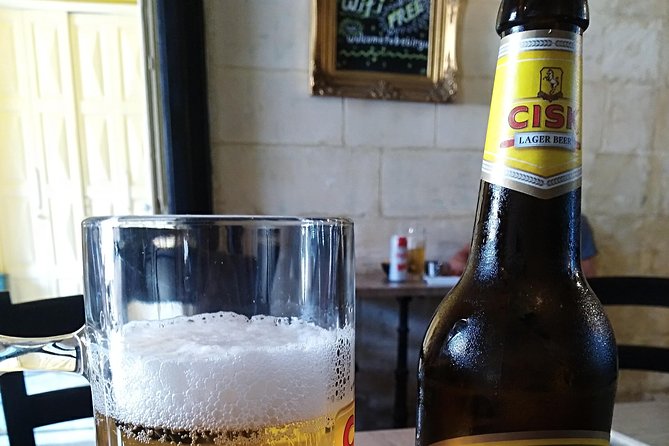
The final stop is Is-Serkin Crystal Palace Bar, known here for serving Malta’s favorite inexpensive snack, pastizzi. This is not a decorative finale. It is a chance to try a piece of everyday Maltese food culture in a local bar setting.
A pastizz is a small pastry snack, typically valued for being cheap, filling, and easy to eat. The activity includes the snack, along with a seasonal choice of tea, coffee, or beer. In winter, a hot drink suits the pastry. In summer, a cold beer is suggested as the better partner.
This ending is one of the tour’s strongest ideas. After churches, courts, museums, Roman remains, and catacombs, you get something simple and social. Food gives the history a local voice. It also makes the $65 price easier to judge, since you are not paying only for a route between landmarks.
The food stop lasts about 20 minutes. That is enough for a taste, a drink, and conversation, but not a full meal. If you arrive hungry, think of the pastizz as a snack rather than lunch.
You should advise the provider about food allergies when booking. The tour includes a specific pastry, and the available information does not list its ingredients or promise alternatives.
What the $65 price really buys
At $65, this is not the cheapest way to see Mdina and Rabat. The value comes from the compact route and the human explanation, not from a long list of included admissions.
You are paying for about two and a half hours with a guide, a maximum group size of six, a planned visit through several important sites, and an included pastizzi stop. Rabat itself has no admission ticket listed, and the activity details do not confirm paid entry to the cathedral, art museum, Roman museum, or catacombs.
That means you should compare this with what you want from your day. If you mainly need directions and exterior views, you could explore Mdina and Rabat independently for less. If you want the sites connected into one clear story, and you prefer a small group over a large bus tour, the price is easier to justify.
The guide is especially important here. Julia is described as passionate, polite, understanding, informative, and entertaining. She has also guided visitors in Valletta and Mdina, and her explanations are said to include Maltese food, culture, and personal insight. Silvia is also praised for conveying her feeling for the city rather than simply reciting facts.
The experience has a rating of 4.7 from 19 reviews, with 95 percent recommending it. Those figures suggest strong satisfaction, but the sample is small. I would treat them as a helpful sign, not a guarantee that every departure will feel identical.
Heat, rain, and the practical side of the walk
The start time is 2:30 pm. That can be pleasant in cooler weather, but the timing deserves attention in summer. One reported outing took place in 104-degree heat, while another went ahead in wind and cold. The guide helped make those conditions manageable, but weather still changes the comfort of a walking tour.
Wear shoes with good support and bring water. Sun protection is sensible in hot weather, and a light layer helps when wind moves through exposed streets. The route’s exact surface details are not provided, so I would not assume it is effortless for every mobility level.
The activity is listed as suitable for most people, near public transportation, and welcoming to service animals. Mobile tickets are available, and confirmation is provided at booking.
Poor weather can lead to a different date or a full refund. The experience also requires a minimum number of participants, so a cancellation for that reason can result in a new date, another experience, or a full refund. For a full refund under the normal cancellation rule, cancel at least 24 hours before the 2:30 pm start time. Changes or cancellations within 24 hours are not refunded.
Who should choose this Mdina food and history tour
I would choose this activity if you want a short, guided introduction to Mdina and Rabat rather than a deep visit to one museum or catacomb complex. It suits first-time visitors who want the major themes explained without committing a full day.
It also fits people who enjoy a guide’s personality. The strongest praise is directed at Julia’s warmth, humor, care, and ability to connect history with Maltese culture. That matters on a small walking tour, where the guide shapes nearly the whole experience.
Food-minded visitors should appreciate the pastizzi stop, especially if you want a local snack rather than a formal restaurant meal. Families and small groups may also like the six-person limit, though the information only says most people can participate and does not give a specific child age policy.
I would look elsewhere if you want guaranteed lengthy interior visits, a full meal, or a broad tour of Malta beyond Mdina and Rabat. The itinerary is focused, and that is both its strength and its limit.
Should you book Medina, Rabat and the pastizzi experience?
Book it if you want history with a human voice, a small group, and a genuine Maltese snack at the end. The route covers an impressive range in 150 minutes: ancient religious ground, medieval government, fine art, Roman Malta, Christian burial sites, and present-day food culture.
Before booking, confirm what interior admissions are included and tell the provider about any food allergies. Also check the forecast, since this is a weather-dependent walk.
For $65, I see the best value in the guide-led connections between places, the group size, and the chance to finish at Is-Serkin rather than at another grand monument. It is a good choice for a first look at Mdina and Rabat, provided you arrive ready to walk and accept that the cathedrals, museums, and catacombs may be brief stops rather than full visits.
FAQ
Where does the tour begin?
The tour begins at Mdina Gate, Mdina, Malta.
What time does the activity start?
The scheduled start time is 2:30 pm.
How long does the tour last?
The tour lasts approximately two hours and 30 minutes.
Where does the tour end?
The activity ends back at the meeting point.
What is included at the food stop?
Pastizzi are included, along with a seasonal choice of tea, coffee, or beer at Is-Serkin Crystal Palace Bar.
How many people can join the tour?
The activity has a maximum of six participants.
Is the Rabat portion included?
Yes. The tour includes about 45 minutes in Rabat, the suburb of Mdina and part of the Roman city of Melita.
Are catacombs part of the experience?
Yes. The tour includes part of Rabat’s Christian catacombs.
Are service animals allowed?
Yes, service animals are allowed.
What happens if the weather is poor?
If poor weather causes cancellation, you will be offered a different date or a full refund.
What is the cancellation deadline?
You can cancel at least 24 hours before the start time for a full refund. Cancellations or changes made within 24 hours are not refunded or accepted.
Just added around Malta
- Malta: 5 hr Vintage Bus Tour – Mdina & Blue Grotto inc. food★ 5.0 · 22 reviews
- Wakeboarding Adventure in Malta: Learn to Ride★ 5.0 · 4 reviews
- World War II Malta Full-Day Walking Tour★ 4.3 · 18 reviews
- Valletta Street Food & History Tour With Private Transfers★ 4.5 · 15 reviews
- Victoria, Gozo: Sunset Walking Food and Drink Tour★ 5.0 · 6 reviews
- Valletta & Mdina: Private Tour★ 4.5 · 16 reviews
- Valletta: Private Maltese Cuisine Walking Tour★ 4.8 · 8 reviews
- Valletta: Private Massage from a world renowned masseuse★ 4.6 · 9 reviews
Maltese Food Tours, compared.




The Valletta Food Tour Experience, a private tour
Read our review →

Browse the lists this tour appears in