
REVIEW · WALKING TOURS
The Grand Tour of Valletta: A walking tour of Valletta.
Valletta’s story is unusually compact and unusually dramatic. In two hours, you move from the Great Siege of 1565 and the Knights of Malta to the city’s wartime damage, with a guide who uses theatrical storytelling rather than simply reading dates from a page. The result is a lively introduction to a fortified city built for conflict, ceremony, and faith.
I like the small-group feel, since you can ask questions without shouting across a crowd. I also like the way guides such as Rafa and Leyla bring an acting and arts background to the stories, especially the curious mix of knightly luxury, religious vows, and everyday gossip. The one drawback is pace: if you prefer constant walking, you may find the longer stops a little fact-heavy.
In This Review
- Key points at a glance
- Why Valletta’s story works so well on foot
- Meeting at Triton Fountain
- Royal Opera House and Valletta’s public face
- Auberge de Castille and the Knights’ political world
- Upper Barrakka Gardens and the best pause for photographs
- The stories behind St. John’s and the Grandmaster’s Palace
- How the guides shape the experience
- Is $24 a fair price for two hours?
- Who will enjoy this walk most?
- Practical details before you book
- Should you book the Grand Tour of Valletta?
- FAQ
- Where does the Grand Tour of Valletta start?
- Where does the tour finish?
- How long does the tour last?
- What language is the tour conducted in?
- What is included in the price?
- Are museum entrance tickets included?
- Does the route include Upper Barrakka Gardens?
- Does the tour visit the Royal Opera House?
- Does the tour visit Auberge de Castille?
- Is the tour wheelchair accessible?
- Can I cancel for a full refund?
- Can I reserve now and pay later?
Key points at a glance
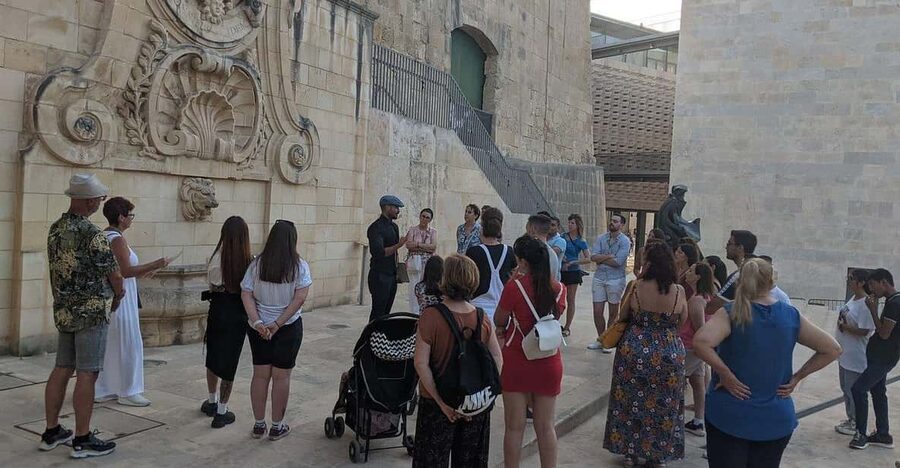
- The Knights of Malta take center stage: Hear about the Great Siege, the crusading order, knightly life, and their vow of chastity.
- Three useful Valletta stops: The route includes the Royal Opera House, Auberge de Castille, and Upper Barrakka Gardens.
- Upper Barrakka is the main photo stop: Allow time to take in the views and ask questions here.
- Theatrical guides make the past easier to picture: Rafa, Leyla, Leila, and Layla are among the guides praised for lively delivery and clear explanations.
- A good first look at Valletta: The two-hour walk gives you a framework for later visits to places such as St. John’s Co-Cathedral and the Grandmaster’s Palace.
- Straightforward value at $24: The fee covers the professional English-speaking guide, while museum entrance fees are separate.
Why Valletta’s story works so well on foot
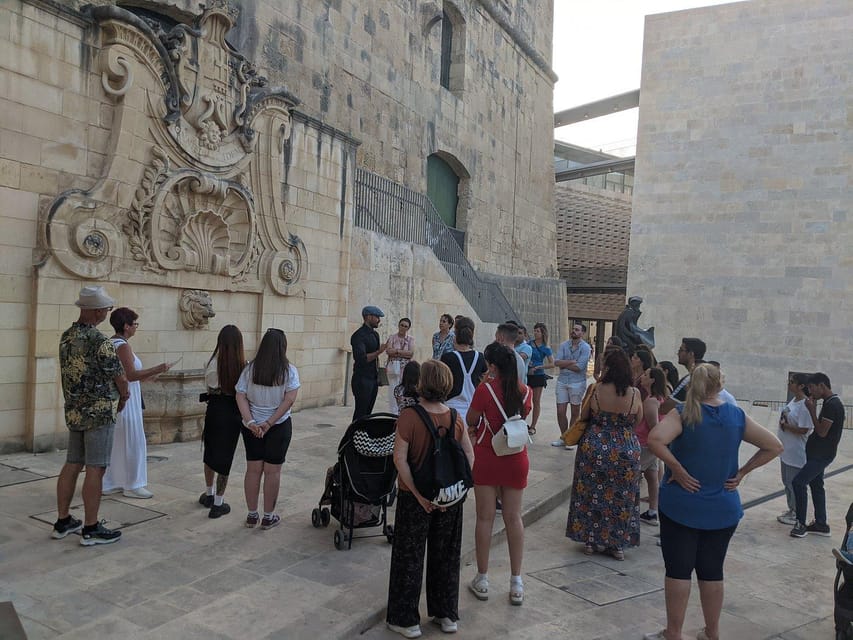
Valletta is not a city where history sits in one isolated museum. It is built into the streets, walls, palaces, gardens, and formal buildings around you. That makes a walking tour a sensible first step, since the guide can connect the city’s grand design with the events that shaped it.
The central story begins with the Knights of Malta and the Great Siege of 1565, described here as the bloodiest battle of the 16th century. You hear how the order’s military role, religious life, and public image came together. The tour also follows the Knights from their crusading period through their time in Malta and on to their continuing legacy.
I especially like that the experience does not stop at military history. You also hear about lavish knightly living and the odd tension between a knight’s religious vows and his privileged lifestyle. That human detail gives the subject more bite than a simple list of rulers and battles.
Valletta’s later history enters the picture too. The city was nearly destroyed during the Second World War, so the walk is not only about a distant age of fortifications and armored knights. It shows you a place that has had to rebuild, adapt, and keep its identity through very different kinds of conflict.
A few more Valletta trips to weigh up
- The Original Valletta Walking Tour
★ 5.0 · 2,719 reviews - Valletta: 3-Hour Walking Tour
★ 4.7 · 1,605 reviews - Valletta: Guided City Walking Tour
★ 4.8 · 1,256 reviews
Meeting at Triton Fountain
The tour begins at Triton Fountain, outside the fortified city area. Look for the guide holding a HOUSE OF TOURS board. This is the detail to keep in mind on arrival, since the fountain is a broad public meeting area and a clear sign is easier to spot than a guide standing alone in a crowd.
Starting here gives you a useful sense of arrival. You are positioned at the entrance to Valletta, ready to move from the modern approach into the historic city. The opening section should help you get oriented before the route reaches its grander buildings and viewpoints.
The walk lasts about two hours. That is long enough to cover several important locations without turning into an all-day history course. It also means you should wear comfortable shoes and be ready for a city walk rather than a coach excursion. The experience is wheelchair accessible, which is useful for anyone checking access before booking.
The tour is in English, with a live guide. If you want explanations in another language, this is not the right choice, since English is the only language specified.
Royal Opera House and Valletta’s public face
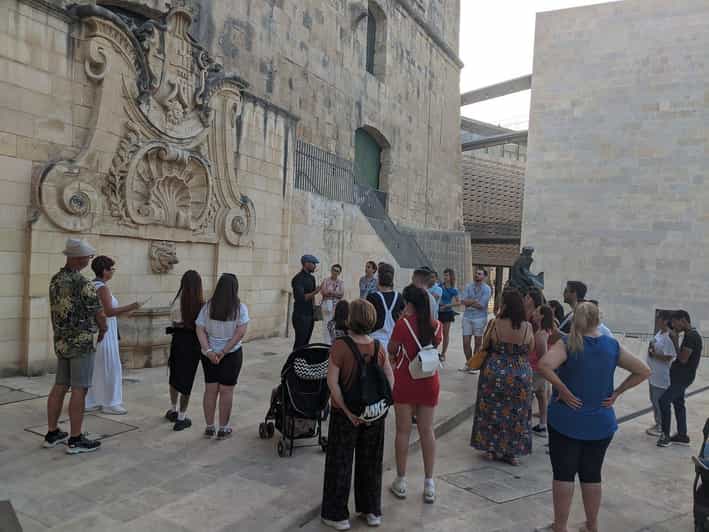
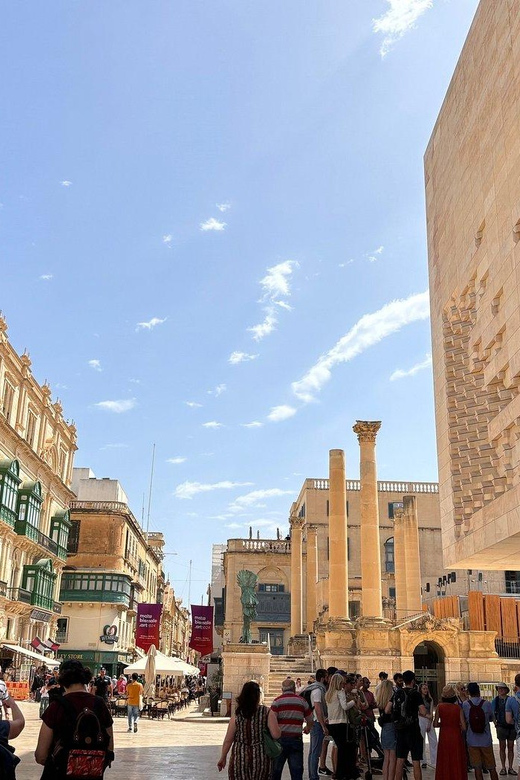
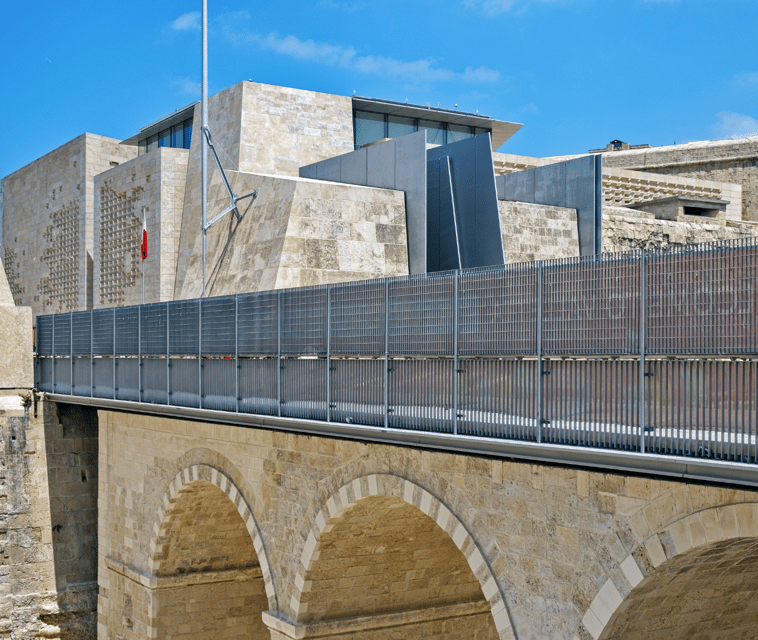
The first listed stop is the Royal Opera House, where the guided explanation lasts about eight minutes. This is a short stop, but it helps show that Valletta is not only a fortress. It has also been a city of public culture, ceremony, and performance.
A brief stop here works well for orientation. You get a taste of the city’s civic character before moving to buildings tied more directly to the ruling order and government. The guide’s style matters at this point. A plain description can make any grand building blur into the next one, while a well-told anecdote helps you remember why the place matters.
This is also one of the moments when the tour’s theatrical approach should be most useful. Several guides, including Rafa and Leyla, have been praised for making the material entertaining and easy to follow. Leyla has an arts and acting background, and that kind of delivery suits Valletta, where the setting itself feels built for ceremony and drama.
Do not expect a long visit inside the Royal Opera House from the information provided. The stop is a guided exterior or location-based explanation lasting around eight minutes, and museum entrance tickets are not included.
Auberge de Castille and the Knights’ political world
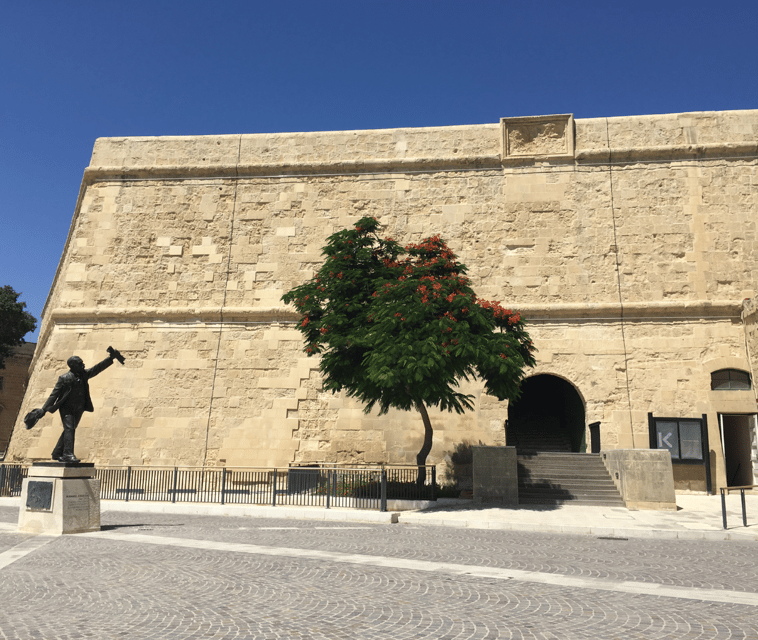
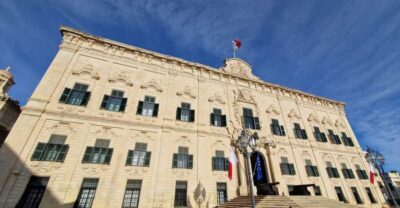
The route continues to Auberge de Castille, with another guided stop of about eight minutes. This building helps shift the focus from public entertainment to the organization and power of the Knights of Malta.
Here, the stories about the order’s origins, its role after the Crusades, and its place in Valletta’s government have a natural setting. You can expect the guide to explain how the Knights were not simply soldiers. They were also a religious order with a formal hierarchy, major responsibilities, and a taste for ceremony.
The tour’s most memorable material is likely to come through the details rather than the building alone. You hear about a knight’s life, the order’s vows, and the gap between religious discipline and lavish surroundings. That contrast gives you something to think about as you look at the city’s grand architecture.
This stop may feel short if you want a full architectural visit. That is part of the trade-off. The tour is designed to give you a broad picture of Valletta, not to provide extended time inside each major building. If your main goal is a detailed visit to every palace and church, you will need to return independently.
Same islands, a completely different day out:
- From Malta: Full-Day Gozo UTV Tour with Lunch and Boat Ride
★ 4.6 · 4,408 reviews - From Malta: Full-Day Gozo Quad Tour with Lunch and Boat Ride
★ 4.8 · 1,419 reviews - Valletta: Street Food and Culture Walking Tour
★ 4.8 · 1,251 reviews - Gozo Full-Day Jeep Tour with Private Boat to Gozo & return
★ 4.5 · 1,048 reviews
Upper Barrakka Gardens and the best pause for photographs
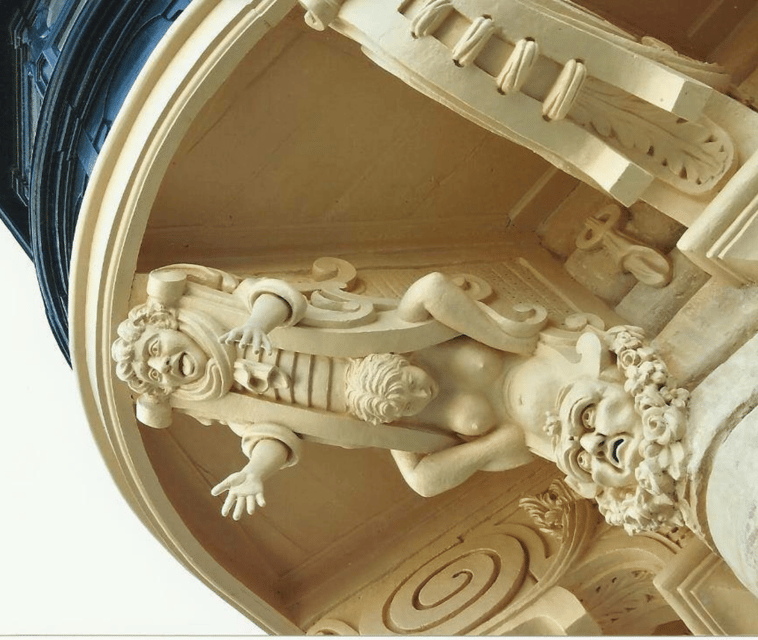
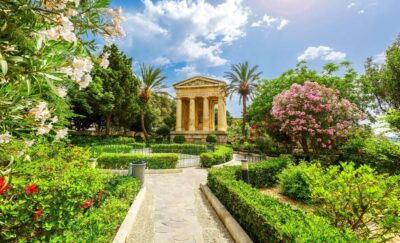
The longest planned stop is Upper Barrakka Gardens, with about 15 minutes for a guided explanation and photographs. This is the point where the tour pauses for the city’s wider setting, giving you a chance to look beyond the close walls and streets.
Bring your camera here. The gardens are the clearest photo stop named on the route, and the elevated position helps you understand Valletta’s relationship with its harbor and surrounding fortifications. The view also gives scale to the story you have been hearing. Fortified walls make more sense when you can see how the city sits above the water and controls its approaches.
The stop is long enough for a few photographs and questions, but it is not a leisurely garden visit. If you want extensive time for pictures, build that into your own schedule before or after the tour. The guide will be moving the group onward after the explanation.
I like this part of the route because it breaks up the historical talk with space and light. The earlier stops focus on buildings and institutions. Upper Barrakka lets you connect those institutions to the physical setting that made Valletta such a powerful stronghold.
The stories behind St. John’s and the Grandmaster’s Palace
The tour description also points to major Valletta sights such as St. John’s Co-Cathedral and the Grandmaster’s Palace, along with lesser-known stories and local anecdotes. These places are central to understanding the Knights and the city’s public image.
Do not assume that the $24 fee includes entry to these interiors. Museum entrance tickets are not included, and the listed route specifically names the Royal Opera House, Auberge de Castille, and Upper Barrakka Gardens as its stops. The tour can give you context for the major sights, but you should plan separate admission if you want to go inside.
That arrangement can be good value. You first learn what you are looking at, then decide which building deserves your time and entrance fee. St. John’s Co-Cathedral, the Grandmaster’s Palace, and other attractions are easier to appreciate when you understand the Knights’ role before stepping through the doors.
The guide’s anecdotes are an important part of the experience. You may hear gossip, small human stories, and details that do not appear on a basic city map. One useful connection is the link between the Knights of St. John and St. John Ambulance in the United Kingdom. That kind of detail helps the order’s history reach beyond Malta.
How the guides shape the experience
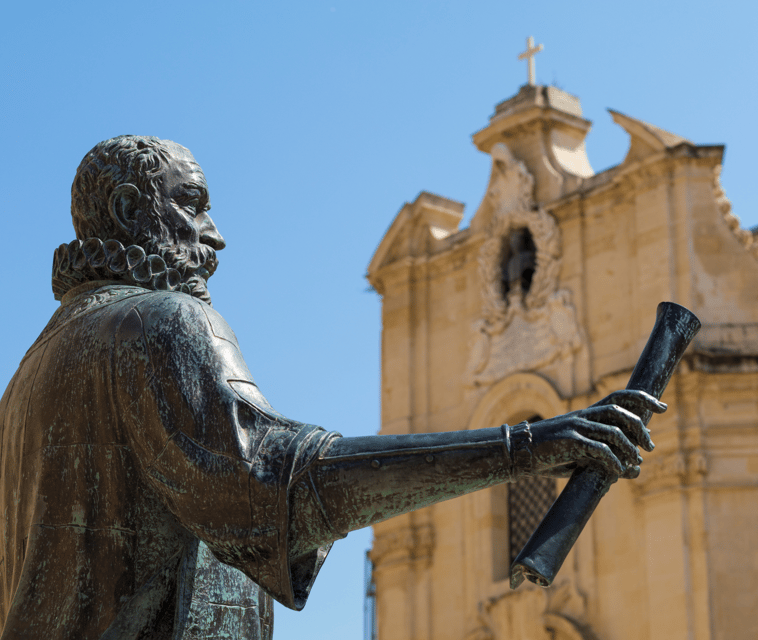
The strongest feature of this tour is the guide. The format leaves room for a personable presenter to make the city memorable, and the guide names associated with the experience include Rafa, Leyla, Leila, and Layla. Spellings vary in the information provided, so do not book expecting one particular person unless the operator confirms your guide.
Rafa is noted for making the subject interesting and for taking time with questions. Leyla and Leila are praised for clear explanations of Malta’s origins, the Knights, and the city’s complex religious and colonial past. One guide’s arts and acting background adds a natural fit with the promised theatrical storytelling.
That does not mean every minute will be a dramatic performance. You are still receiving a history tour, and some sections involve a lot of information. The best approach is to ask questions when something catches your attention. You are encouraged to do so, and the intimate format makes that easier.
The experience has an overall rating of 4.9 from 23 reviews, with nearly all of the supplied ratings giving five stars. The useful pattern is clear: friendly delivery, strong history explanations, and willingness to answer questions are the main reasons to choose it. The one four-star assessment offers a fair warning: someone wanting more walking and shorter fact stops may prefer a faster-paced route.
Is $24 a fair price for two hours?
At $24 per person, this is a reasonable price for a guided introduction to Valletta. You are paying for a professional guide, live explanations, and a route that links several key places rather than simply pointing them out on a map.
The value is highest if you are new to Malta or want a historical framework before exploring alone. Two hours with a good guide can save you from wandering past important buildings without knowing why they matter. It can also help you decide which paid sights deserve your attention later.
The value is lower if you already know Valletta’s history or want long interior visits. Entrance fees are not included, and the tour does not replace a visit to St. John’s Co-Cathedral or the Grandmaster’s Palace. Think of it as an introduction and orientation, not a complete sightseeing pass.
Free cancellation up to 24 hours before the tour adds useful flexibility. You can also reserve now and pay later, which helps if your Malta plans are still shifting. Check the available starting times when booking, since the duration is fixed at two hours but the start time can vary.
Who will enjoy this walk most?
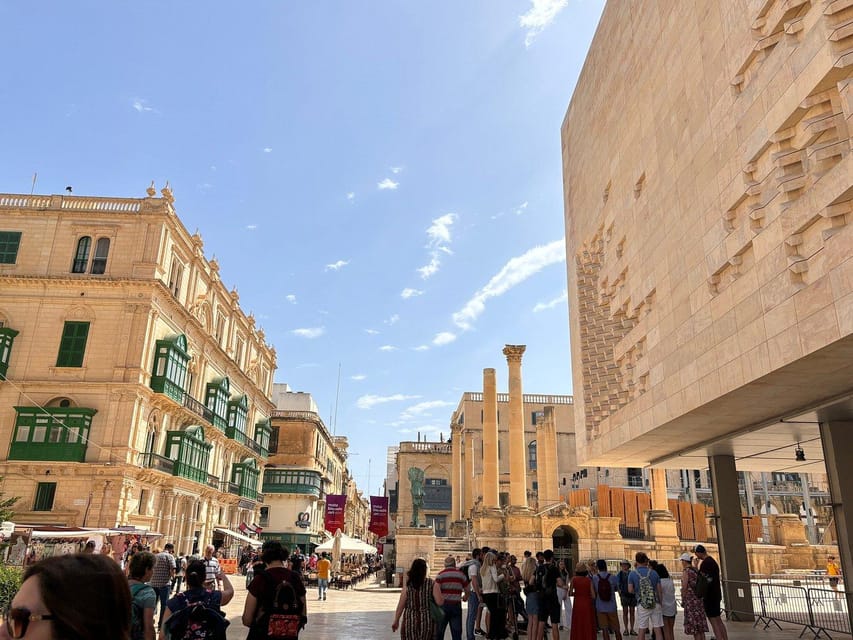
I would choose this tour for a first visit to Valletta, especially if you want the city’s history explained in plain English. It suits people who enjoy stories about rulers, battles, religion, architecture, and human behavior more than those who simply want a quick list of photo stops.
It is also a good fit for families and mixed-age groups if the guide keeps the storytelling lively. Knights, sieges, secretive vows, extravagant living, and wartime destruction give the subject enough drama to hold attention.
History fans should get particular value from it. The tour covers Malta’s origins, the Knights from their crusading period to the present, and the religious and colonial forces that shaped Valletta. You can then use the remaining part of your day to visit the interiors that interest you most.
You may want another option if you dislike guided explanations or prefer a fast walking pace. The route includes several stationary talks, and the four-star feedback makes clear that some people would rather spend less time hearing facts and more time moving through the streets.
Practical details before you book
Meet at Triton Fountain and look for the HOUSE OF TOURS board. The guide will be around the fountain, so arrive with enough time to locate the sign without rushing.
The tour is two hours and conducted in English by a live professional guide. Museum entrance tickets are not included, so budget separately for any attractions you plan to enter.
Comfortable footwear makes sense, even though the route is not presented as a strenuous hike. You will be walking between central Valletta locations and stopping at viewpoints and historic buildings.
The tour is wheelchair accessible. If you need precise information about the surface, route gradients, or access to any optional indoor attractions, confirm those details with the operator before booking.
Should you book the Grand Tour of Valletta?
Book it if you want a lively historical foundation before exploring Valletta on your own. At $24, the price is fair, the route covers useful landmarks, and the best guides add personality through acting, anecdotes, and careful answers to questions.
I would be especially happy to take this early in a Malta visit, then return to St. John’s Co-Cathedral, the Grandmaster’s Palace, or other sights with a better sense of what I am seeing. If you need a rapid walking tour with minimal stopping, choose carefully, since the storytelling is a major part of the experience.
FAQ
Where does the Grand Tour of Valletta start?
The tour starts at Triton Fountain in Valletta. Look for guides holding a HOUSE OF TOURS board.
Where does the tour finish?
The tour finishes at Misraħ San Ġwann.
How long does the tour last?
The walking tour lasts two hours.
What language is the tour conducted in?
The live tour is conducted in English.
What is included in the price?
The price includes a professional tour guide.
Are museum entrance tickets included?
No. Museum entrance tickets are not included in the tour price.
Does the route include Upper Barrakka Gardens?
Yes. Upper Barrakka Gardens is included as a guided stop and photo stop, lasting about 15 minutes.
Does the tour visit the Royal Opera House?
Yes. The route includes an approximately eight-minute guided stop at the Royal Opera House.
Does the tour visit Auberge de Castille?
Yes. The route includes an approximately eight-minute guided stop at Auberge de Castille.
Is the tour wheelchair accessible?
Yes. The activity is listed as wheelchair accessible.
Can I cancel for a full refund?
Yes. You can cancel up to 24 hours in advance for a full refund.
Can I reserve now and pay later?
Yes. The activity allows you to reserve your place and pay later.
Just added around Valletta
- Malta: 5 hr Vintage Bus Tour – Mdina & Blue Grotto inc. food★ 5.0 · 22 reviews
- World War II Malta Full-Day Walking Tour★ 4.3 · 18 reviews
- Valletta & Mdina: Private Tour★ 4.5 · 16 reviews
- Valletta: Private Maltese Cuisine Walking Tour★ 4.8 · 8 reviews
- Valletta : Highlights & Hidden Gems Walking Tour★ 3.1 · 5 reviews
- Afternoon Harbours Cruise with Guide and Roundtrip Transfers★ 3.4 · 11 reviews
- Valletta: Guided Walking Tour★ 3.8 · 5 reviews
- Valletta: Food and Culture Private Tour★ 4.9 · 10 reviews
Walking Tours, compared.

Guided Walking Tour with Optional Cathedral Tour
Read our review →
The Valletta Street Food and Culture Walking Tour
Read our review →Browse the lists this tour appears in