
REVIEW · THREE CITIES TOURS
Three cities walking tour incl. entrance to Inquisitor’s palace
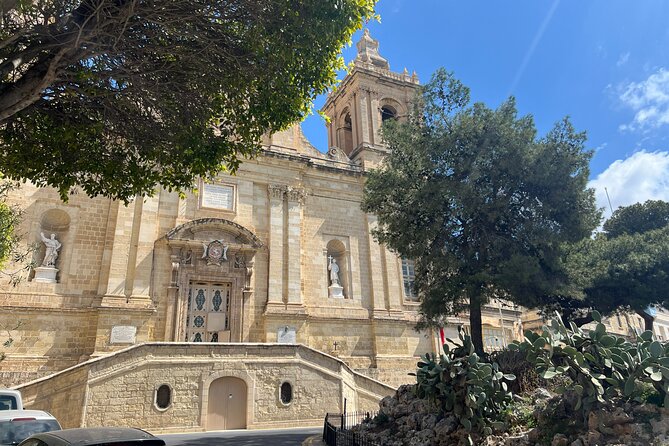
Birgu’s Inquisitor’s Palace is the heart of this tour. Inside, you see the rooms where church officials questioned, judged, and punished people, then step back into the narrow lanes of Collacchio, the city’s oldest quarter. That shift from grim institutional rooms to sunlit streets gives the past a human scale.
I like the small-group format, which makes it easier to hear the guide and ask questions. I also like the mix of landmarks and everyday details, especially when guides such as Matthew or Alizea connect Birgu’s past with family stories and local life.
The main drawback is that this is a walking tour of Birgu, not a full tour of all three cities. You will see the other two from a distance and learn how they fit together, but most of your time is spent in Vittoriosa, the city locals call Birgu.
In This Review
- Key points to know before you book
- Why Birgu makes a good walking tour
- Starting near Café Riche and the Couvre Porte
- Collacchio, Birgu’s oldest quarter
- Inside the Inquisitor’s Palace
- The Knights and Auberge d’Angleterre
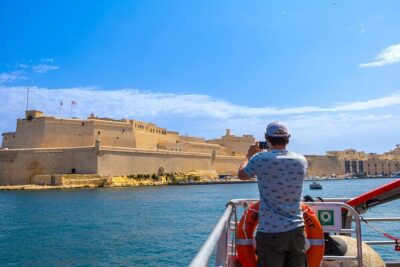
- Fort St. Angelo and the Grand Harbour
- Victory Square and Birgu’s wartime story
- Waterfront views and the Freedom Monument
- What the $30.77 price gets you
- Group size, pace, and guide quality
- Who will enjoy this Birgu tour most
- Should you book the Three Cities walking tour?
- FAQ
- How long does the Three Cities walking tour last?
- Where does the tour begin?
- Where does the tour end?
- Is entry to the Inquisitor’s Palace included?
- Is entry to Fort St. Angelo included?
- Does the tour visit all three cities?
- Is food, transport, or hotel pickup included?
Key points to know before you book
- The Inquisitor’s Palace is included: You receive entry and about 20 minutes inside the palace, with the guide explaining its courtroom, prison, and punishment spaces.
- Birgu is the real focus: The tour covers the medieval Collacchio, the main square, St. Lawrence Church, the waterfront, and views toward Fort St. Angelo.
- Allow close to three hours: The advertised duration is about two and a half hours, while the schedule runs from 10am to around 1pm.
- The group is intended to stay small: The tour is promoted for up to 15 people, though booking information also gives a maximum of 25.
- Meet at Café Riche: The meeting point is near the main entrance by Café Riche, not simply at a vaguely defined main gate.
- Valletta connections are not included: Hotel pickup, food, drinks, and entry to Fort St. Angelo are extra. A ferry back to Valletta is optional.
Why Birgu makes a good walking tour
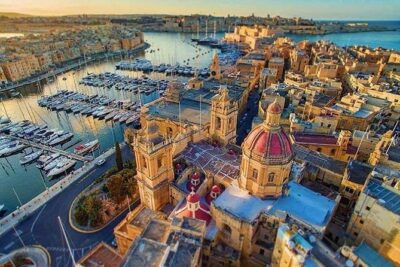
Birgu, also called Vittoriosa, is one of Malta’s Three Cities along the Grand Harbour. The name can confuse you at first. The Three Cities are Birgu, Senglea, and Cospicua, but this experience concentrates on Birgu.
That focus is useful. Birgu has a compact old center, a powerful waterfront setting, and enough churches, palaces, forts, and lanes to fill a morning without long transfers between sights. You get a clear introduction rather than a rushed checklist spread across several towns.
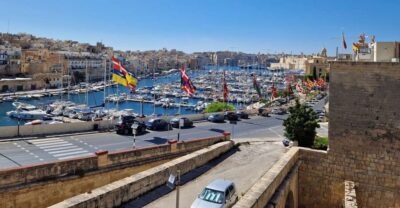
The city’s character comes from its layers. Medieval streets sit beside buildings linked to the Knights of St. John, while Victory Square recalls the city’s role in Malta’s wartime story. At the harbor, yachts and waterfront buildings frame Fort St. Angelo and the broad sweep of the Grand Harbour.
You should expect to walk on paved streets and through narrow lanes. The route includes stops for photographs and a short break in Birgu’s main square, but it is still a continuous walking experience, so comfortable shoes and protection from the sun make sense.
More three cities tours in Malta:
- From Sliema: Valletta and the Three Cities Scenic Cruise
★ 4.3 · 763 reviews - Valletta & Three Cities Harbour Cruise
★ 4.0 · 239 reviews - From Cospicua: Senglea, Bormla, and Birgu Walking Tour
★ 4.9 · 138 reviews
Starting near Café Riche and the Couvre Porte
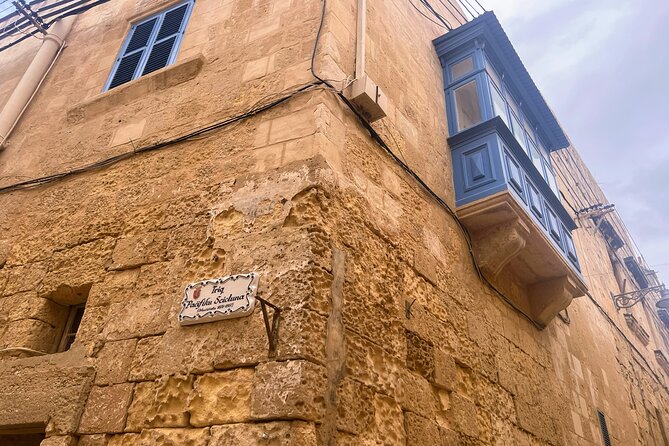
The tour begins around 10am at the main entrance next to Café Riche on Triq P. Boffa. This is the most important practical detail to get right. The phrase main gate can cause confusion, so look for the guide near Café Riche and the entrance rather than wandering around the city walls.
The first few minutes are used to meet the guide and group. The guide introduces Birgu as a fortified seaport and explains how it fits into Malta’s Three Cities.
You then enter through the Couvre Porte area, also called the Advanced Gate. This short stop is more than a doorway into the old town. It helps you see how Birgu was protected and how its defensive design shaped the way people moved through the city.
The entrance also sets the tone for the morning. Birgu is not laid out like a modern city with wide streets and obvious sightlines. Its lanes turn, narrow, and open into small squares. A guide is especially useful here because important buildings can be easy to pass without context.
Collacchio, Birgu’s oldest quarter
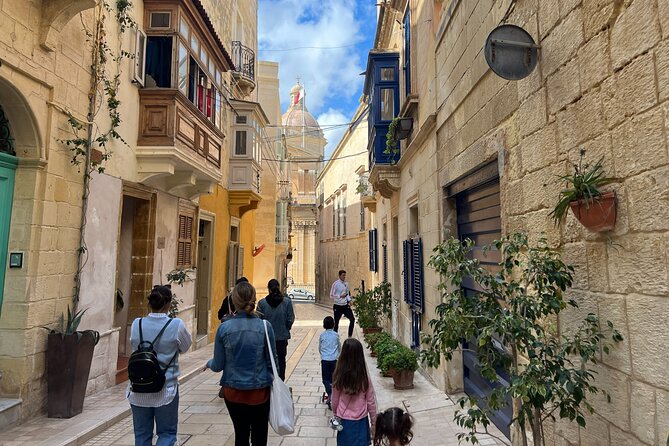
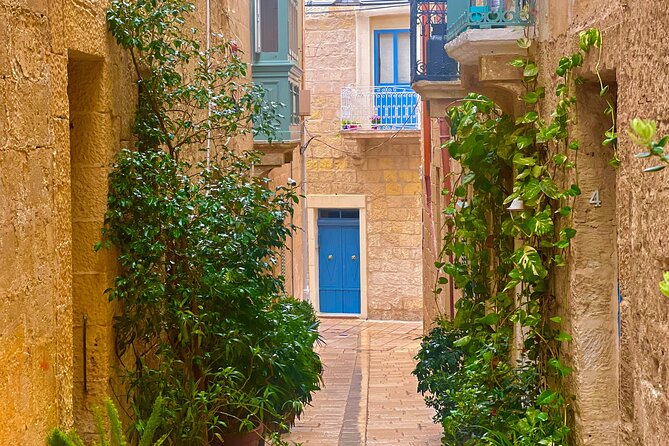
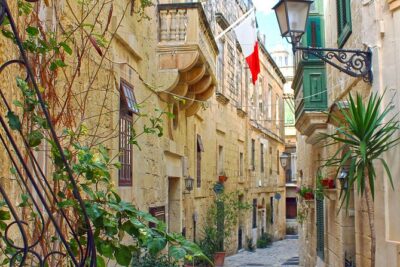
The Collacchio is the medieval quarter of Birgu, and this is where the tour feels most atmospheric. You walk through maze-like streets while the guide points out old houses, religious buildings, and places tied to the city’s long connection with the Knights of St. John.
Casa Collacchio is one of the notable buildings along the route. The point is not simply to photograph a facade. Your guide helps explain how Birgu was organized and how the old quarter developed around military, religious, and residential life.
The Siculo-Norman House adds an older layer. It is believed to date from the 13th century and now functions as a museum when open. The planned stop is short, about five minutes, and entry is included if the building is open at the time of the tour.
That qualification matters. You should treat this as a possible extra stop rather than the main reason to book. The Inquisitor’s Palace is the guaranteed included interior visit, while access to the Siculo-Norman House depends on opening conditions.
Inside the Inquisitor’s Palace
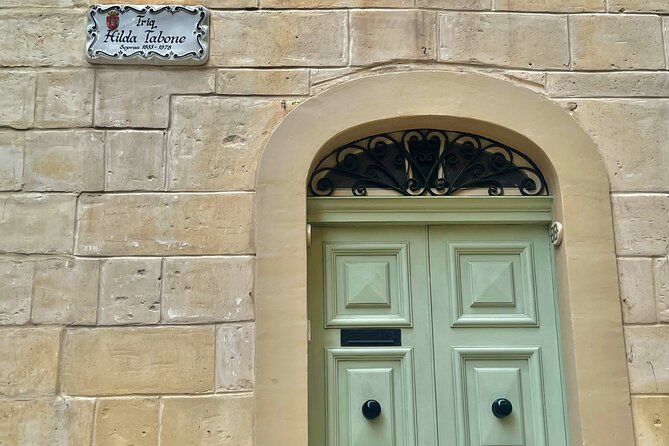
The Inquisitor’s Palace receives the longest single stop, about 20 minutes. Entry is included, which improves the tour’s value because you are not left to find the palace later or pay a separate admission during the morning.
The building was connected with the Roman Catholic Inquisition in Malta and later served as a residence for Roman Catholic bishops. The guide explains the institution’s role and takes you through spaces linked to questioning, judgment, and punishment.
This is a serious stop, not a light museum visit. You may see rooms and methods connected with extracting confessions and enforcing religious authority. The subject can be unsettling, but the guide’s explanation gives the building a clear purpose instead of leaving you to guess what happened there.
A strong guide makes a real difference here. Alizea and Matthew are names associated with this tour, and past descriptions of their guiding style emphasize clear explanations, personal stories, and a willingness to answer questions. Your exact guide may differ, but the experience works best when you ask about the parts that interest you rather than treating the palace as a quick photo stop.
The palace is also valuable because it complicates Malta’s story. The Knights, bishops, local residents, and visiting powers all shaped the island, but not always in peaceful ways. This stop gives you a look at authority from inside its own rooms.
A few more Malta trips to weigh up
- The Original Valletta Walking Tour
★ 5.0 · 2,719 reviews - Valletta: 3-Hour Walking Tour
★ 4.7 · 1,605 reviews - Valletta: Guided City Walking Tour
★ 4.8 · 1,256 reviews - Valletta: Street Food and Culture Walking Tour
★ 4.8 · 1,251 reviews
The Knights and Auberge d’Angleterre
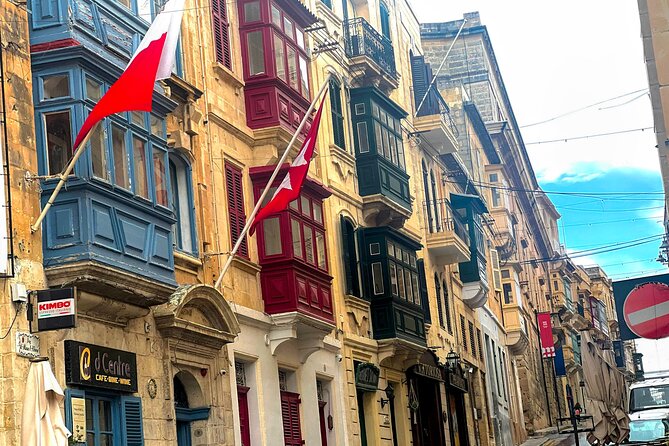
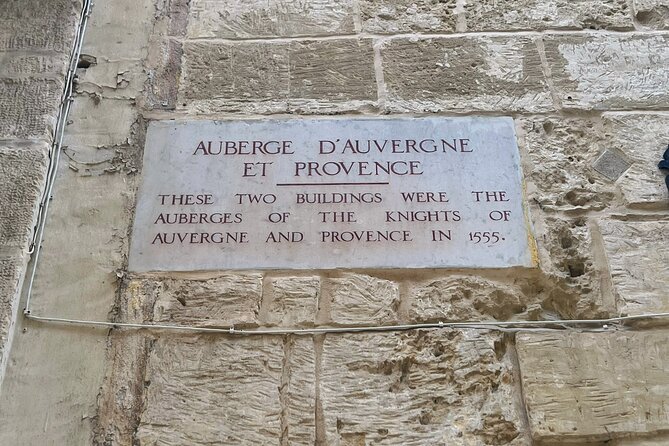
The route continues to the Auberge d’Angleterre, an area linked to the Knights of St. John. You spend around 20 minutes learning about where the Knights lived and how their presence changed Birgu.
This is a good place to connect architecture with organization. The Knights were not simply a military force occupying a fort. They needed homes, churches, administrative buildings, and social spaces. Birgu’s streets show how that system worked on the ground.
The tour does not promise entry into every building. Much of the value comes from looking at the exteriors while the guide fills in the missing pieces. That approach suits anyone who wants a clear orientation before exploring independently.
A short break in Birgu’s main square follows. The break lasts about 20 minutes, giving you time to pause, ask questions, and catch your breath. Café Riche is also a useful place to arrive early or linger before the tour, as it has a courtyard and serves food and drinks, though refreshments are not part of the tour price.
Fort St. Angelo and the Grand Harbour
Fort St. Angelo is one of the visual anchors of Birgu. The tour explains why this fortification mattered in the Grand Harbour area and gives you time to admire it from the outside.
The fort has a long military story, but this experience does not include admission. You should not expect an interior visit or a detailed exploration of the fort itself. If you want to tour Fort St. Angelo, plan that as a separate activity and allow extra time.
The outside view is still worthwhile. From Birgu, the fort helps you understand the harbor’s defensive shape. Instead of seeing isolated buildings, you begin to read the shoreline as a system of forts, walls, gates, and water access.
The route then reaches St. Lawrence Church, Birgu’s parish church. The scheduled stop is about 10 minutes, enough to admire the building and hear why it matters locally. As with many short church stops, the amount you see inside may depend on access at the time.
The Malta Maritime Museum is another photo point. It adds a seafaring note to the tour and fits naturally with Birgu’s position beside the harbor, though the experience does not include museum admission.
Victory Square and Birgu’s wartime story
Victory Square gives the tour a change of subject. Instead of focusing only on medieval Malta, the guide discusses Birgu’s role during World War II.
This is one reason the tour feels broader than a simple old-town walk. The same streets that served medieval residents and the Knights also endured the pressures of modern war. You get a sense of how Malta’s strategic position affected ordinary urban life.
The guide’s personal connection can be especially useful here. Descriptions of Alizea’s tours note that she grew up in the area and sometimes explains history through stories about her Maltese grandmother and family life. Such details can make the wartime section easier to picture, though the exact stories will depend on who leads your group.
The tour does not promise a full military history of Malta. Instead, it gives you a readable introduction and connects Birgu’s buildings to the events that shaped them.
Waterfront views and the Freedom Monument
Near the end, the route moves toward the Vittoriosa Waterfront. This is the most open section of the morning and one of the best places for photographs.
You can look across the Grand Harbour toward Fort St. Angelo and the other parts of the Three Cities. After spending time in tight lanes, the broad harbor view helps you understand Birgu’s location and defensive importance.
The walk finishes near the Freedom Day Monument in central Birgu. The monument marks the end of the formal tour, with the scheduled finish around 1pm. From there, you can continue exploring Birgu, visit another attraction, find lunch, or arrange transport back toward Valletta.
An optional ferry connection from the Three Cities back to Valletta is mentioned as a possible next step. The ferry is not included, so check the current service and fare separately rather than assuming it is part of the booking.
What the $30.77 price gets you
At $30.77 per person, the price is reasonable if you want a guided introduction and plan to visit the Inquisitor’s Palace. The cost covers a professional guide and palace admission, while the walking route also gives you several harbor viewpoints and an organized look at Birgu’s main sights.
The value comes less from the number of stops than from the connections between them. A gate, a church, a Knight’s residence, a palace, a fort, and a waterfront can feel like unrelated photo points without explanation. A good guide turns them into parts of one story.
You should budget separately for food, drinks, transport, and Fort St. Angelo if you want to go inside. Hotel pickup and drop-off are not provided, so this suits people who can reach central Birgu on their own.
The tour is booked, on average, about 28 days ahead. That does not guarantee it will sell out on your dates, but it is a useful sign to reserve early if your Malta plans are fixed.
Group size, pace, and guide quality
The experience is designed as a small-group tour limited to 15 people, which is one of its strongest features. A small group helps in the narrow streets and makes it easier to hear explanations inside the palace.
The additional booking information gives a maximum of 25 people, so you should clarify the expected group size if that point matters to you. The advertised small-group limit suggests the usual format is intimate, but the published figures are not perfectly consistent.
The pace appears measured rather than rushed. Guides have been praised for starting on time, explaining clearly, stopping for questions, and seeking shade during hot weather. One especially useful quality is the ability to adjust the route’s pauses when the sun is strong.
You will get more from the tour if you stay engaged. Ask about the Inquisition, the Knights, local customs, or the cats that are part of Malta’s everyday visual character. Guides such as Matthew and Alizea have been described as personable and easy to follow, but your own experience will depend on the guide assigned that day.
Who will enjoy this Birgu tour most
This tour is a good choice for a first visit to Birgu, especially if you have already seen Valletta or Mdina and want to understand another side of Malta. It gives you a useful foundation before you return on your own for longer visits inside museums or forts.
It also suits anyone with limited time. In one morning, you see the city gate, Collacchio, the Inquisitor’s Palace, Knight-related buildings, Victory Square, St. Lawrence Church, the waterfront, and views of Fort St. Angelo.
You may prefer a different plan if you want a full Three Cities tour. This experience does not give Senglea and Cospicua equal walking time. It uses the Three Cities setting to explain Birgu, rather than taking you through all three towns in detail.
It is also less suitable if you dislike walking, hot weather, or historical subjects involving religious courts and punishment. Most participants can take part, and service animals are allowed, but the tour remains a street-based walk with several hours on your feet.
Free cancellation is available if you cancel at least 24 hours before the start time. Changes or cancellations made inside that period are not accepted for a refund, so keep the local start time in mind.
Should you book the Three Cities walking tour?
Book it if you want a focused, well-paced introduction to Birgu with palace admission included. The strongest reasons are the small-group setting, the guide’s role in making the Inquisitor’s Palace understandable, and the mix of medieval lanes, Knight-era buildings, wartime stories, and harbor views.
Do not book it expecting a complete tour of Senglea and Cospicua or entry to Fort St. Angelo. For first-time visitors, people short on time, and anyone who prefers history explained by a local guide, the $30.77 price offers solid value. Arrive early at Café Riche, confirm the meeting spot, wear sensible shoes, and plan to continue along the waterfront after the tour ends.
FAQ
How long does the Three Cities walking tour last?
The experience is listed as approximately two and a half hours, while the scheduled departure is 10am and the finish is around 1pm. You should allow close to three hours.
Where does the tour begin?
The meeting point is at Café Riche, Triq P. Boffa, Birgu. Meet near the main entrance next to the café and confirm the exact spot when you arrive, since the phrase main gate can be confusing.
Where does the tour end?
The tour ends at the Freedom Day Monument in central Birgu, also called Vittoriosa.
Is entry to the Inquisitor’s Palace included?
Yes. The tour includes an entrance ticket to the Inquisitor’s Palace and allows about 20 minutes for the visit.
Is entry to Fort St. Angelo included?
No. The tour explains the importance of Fort St. Angelo and provides an outside viewing opportunity, but admission is not included.
Does the tour visit all three cities?
The tour is called a Three Cities walking tour, but its specific focus is Birgu, also known as Vittoriosa. You learn how the three cities relate to one another, but the walking route mainly covers Birgu.
Is food, transport, or hotel pickup included?
No. Food, drinks, hotel pickup, and hotel drop-off are not included. An optional ferry from the Three Cities back to Valletta may be used after the tour, but it is separate from the tour price.
Just added around Malta
- Malta: 5 hr Vintage Bus Tour – Mdina & Blue Grotto inc. food★ 5.0 · 22 reviews
- Wakeboarding Adventure in Malta: Learn to Ride★ 5.0 · 4 reviews
- World War II Malta Full-Day Walking Tour★ 4.3 · 18 reviews
- Valletta Street Food & History Tour With Private Transfers★ 4.5 · 15 reviews
- Victoria, Gozo: Sunset Walking Food and Drink Tour★ 5.0 · 6 reviews
- Valletta & Mdina: Private Tour★ 4.5 · 16 reviews
- Valletta: Private Maltese Cuisine Walking Tour★ 4.8 · 8 reviews
- Valletta: Private Massage from a world renowned masseuse★ 4.6 · 9 reviews
Three Cities Tours, compared.
Three Cities guided tour including harbour boat tour
Read our review →
3 Cities Walking Tour With Inquisitors Palace Entry
Read our review →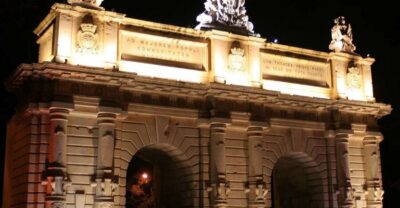
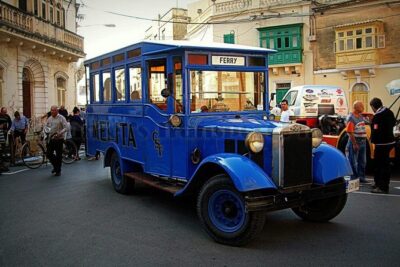
Vittoriosa, Cospicua and Senglea Vintage Bus Tour
Read our review →Browse the lists this tour appears in