
REVIEW · WALKING TOURS
Valletta Private Walking Tour
Valletta was built as a fortress city, but it feels like an open-air history book. In three hours, this private walk takes you from the modern Parliament entrance through grand palaces, church facades, wartime memorials, and gardens above the Grand Harbour. Along the way, your guide explains the Knights of St. John, the Great Siege, Malta’s wartime story, and the less polished side of life as a patient or galley slave.
I like the private format, since your group can ask questions, pause for photos, and request a different pace. I also like the way the tour mixes famous sights with human stories, from the rules of the knights to the daily life of people tied to the Order. The main drawback is value for solo visitors: $362.95 per group is much easier to justify with four people than with one.
In This Review
- Key points to know before you book
- Why a private walk works so well in Valletta
- Starting at Parliament and the Royal Opera House
- Our Lady of Victories and Castile’s grand facade
- Upper Barrakka Gardens and Grand Harbour views
- Palazzo Parisio and the art of St. John’s Co-Cathedral
- St. George’s Square and the Grand Master’s Palace
- Lower Barrakka Gardens, memorials, and Valletta’s war story
- The stories that make the stonework human
- Pace, breaks, and the practical walking experience
- Is $362.95 good value for your group?
- Who should book this Valletta tour?
- FAQ
- How long is the Valletta Private Walking Tour?
- How many people can join the private tour?
- What language is the tour offered in?
- Where does the tour start?
- Is admission to Valletta’s main attractions included?
- Is hotel pickup included?
- Should you book it?
Key points to know before you book
- Private access for up to four people: You get one guide for your own group, not a large shared party.
- A strong first-day orientation: The walk introduces Valletta’s main streets, gardens, churches, palaces, and monuments in one outing.
- Guides with teaching skill: Mario is a former history teacher, while other praised guides include Matthew, Ian, Carmel, Jennifer, Daniela, Raymond, Alizea, and Matteo.
- Three paid sights are not included: Admission to the new Museum of Fine Arts, St. John’s Co-Cathedral, and the Grand Master’s Palace is extra.
- Barrakka Gardens provide the best pauses: The Upper Gardens bring wide views of the Grand Harbour, while the Lower Gardens offer a quieter finish.
- Morning is sensible in warm weather: One review specifically recommends taking the tour in the morning rather than the hot afternoon.
Why a private walk works so well in Valletta
Valletta is compact, but its story is not. The city was founded in the 16th century by the Knights of St. John after the Great Siege, then filled with churches, auberges, palaces, and defensive works. A guide helps connect those pieces instead of leaving you to admire one ornate building after another without knowing why it matters.
The private setup is especially useful here. You can ask why a street is so narrow, how the Order governed Malta, or what happened inside the old hospital. You can also spend more time at a view or move along quickly when a facade has had its turn.
The price is $362.95 for up to four people, making the cost about $90.74 each if your group is full. For two people, it is roughly $181.48 per person. For a solo visitor, it is a costly way to see a fairly small city, particularly if the guide moves slowly or takes a break that you did not request.
The tour lasts about three hours. That is enough for a broad introduction, not enough for extended visits inside every attraction. The most useful way to treat it is as an orientation walk. You see the major landmarks, learn what deserves a later visit, and gain enough context to explore Valletta more confidently afterward.
A few more Malta trips to weigh up
- The Original Valletta Walking Tour
★ 5.0 · 2,719 reviews - Valletta: 3-Hour Walking Tour
★ 4.7 · 1,605 reviews - Valletta: Guided City Walking Tour
★ 4.8 · 1,256 reviews
Starting at Parliament and the Royal Opera House
The walk begins at the New Parliament Building on Republic Street, a useful meeting point at the modern entrance to Valletta. This opening immediately shows the city’s old and new sides: a contemporary civic building sits near the historic street grid and fortified heart of the capital.
The first stop is Pjazza Teatru Rjal, the Royal Opera House ruins. The remains prompt a good question: how did such a grand cultural building become an open-air ruin? Your guide uses the site to explain the building’s place in Valletta and the story behind its present form.
These opening stops are brief, so do not expect a long architectural lecture at each one. Their value comes from setting up the city’s themes: war, rebuilding, government, public life, and the constant overlap of ancient and modern Malta.
Our Lady of Victories and Castile’s grand facade
Our Lady of Victories Church is the next stop. The church is tied to Malta’s early history and the famous hero buried there, giving your guide a chance to introduce the people behind the city’s monuments.
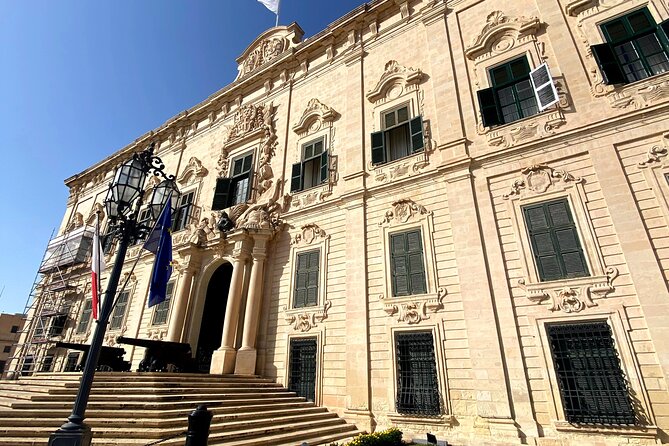
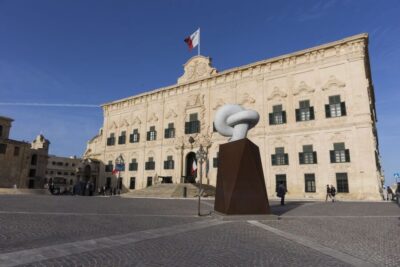
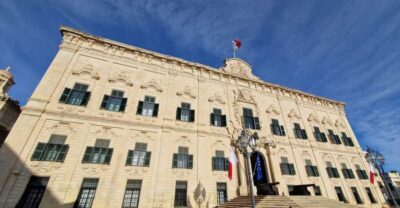
From there, you reach Il-Berga ta’ Kastilja, also known as the Auberge de Castille. Its facade is one of Valletta’s grandest, and it helps explain how the Knights of St. John organized themselves by language and regional origin. The auberges were not ordinary inns in the modern sense. They were headquarters and residences for the Order’s different national groups.
You will also pass the Auberge d’Italie, now associated with the new Museum of Fine Arts. The stop is short, and admission is not included. That matters because the tour gives you the setting and explanation, but you would need a separate visit if you want to see the museum’s collection.
Upper Barrakka Gardens and Grand Harbour views
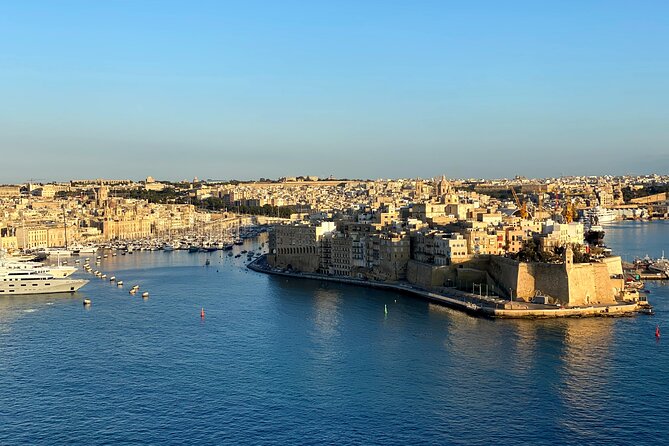
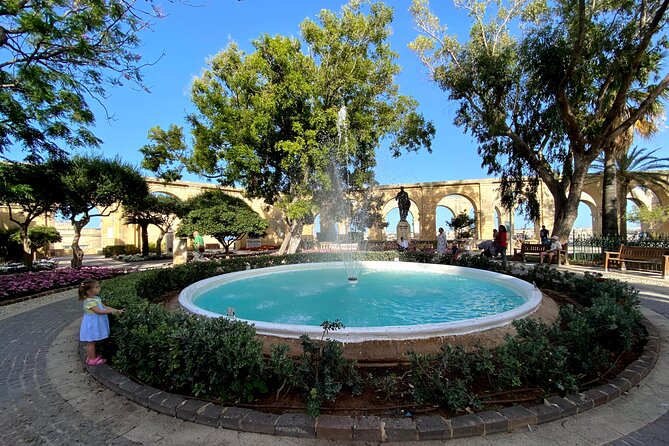
The Upper Barrakka Gardens receive the longest scheduled stop, about 30 minutes. That is a wise choice. The gardens provide one of Valletta’s most rewarding outlooks, across the Grand Harbour and toward the fortified shorelines beyond.
I like this pause because it breaks up the stone streets and gives you time to take photographs without feeling hurried. Your guide can also point out the strategic importance of the harbor, which is central to Malta’s military and trading past.
The gardens are not only a photo stop. They help you understand why Valletta was built where it was. From above, the defensive position becomes clear, and the city’s relationship with the water is easier to read.
The schedule allows enough time for a relaxed look, but the overall tour still covers a lot. If you want a long coffee break, extended photography, or a full garden visit at your own pace, that may reduce the time available for later sights. One guide has been praised for adding a coffee stop, while another guest felt a 20-minute break used too much of the three-hour tour. Be clear at the start about your priorities.
Same islands, a completely different day out:
- Malta: Gozo & Comino Islands, Blue Lagoon & Seacaves Tour
★ 4.5 · 15,672 reviews - Comino: Blue Lagoon, Crystal Lagoon, and Seacaves Tour
★ 4.6 · 5,673 reviews - Malta: Blue Lagoon, Beaches & Bays Trip by Catamaran
★ 4.7 · 5,496 reviews - Malta: Gozo, Comino, Blue & Crystal Lagoon, & Caves Cruise
★ 4.6 · 5,092 reviews
Palazzo Parisio and the art of St. John’s Co-Cathedral
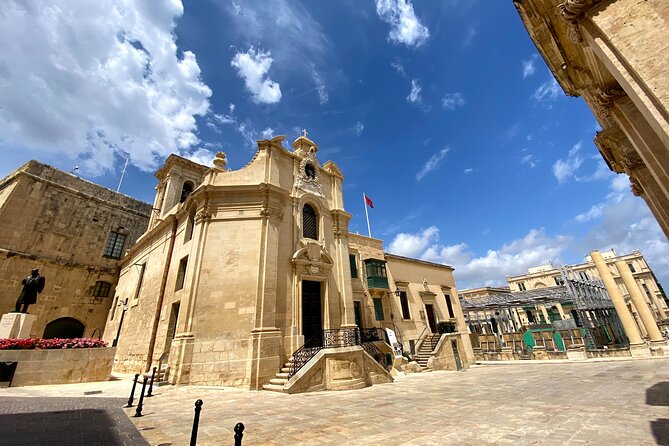
The route continues to Palazzo Parisio, where the guide explains which world-famous historical figure once lived there. This is the sort of compact story that makes the walk more memorable. Rather than treating every building as a facade, the tour links Valletta’s architecture to the people who used it.
St. John’s Co-Cathedral is one of the major highlights. Its interior is known for important works by famous artists, and the guide focuses on the stories behind the art. Admission is not included, so budget for a separate ticket if you want to enter.
The title co-cathedral can seem confusing. Your guide can explain the church’s special status and why it became so important to the Order of St. John. Even a short visit can be worthwhile, but the schedule allows only about ten minutes at this stop. If you want a detailed look at the art and interior, ask how the timing will work before you book or consider returning later on your own.
This is also one of the places where a private guide can help. You can ask about the artists, the symbols, and the purpose of the decoration instead of simply walking through a dazzling room. The guide may not be able to provide a full guided interior visit within the scheduled time, and the separate admission is an important cost to remember.
St. George’s Square and the Grand Master’s Palace
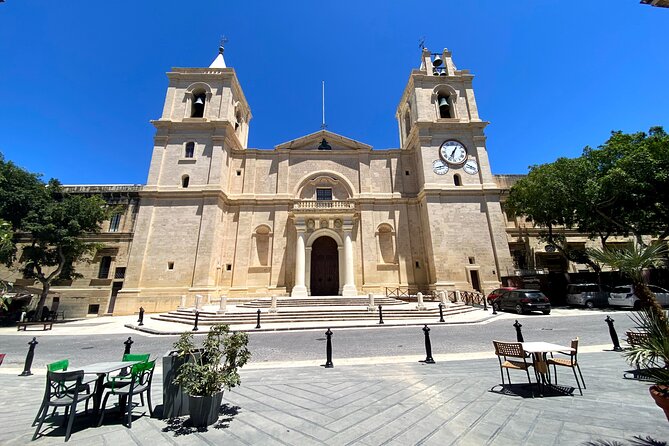
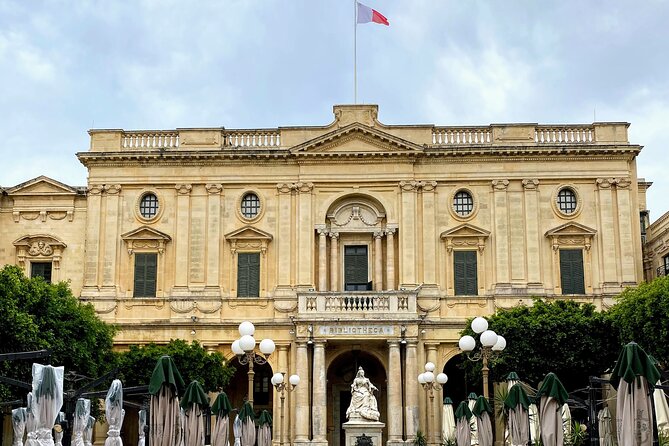
St. George’s Square is Valletta’s main square and a natural place to pause. It gives you a sense of the city as a civic center, not just a fortified military post.
The Grand Master’s Palace follows. This building has served important roles across the centuries, and the tour explains why it mattered to the Knights and to later government. Admission is not included, so again, you will need to pay separately if you want to go inside.
The palace is one of the most useful stops for understanding how Malta was ruled. A guide can tie the building to the Grand Masters, the Order’s administration, and later changes in the island’s political life. The tour also places Valletta’s old power structure beside modern Malta, including the Parliament stop at the beginning.
The stated end point is St. George’s Square on Republic Street, while the route also includes Lower Barrakka Gardens as its final sightseeing stop. Because those details do not fully match, confirm the exact finishing point and order when you receive your tour confirmation. Either way, both areas are central and useful for continuing your own exploration.
Lower Barrakka Gardens, memorials, and Valletta’s war story
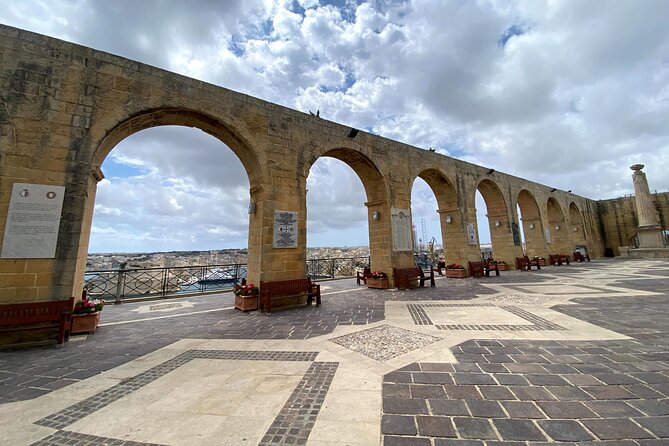
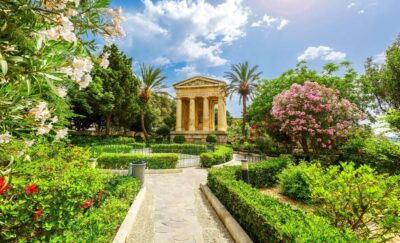
The Lower Barrakka Gardens offer another view over the lower part of the city and harbor. They are a calmer counterpoint to the Upper Gardens, and ending among greenery gives the walk a pleasant final pause.
The wider route also takes in the Great Siege Monument, the Siege Bell War Memorial, Strait Street, and Fort St. Elmo, home to the National War Museum. These sights add military and social depth to the grand architecture.
The Great Siege is central to Valletta’s identity. The Knights and Maltese defenders held out against Ottoman forces in 1565, and the victory shaped the city that followed. Fort St. Elmo is tied to the defensive system and gives more weight to the idea of Valletta as a planned fortress.
The Siege Bell War Memorial shifts the focus to the 20th century and Malta’s experience during the Second World War. This is one of the tour’s strengths: you are not left with the impression that Malta’s story ended with the knights. The guide also places the city in the context of modern independence and present-day Malta, something several praised guides do particularly well.
Strait Street offers a different view again. Its history is connected to the social life of the city and the people who lived and worked around the Order’s institutions. Ask your guide about the contrast between official Valletta and everyday Valletta. That is often where the city begins to feel like a real place rather than a collection of monuments.
The stories that make the stonework human
The most memorable material here is not always the grandest. Your guide may explain what it was like to be treated at the Holy Infirmary, one of the Order’s major institutions, or describe the harsh life of galley slaves who worked aboard the knights’ ships.
You also hear about the private behavior of the knights and whether all of them lived according to their vows. That question gives the tour a welcome dose of realism. The Order was religious and military, but its members were also human, with ambition, privilege, discipline, and failings.
This approach is why guides such as Mario, Matthew, Ian, and Carmel receive such strong praise. Mario is described as a former history teacher and professor of history, while Matthew is praised for mixing detailed Maltese history with thoughtful comments about modern Malta. Ian is frequently noted for making the past easy to understand and for offering suggestions about what to see and where to eat afterward.
Guide assignments are not guaranteed, so you should not book on the assumption that you will receive one particular person. Still, the repeated praise for several named guides suggests that the operator has a solid bench of local professionals. Guides including Jennifer, Daniela, Raymond, Alizea, Matteo, Maria, and Carmel are also described as friendly, flexible, entertaining, and well informed.
Pace, breaks, and the practical walking experience
This is a walking tour through Valletta’s central streets. Most visitors can participate, children must be accompanied by an adult, and service animals are allowed. The tour is near public transportation, but hotel pickup and drop-off are not included, so you must reach the New Parliament Building yourself.
Valletta’s streets are close together, which allows the guide to cover many landmarks without long transfers. That also means the tour may feel more like a series of short explanations than a long-distance city walk. If you prefer a fast pace and want to cover every corner, say so at the beginning.
The private format lets you request time for photographs or adjust the route. One guide changed the route so the group could see the cannons, and several guides adapted the pace to suit the people walking. That flexibility is a real benefit, but it works best when you speak up.
A morning booking is a sensible choice, especially in warm weather. One review specifically recommends morning rather than afternoon, and another mentions a 4 pm cannon firing that happened to fit the route. Do not assume the cannon event will be part of every tour, but ask about timing if it interests you.
Wear comfortable walking shoes and bring water. Those are simple precautions for any three-hour city walk, and the schedule leaves limited room for a long rest. You can ask for a short refreshment stop, but remember that every break uses time that could otherwise go to another sight.
Is $362.95 good value for your group?
For four people, the price is reasonable for a private three-hour introduction, especially if you value personal attention. You are paying for a guide who can answer your questions, adjust the pace, and shape the conversation around your interests rather than following a fixed group script.
For two people, the cost is harder to defend unless you strongly prefer private guiding. For one person, it is expensive. Valletta is small enough that an independent visitor can walk around many of the same streets, although you will not receive the same historical connections or personal recommendations.
The value improves if you take the tour early in your Malta stay. You can use the guide’s suggestions to plan the rest of your visit, decide which interiors deserve separate admission, and avoid spending time on sights that do not match your interests.
Remember the extra costs. The listed price does not cover admission to the Museum of Fine Arts, St. John’s Co-Cathedral, or the Grand Master’s Palace. It also does not include transportation to or from the meeting point.
Cancellation is free up to 24 hours before the start time. Inside that 24-hour window, the payment is not refunded, and changes are not accepted.
Who should book this Valletta tour?
I would choose this walk if you are visiting Valletta for the first time and want a clear introduction in one morning. It suits couples, families, or small groups of friends who can share the group price and enjoy asking questions.
It is also a good match for anyone who cares more about context than speed. The stories about the infirmary, galley slaves, the knights’ conduct, wartime Malta, and modern independence give you more than a simple checklist of buildings.
You may want to skip it if you are a solo visitor on a tight budget, already have a strong grasp of Maltese history, or prefer to explore at your own fast pace. You should also clarify the expected route and break policy if covering maximum ground is important to you.
FAQ
How long is the Valletta Private Walking Tour?
The tour lasts approximately three hours.
How many people can join the private tour?
The price covers one private group of up to four people. Only your group participates in the activity.
What language is the tour offered in?
The tour is offered in English.
Where does the tour start?
The stated meeting point is the New Parliament Building on Republic Street in Valletta.
Is admission to Valletta’s main attractions included?
Admission is not included for the Museum of Fine Arts at Auberge d’Italie, St. John’s Co-Cathedral, or the Grand Master’s Palace.
Is hotel pickup included?
No. Hotel pickup and drop-off are not included. You must make your own way to the central Valletta meeting point.
Should you book it?
Book this tour if you want a private, story-led introduction to Valletta and can share the cost with a small group. The best reasons are the local guides, the flexible pace, the strong overview of the city, and the mix of grand architecture with less familiar stories about hospitals, ships, war, and daily life.
For the best value, book it early in your Malta visit, choose a morning time if possible, and tell the guide whether you care most about interiors, photography, military history, or covering ground quickly. If you are traveling alone and watching your budget, explore Valletta independently and spend your money on the sights you most want to enter.
Just added around Malta
- Malta: 5 hr Vintage Bus Tour – Mdina & Blue Grotto inc. food★ 5.0 · 22 reviews
- Wakeboarding Adventure in Malta: Learn to Ride★ 5.0 · 4 reviews
- World War II Malta Full-Day Walking Tour★ 4.3 · 18 reviews
- Valletta Street Food & History Tour With Private Transfers★ 4.5 · 15 reviews
- Victoria, Gozo: Sunset Walking Food and Drink Tour★ 5.0 · 6 reviews
- Valletta & Mdina: Private Tour★ 4.5 · 16 reviews
- Valletta: Private Maltese Cuisine Walking Tour★ 4.8 · 8 reviews
- Valletta: Private Massage from a world renowned masseuse★ 4.6 · 9 reviews
Walking Tours, compared.

Guided Walking Tour with Optional Cathedral Tour
Read our review →
The Valletta Street Food and Culture Walking Tour
Read our review →Browse the lists this tour appears in