
REVIEW · WALKING TOURS
Valletta World War II Private Walking Tour
Valletta’s World War II story is written into its streets: the gutted Royal Opera House, shelter tunnels below the city, harbor views tied to the Illustrious Blitz, and the Siege Bell above the Grand Harbour. This private three-hour walk connects those scattered places into one clear story, rather than leaving you to guess what happened where.
I like the personal scale, especially if you book for a small family or couple. Guides Matthew and Mario are praised for making the past feel close to home, with Matthew known for detailed dates and family stories, and Mario bringing his background as a retired Maltese history teacher. I also like that the guide walks through the National War Museum with you instead of simply pointing you toward the entrance.
The main drawback is physical: this is a real walking tour on hard stone, with hills and stairs. Some war sites are memorials or traces rather than large attractions, so you are paying mainly for the guide’s explanations and connections. Museum admission is also extra.
In This Review
- Key points to know before booking
- Valletta’s war story begins at the harbor
- The ruined Opera House and the visible scars of bombing
- The Siege Bell and views over Grand Harbour
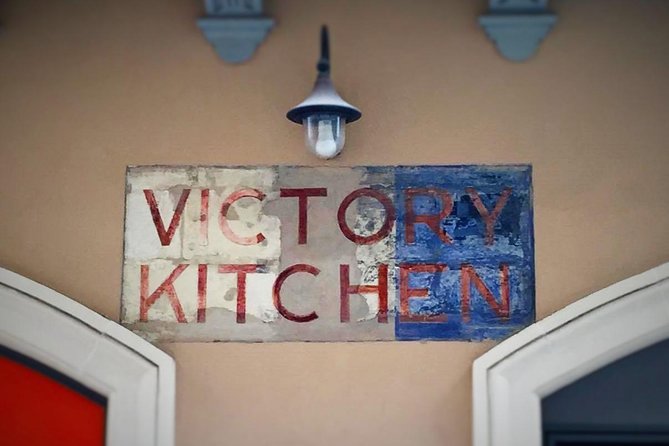
- Tunnels, Victory Kitchens, and the civilian war
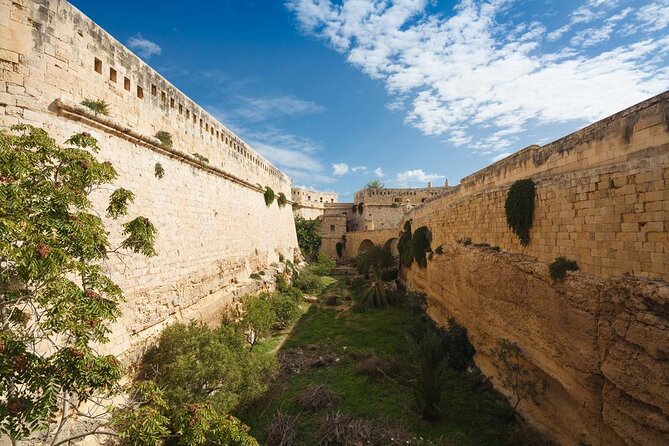
- Fort St. Elmo and the National War Museum
- How Matthew and Mario shape the experience
- Is $373.48 good value for four people?
- Who should book this Valletta WWII walk?
- Should you book it?
- FAQ
- How long does the Valletta World War II tour last?
- Where does the tour start?
- Is the National War Museum ticket included?
- Is the tour private?
- What language is the tour offered in?
- Do I need to be physically fit?
Key points to know before booking
- Trace the 1940 to 1942 siege: See how Malta was bombed and starved by Axis forces as it became a base in the struggle for North Africa.
- Hear the human side of the war: Learn about shelter tunnels, Victory Kitchens, supply convoys, and daily life under attack.
- Finish at Fort St. Elmo: Spend about an hour in the National War Museum, including the 1942 George Cross awarded to Malta.
- Get a truly private tour: Only your group participates, so you can ask questions and adjust the pace.
- Expect a serious walk: Bring water, sun protection, and firm, comfortable shoes for stone streets, slopes, and stairs.
- Pay attention to the meeting point: The stated start is Valletta City Gate at Victoria Gate, while some past arrangements began near Upper Barrakka Gardens. Confirm the exact instructions after booking.
Valletta’s war story begins at the harbor
Meet your English-speaking guide in central Valletta and enter the city’s wartime story through its streets and harbor outlooks. The tour focuses on Malta between 1940 and 1943, with special attention to the Siege of Malta from 1940 to 1942.
The setting matters. Valletta is compact, but its position in the Mediterranean made it strategically important. After Mussolini declared war on Malta in 1940, the island became a stepping stone in the Axis effort to control North Africa. Its harbors, airfields, and location made it a target, and the population endured sustained bombing and attempts to cut off food and supplies.
You will not just hear a list of dates. The walk explains why Malta was attacked, how the harbor shaped military decisions, and why survival depended on both military action and civilian endurance. That wider context is useful because Valletta’s wartime sites can otherwise seem disconnected.
The official meeting point is Victoria Gate, near Liesse in Valletta. The tour ends at Fort St. Elmo, beside the National War Museum, so it is not a loop back to the start. That ending works well if you plan to continue sightseeing around Fort St. Elmo, but it is worth allowing for the walk back to your hotel or ship.
A few more Malta trips to weigh up
- The Original Valletta Walking Tour
★ 5.0 · 2,719 reviews - Valletta: 3-Hour Walking Tour
★ 4.7 · 1,605 reviews - Valletta: Guided City Walking Tour
★ 4.8 · 1,256 reviews
The ruined Opera House and the visible scars of bombing
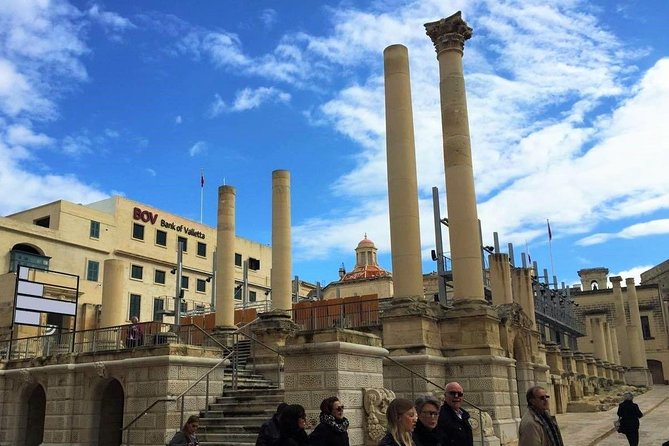
One of the clearest reminders of the bombing campaign is the shell of the Royal Opera House. A German raid in 1942 destroyed the building, leaving a dramatic ruin in the heart of modern Valletta.
The site helps you picture how sudden destruction changed ordinary city life. This is not a preserved battlefield with rooms full of equipment. It is an urban scar, surrounded by the daily movement of the city. Your guide’s explanation gives the ruin its place in the larger story of the Illustrious Blitz and the repeated attacks on HMS Illustrious.
That episode is especially important. Axis aircraft repeatedly targeted the British aircraft carrier in Valletta in 1941, bringing the war directly into the harbor and streets around the city. The tour links the military target to the civilian cost, which is one of its strongest features.
You should set your expectations correctly. Valletta does not offer a long chain of intact WWII structures along the main streets. Some stops are memorials, ruins, statues, or locations where the guide explains what once stood there. If you want a traditional museum-heavy tour from the first minute, this may feel light on physical exhibits at the start. If you like reading a city through its remains, the format works much better.
The Siege Bell and views over Grand Harbour
The Siege Bell Memorial overlooks the Grand Harbour and provides one of the tour’s most moving stops. It is a place to pause, look across the water, and consider the pressure Malta faced during the siege.
The harbor views are more than scenery. They help you understand why this stretch of coast was so valuable and so exposed. A guide can point out how the harbor relates to the military events, while the memorial gives the story a human and reflective pause.
The pace appears to be a strong part of the experience. You can stop to discuss locations rather than rush from one marker to the next. That matters on a private walk, since you can ask about a relative who served in Malta, the Royal Navy, the Knights of Malta, or a particular battle without holding up a larger group.
The walk is conducted outdoors for most of its duration. Malta’s sun can be intense, and the stone paving can be tiring. Bring water, sunscreen, and shoes with a good grip. You should also be comfortable with uphill sections and stairs. A moderate level of fitness is required.
Tunnels, Victory Kitchens, and the civilian war
The most valuable part of the tour may be the attention given to civilians. You will hear about the tunnels built beneath Valletta as shelters and about the Victory Kitchens created to feed people during shortages.
These details show how the siege affected daily routines. Bombing is easy to imagine as a military event viewed from above. Tunnels and communal kitchens bring it down to the level of families finding shelter, securing food, and trying to maintain some order while the city was under attack.
The tour also covers the struggle to bring supplies to Malta. The San Marija Convoy is part of that story, and it helps explain why Malta’s survival was never simply a matter of enduring air raids. Food, fuel, and other essentials had to reach the island through dangerous waters.
This is where a private guide can add real value. You can pause over a question and ask how a particular event affected Maltese families, how the harbor functioned, or why a convoy mattered. Mario is described as bringing family accounts of wartime life, while Matthew is praised for connecting the war to Malta’s longer story, reaching back to the 1500s and the era of the Knights.
That extra context is useful, but it also means the tour may not stay narrowly fixed on 1940 to 1943. If you want only military facts, tell your guide at the start. If you want to understand Malta’s identity and why the war still matters there, the broader approach should suit you.
Same islands, a completely different day out:
- Malta: Gozo & Comino Islands, Blue Lagoon & Seacaves Tour
★ 4.5 · 15,672 reviews - Comino: Blue Lagoon, Crystal Lagoon, and Seacaves Tour
★ 4.6 · 5,673 reviews - Malta: Blue Lagoon, Beaches & Bays Trip by Catamaran
★ 4.7 · 5,496 reviews - Malta: Gozo, Comino, Blue & Crystal Lagoon, & Caves Cruise
★ 4.6 · 5,092 reviews
Fort St. Elmo and the National War Museum
The tour’s final major stop is Fort St. Elmo, where you receive a guided visit to the National War Museum. The museum admission is not included, so budget for a separate ticket.
Plan on about an hour inside. The exhibits and audio-visual material cover Malta’s ordeal during World War II, including the effort to get supplies through the blockade. The 1942 George Cross is a key object. King George VI awarded it to the people of Malta for their courage, and seeing the medal gives the story a tangible ending.
I consider the museum visit essential to the tour’s value. The outdoor walk gives you locations and stories, while the museum supplies objects and displays that help complete the picture. The strongest version of the experience is one where Matthew or Mario stays with you inside, selecting the important exhibits and explaining their significance.
That guided museum time is not guaranteed in every practical detail, so it is sensible to ask at the start how the visit will work. Some guides may spend the full hour with you, as Matthew has done, while the formal description only promises a guided visit. Either way, do not treat the museum as an optional afterthought if World War II is your main reason for booking.
Fort St. Elmo also makes a practical endpoint. You can continue exploring the fort and nearby attractions after the three-hour tour. One past itinerary also continued with nearby historical sights after the walk, so you may want to leave extra time rather than schedule another tight appointment.
How Matthew and Mario shape the experience
The provider is Colour my Travel, and the tour is offered in English. The guide makes a noticeable difference because the physical sites alone cannot tell the whole story.
Matthew is repeatedly praised for his command of dates, events, and Maltese history. He has been described as passionate about World War II and able to keep a group engaged through a full morning of walking. His approach appears especially suitable if you want a connected account rather than a few general facts.
Mario brings a different strength. He is a retired history teacher from Malta and has family connections to wartime memories. His teaching background may appeal to you if you prefer explanations, questions, and wider context. He has also helped with Maltese pronunciation and suggested other museums and activities for the rest of a Malta stay.
Because the tour is private, you can tell the guide what matters most. A family tracing a parent’s Royal Navy service may want more time on military events. Someone with a general interest in Malta may prefer the links between the Knights, the harbor, and the war. The guide can also set a gentler pace, with breaks for discussion and views.
The experience has a 4.8 rating from 26 ratings, with 96 percent recommending it. That is a strong record, though the sample is not huge. There is also one clear caution: one booking failed because the customer went to the wrong city. The operator said the guide waited at Valletta City Gate and could not reach the customer by phone. Since Mdina has gardens and horse-drawn cabs while Valletta’s stated meeting point is Victoria Gate, check the city name and map carefully.
Is $373.48 good value for four people?
The listed price is $373.48 per group of up to four. For four people, that works out to about $93.37 each before the museum ticket. For two people, the effective cost is much higher, roughly $186.74 each before admission.
That pricing makes the tour most attractive to a family or group of friends who can fill all four places. You are paying for a private guide, three hours of attention, and a guided museum visit, not for transportation or a large package of admissions. There is no hotel pickup or drop-off.
For a couple, the price is harder to justify unless World War II is a major interest or you place a high value on private guiding. A shared group tour could cost less, but it would not offer the same freedom to ask detailed questions or slow down at a family connection.
The value also depends on how much use you make of the guide. If you simply follow the route and listen quietly, the price may feel steep. If you ask about the Siege of Malta, convoy supplies, the harbor, your own family history, and what else to see in Valletta, the private format becomes more worthwhile.
The tour is often booked about 29 days ahead, so it is not a last-minute product for every departure. Confirmation is sent within 48 hours, subject to availability. The cancellation terms are strict: the experience is non-refundable and cannot be changed after booking. Make sure your date, meeting point, and group size are settled before paying.
Who should book this Valletta WWII walk?
I would choose this tour if you have a serious interest in World War II, Malta’s wartime role, or family military history. It is also a strong choice for a first visit when you want a guide to explain why Valletta matters beyond its handsome streets and grand buildings.
It suits cruise passengers well in principle because the walk lasts about three hours and finishes near Fort St. Elmo. Still, you must allow time to reach the starting point and return to your ship. Do not book it so close to departure that a slow walk, museum visit, or wrong turn creates stress.
Families can benefit from the private format, especially if different ages need different levels of explanation. History fans will appreciate the focus on dates, convoys, bombardment, and the George Cross. People who dislike walking on stone, sun exposure, or hills should think twice.
This is not the best match if you want a general sightseeing tour of every major Valletta landmark. The focus is the war, with related Maltese history added along the way. The harbor views and city monuments are part of the setting, not the main product.
Should you book it?
Book the Valletta World War II Private Walking Tour if you want the story behind the stones and prefer a guide who can spend time on your questions. Matthew and Mario bring strong local and historical perspectives, and the combination of outdoor sites with Fort St. Elmo’s museum gives the three hours a clear shape.
I would book it for four people to make the price work best, and I would wear good shoes, carry water, and confirm the exact meeting point. If you want Malta’s wartime experience explained by a local guide rather than reduced to a few plaques, this is a focused and worthwhile choice. If you are only mildly curious about World War II or need a low-cost, low-effort city tour, spend your budget elsewhere.
FAQ
How long does the Valletta World War II tour last?
The tour lasts approximately three hours, including the walking route and the guided visit to the National War Museum.
Where does the tour start?
The stated meeting point is Victoria Gate, at Liesse in Valletta. The tour ends at Fort St. Elmo and the National War Museum on Mediterranean Street.
Is the National War Museum ticket included?
No. Admission to the National War Museum is not included in the tour price and must be paid separately.
Is the tour private?
Yes. Only your group participates, with a maximum of four people under the listed group price.
What language is the tour offered in?
The tour is offered in English with a professional private guide.
Do I need to be physically fit?
You should have a moderate level of fitness. The tour involves outdoor walking on hard stone, uphill sections, and some stairs. Water, sun protection, and comfortable shoes are recommended.
Just added around Malta
- Malta: 5 hr Vintage Bus Tour – Mdina & Blue Grotto inc. food★ 5.0 · 22 reviews
- Wakeboarding Adventure in Malta: Learn to Ride★ 5.0 · 4 reviews
- World War II Malta Full-Day Walking Tour★ 4.3 · 18 reviews
- Valletta Street Food & History Tour With Private Transfers★ 4.5 · 15 reviews
- Victoria, Gozo: Sunset Walking Food and Drink Tour★ 5.0 · 6 reviews
- Valletta & Mdina: Private Tour★ 4.5 · 16 reviews
- Valletta: Private Maltese Cuisine Walking Tour★ 4.8 · 8 reviews
- Valletta: Private Massage from a world renowned masseuse★ 4.6 · 9 reviews
Walking Tours, compared.

Guided Walking Tour with Optional Cathedral Tour
Read our review →
The Valletta Street Food and Culture Walking Tour
Read our review →Browse the lists this tour appears in