
REVIEW · HISTORICAL TOURS
COMBO: Heritage Pass with Hop-On Hop-Off Bus (CMO)
Malta’s story is spread across forts, temples, museums, harbors, and old cities, so this pass gives you a useful way to connect the pieces. For six days, you can ride the City Sightseeing Malta bus, take a 90-minute harbor cruise, and enter more than 20 heritage sites with one pass.
I like the range of places included, from the National War Museum and Palace State Rooms to Ħaġar Qim and Ta’ Skorba Temples. I also like the six-day validity, which lets you move at a slower pace instead of cramming every museum into one long day. The main concern is ticket activation and bus frequency, especially outside peak season, so you should sort out the QR codes and pass details early.
In This Review
- Key points at a glance
- Why this pass makes sense for Malta
- Starting with Valletta’s forts and museums
- Seeing Valletta and the Three Cities from the water
- Using the north and south bus routes
- The prehistoric sites: Ħaġar Qim and Mnajdra
- Catacombs, Roman remains, and early Malta
- Fort St. Angelo, the Inquisitor’s Palace, and the maritime story
- A six-day plan that avoids rushing
- What the $91 price really buys you
- Activation, accessibility, and what to carry
- Who should buy the Heritage Pass
- FAQ
- How long is the Heritage Pass valid?
- What transportation is included?
- Is a harbor cruise included?
- Which languages are available on the harbor cruise?
- How many heritage sites can I visit?
- Which major sites are included?
- Are meals and hotel transfers included?
- Should you book it?
Key points at a glance
- Six days of unlimited bus travel: Use City Sightseeing Malta’s north and south routes for the full validity period.
- A 90-minute harbor cruise: Hear live commentary in English and German while viewing Valletta, the Three Cities, forts, battlements, and creeks from the water.
- More than 20 included sites: Visit museums, temples, catacombs, palaces, forts, and archaeological remains with one-time entry.
- Good coverage for first-time visitors: Many included places are within walking distance of bus stops.
- A strong mix of Malta’s past: The pass covers prehistoric temples, Roman remains, military sites, religious buildings, and national collections.
- A few practical snags: QR codes and activation may require help from staff, and buses can be less frequent outside the busy season.
Why this pass makes sense for Malta
Malta is small, but its major sights are not all clustered together. Valletta and the Three Cities are close across the harbor, while Ħaġar Qim, Mnajdra, Għar Dalam, and other archaeological sites sit farther away. The pass is designed for exactly this sort of trip: use the bus to cover ground, then walk from a stop to a museum or monument.
At $91 per person, the value depends on how much you use it. If you take several bus rides over six days, join the harbor cruise, and visit a good number of the included sites, the cost can make sense. You do not need to enter every attraction, but the pass becomes more useful once you plan around at least several museums and archaeological sites rather than treating it as only a bus ticket.
I would not buy it automatically for a short stay focused only on Valletta. You can spend a full day in Valletta without needing much transport, and one or two attractions alone will not justify the price. The pass works best when you want to see both urban Malta and the older sites beyond the capital.
A few more Sliema trips to weigh up
- From Sliema or Bugibba: Gozo Heritage Day Pass
★ 3.0 · 16 reviews - Malta: Prehistoric Temples, Limestone Heritage & Blue Grotto
★ 4.2 · 412 reviews - Maltese Islands History Audio-Visual Show and La Sacra Infermeria Tour
★ 4.0 · 344 reviews
Starting with Valletta’s forts and museums
Fort St. Elmo is one of the most important stops in the pass. It houses the National War Museum, where Malta’s military story is presented through the fort itself and its collections. The setting matters here. You are not just looking at objects in a modern gallery; you are inside a defensive position at the tip of Valletta, where the harbor views explain why the fort was built.
The Fortification Interpretation Centre, also called The Fortress Builders, helps you understand Malta’s defensive design. If the walls, bastions, and harbor positions seem confusing when you first arrive, this is a useful early visit. It gives you a clearer sense of how the cities were planned and protected.
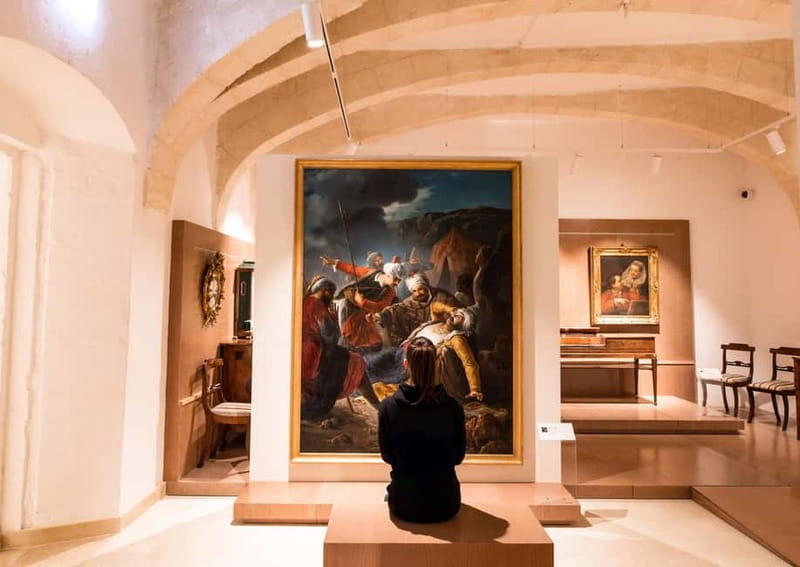
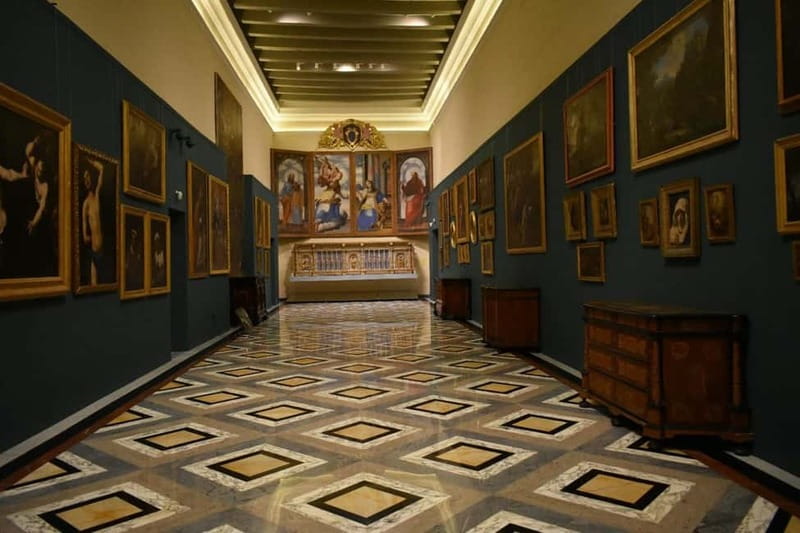
MUŻA, the Malta National Community Art Museum, offers a change of pace. The collection brings art into the sightseeing plan, so the pass is not limited to military and archaeological attractions. I would pair MUŻA with the National Museum of Archaeology, especially if you want to see how Malta’s earliest cultures fit into the wider story of the island.
The National Museum of Archaeology is particularly useful before visiting the prehistoric temple sites. It gives you objects and context that can make the stone remains at Ħaġar Qim, Mnajdra, Ta’ Ħaġrat, and Ta’ Skorba easier to understand. You can visit the outdoor sites later, when you are ready for a slower look at the architecture and setting.
Seeing Valletta and the Three Cities from the water

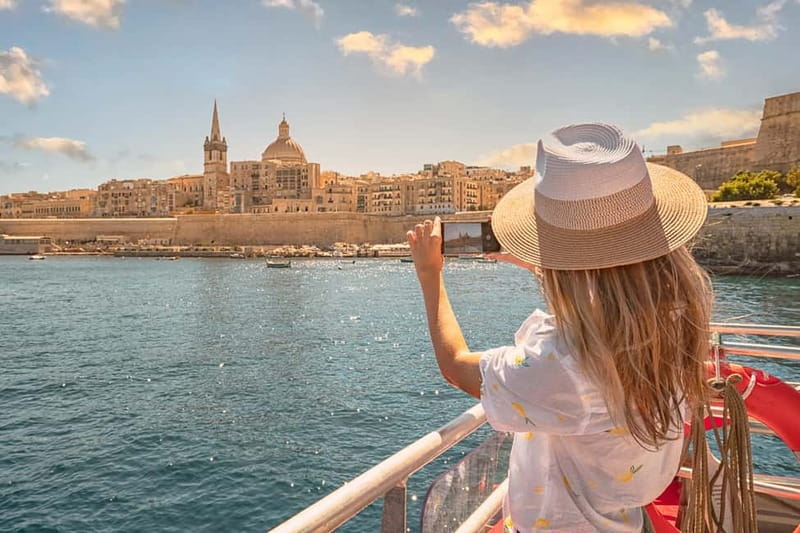
The traditional harbor cruise lasts 90 minutes and visits the waters around Valletta, including Marsamxett Harbour and the Grand Harbour. It is not simply a second form of bus transport. From the deck, you see the fortifications from the angle that made them effective.
The cruise takes you past forts, battlements, and creeks connected with Valletta and the Three Cities. Some views can only be appreciated from the water, particularly the way the defensive walls rise above the harbors. Live commentary is provided in English and German, with information about the two Great Sieges of 1565 and 1942 as well as other points of interest.
I would use the cruise early in your six-day plan. It helps you get oriented before you explore the harbors on foot, and it gives you a visual map of the places you will be visiting. The boat also offers a welcome break from museum interiors and bus rides.
The practical weak point is that the cruise and pass may need checking at the start. Keep your QR codes available, and allow time for staff to confirm that the pass is active. A helpful staff member at Sliema Harbour has been able to sort out activation and ticket problems, but it is better to handle this before you are standing at a museum entrance with a full day planned.
Using the north and south bus routes
The City Sightseeing Malta bus is included without limits for all six days. Both the north and south routes are covered, which makes the pass more useful than a single sightseeing circuit. You can ride between areas, get off near a heritage site, and continue later without paying for each separate journey.
Many of the included attractions are within walking distance of bus stops. That does not mean every walk will be equally short or easy, so check the route and site pairing before setting out. The pass works best when you group nearby sights together rather than crossing the island for one small museum and then returning.
Use the bus as a sightseeing tool, not only as a transfer. Malta’s forts, towns, coast, and old stone buildings are part of the experience, and the open route gives you a broad view between stops. Still, you should leave room in your day for delays or a longer wait.
Outside peak season, bus service can be limited. This is the biggest planning issue with the pass. Six days of validity does not guarantee frequent departures, so avoid building a tight schedule around several connections. Pick one main area for the morning and one for the afternoon, with the cruise or a major museum as your fixed point.
Same islands, a completely different day out:
- From Sliema: Comino, Crystal Lagoon, and Blue Lagoon Cruise
★ 4.5 · 3,792 reviews - From Sliema: Gozo, Comino and Blue Lagoon Cruise
★ 4.5 · 3,461 reviews - From Sliema: Cruise Around Malta’s Harbours & Creeks
★ 4.5 · 2,292 reviews - Sliema: Boat Trip to Comino Blue Lagoon, Gozo, and Caves
★ 4.8 · 2,061 reviews
The prehistoric sites: Ħaġar Qim and Mnajdra
The pass includes Ħaġar Qim and Mnajdra Temples, two of Malta’s major prehistoric sites. These are not quick indoor museum stops. You are visiting ancient stone structures and considering how much time, labor, and planning went into building them.
The appeal is the setting and the age of the remains, but you should plan for a visit that rewards patience. Take time to look at the stones, the temple layout, and the surrounding views rather than rushing in for a photograph. Comfortable shoes are important for this part of the pass.
Ta’ Ħaġrat Temples and Ta’ Skorba Temples add two more archaeological stops. Including all four sites gives you a better sense of Malta’s prehistoric past than visiting only one. The drawback is that archaeological remains may not provide the same immediate visual payoff as a grand fort or palace, so they suit you best if you enjoy ancient sites and want time to study them.
Tarxien Temples offers another important prehistoric visit, this time in a more urban setting. Its inclusion helps show that Malta’s ancient remains are not confined to one remote corner. I would spread the temple sites across different days rather than visiting them all together.
Catacombs, Roman remains, and early Malta
The pass includes Ta’ Bistra Catacombs and St. Paul’s Catacombs, giving you a look at underground burial spaces and Malta’s early Christian past. Catacombs are very different from the open harbor forts and temple sites, so they add variety to your schedule.
Domvs Romana provides a Roman-era stop, while Għar Dalam reaches farther back into Malta’s natural and human past. Borġ in-Nadur adds another archaeological site to the southern part of the island. Taken together, these attractions help you trace Malta across several periods instead of seeing its story only through the Knights and later wars.
I would avoid treating these sites as interchangeable. The catacombs focus on burial practices and underground spaces. Domvs Romana is tied to Roman life. The prehistoric and early archaeological sites deal with much older settlement and ritual. If you give each one enough time, the pass becomes a history course spread across the island, with stone walls and real locations instead of only display cases.
Fort St. Angelo, the Inquisitor’s Palace, and the maritime story
Fort St. Angelo is in the Three Cities, across the harbor from Valletta. Its position makes it a natural companion to Fort St. Elmo. Seeing both helps you understand Malta’s defensive system from opposite sides of the water.
The Inquisitor’s Palace offers a different view of the island’s institutions and religious authority. The Palace Armoury and Palace State Rooms add formal interiors and military collections in Valletta. These sites are useful when you want more than battlefields and ruins. They show how power was organized, displayed, and defended.
The Malta Maritime Museum rounds out the harbor story. After taking the cruise, this museum gives you another way to understand Malta’s relationship with ships and the sea. I would place it near your Three Cities or harbor day, since the connection between the museum, Fort St. Angelo, and the cruise is one of the strongest themes in the pass.
A six-day plan that avoids rushing
You can shape the pass in many ways, but a sensible plan might look like this:
- Day one: Activate the pass, confirm the QR codes, and use the bus for orientation. Visit MUŻA or the National Museum of Archaeology in Valletta.
- Day two: Explore Fort St. Elmo, the National War Museum, and the Fortification Interpretation Centre.
- Day three: Take the harbor cruise and visit Fort St. Angelo, the Malta Maritime Museum, or the Inquisitor’s Palace.
- Day four: Travel to Ħaġar Qim and Mnajdra Temples, allowing time for the archaeological sites rather than rushing between them.
- Day five: Visit Għar Dalam, Borġ in-Nadur, or Tarxien Temples.
- Day six: Use the north or south route for any missed site, then visit Ta’ Ħaġrat, Ta’ Skorba, Domvs Romana, or the catacombs.
This plan is only a framework. Bus frequency may affect the order, and you should not assume every stop will line up perfectly with your preferred timing. The important idea is to group sites by area and keep at least one flexible day.
What the $91 price really buys you
The headline price is $91 per person. That is not a bargain if you use only the buses and cruise. It becomes more persuasive when you visit enough of the 20-plus included heritage sites to replace separate admission fees and several local transport journeys.
The one-time entry rule matters. You can visit each included site once during the six-day validity period, so the pass suits a sightseeing plan more than casual repeat visits. If you like to return to a favorite museum or split one attraction across two days, this arrangement may feel restrictive.
The pass also saves mental effort. You do not need to decide at every stop whether another ticket is worth buying. That can encourage you to visit a smaller site, such as Ta’ Skorba Temples or the Fortification Interpretation Centre, that you might otherwise skip.
Still, value depends on your pace. I would choose this for an active six-day visit with several heritage stops. For a slower holiday centered on swimming, dining, and a few Valletta sights, buying individual admissions may be simpler.
Activation, accessibility, and what to carry
The pass is valid for six days from activation, not necessarily from the day you book. Pay attention to that distinction when planning your first use. Have the QR codes ready, and check activation with staff before you begin visiting sites.
A ticket desk at a Valletta museum once found that the pass had not activated properly, and staff at Sliema Harbour helped resolve similar issues. The codes also needed checking near the end of the validity period. These problems do not cancel out the value, but they make a quick first-day confirmation wise.
Wear comfortable shoes, especially for forts, archaeological sites, and walks from bus stops. Bring a camera and some cash. Hotel pickup, hotel drop-off, meals, and drinks are not included, so plan those separately.
The activity is wheelchair accessible, though the supplied information does not describe the access conditions at each individual heritage site. If a particular museum or archaeological location is essential for you, confirm its site-specific access before booking.
Who should buy the Heritage Pass
I would recommend it to you if you want a broad look at Malta, plan to stay for several days, and enjoy moving between museums, forts, archaeological remains, and harbor towns. It is especially useful for first-time visitors who do not want to arrange transport and admission tickets one by one.
Families and active sightseers may also find it practical, since the bus creates a break between indoor visits and the six-day period allows you to spread things out. History fans will get the most from the wide range of periods covered.
I would be more cautious if you are visiting for only one or two days, dislike fixed sightseeing routes, or plan to spend most of your time in one neighborhood. The bus schedule may also be a frustration outside peak season, when limited service can reduce how much you cover in a day.
FAQ
How long is the Heritage Pass valid?
The pass is valid for six days from the time you activate it.
What transportation is included?
You receive unlimited use of the City Sightseeing Malta Hop-On Hop-Off bus on both the north and south routes for the six-day validity period.
Is a harbor cruise included?
Yes. The pass includes one 90-minute traditional harbor cruise with live commentary.
Which languages are available on the harbor cruise?
The live cruise commentary is available in English and German.
How many heritage sites can I visit?
The pass includes free one-time entry to more than 20 heritage sites in Malta.
Which major sites are included?
Included places include the National War Museum at Fort St. Elmo, MUŻA, the National Museum of Archaeology, Fort St. Angelo, the Inquisitor’s Palace, Ħaġar Qim, Mnajdra, Tarxien, Ta’ Ħaġrat, Ta’ Skorba, Domvs Romana, St. Paul’s Catacombs, Għar Dalam, and the Palace State Rooms.
Are meals and hotel transfers included?
No. Hotel pickup and drop-off, meals, and drinks are not included.
Should you book it?
Book this pass if you want to see Malta’s major heritage sites across six days and will use both the buses and the harbor cruise. Its best feature is the variety: you can move from prehistoric temples to Roman remains, military forts, art museums, catacombs, and palace rooms without buying a separate ticket at every stop.
Before booking, be honest about your pace. The pass rewards planning and several sightseeing days, while limited off-season buses and occasional activation trouble call for patience. If you confirm the QR codes early, group nearby sites, and leave room in your schedule, the $91 price can deliver solid value and a much fuller picture of Malta.
Just added around Sliema
- Malta: 4 hour Quad Bike Island Tour★ 5.0 · 4 reviews
- Sliema Professional Vacation photographer in Malta★ 4.7 · 6 reviews
- Malta: 8 Hour Quad Bike Island Tour★ 4.3 · 3 reviews
- Sliema: Powerboat Trip to Gozo with Caves and Island Stop★ 4.6 · 18 reviews
- Private Driver to roam the island of Malta (VIP)★ 4.9 · 18 reviews
- Manoel Island SUP Adventure★ 5.0 · 3 reviews
- From Sliema: Blue Grotto Trip – Including Boat Cave Tour★ 4.6 · 18 reviews
- Malta: 2 Scuba Fun Dives for Certified divers★ 4.6 · 10 reviews
Historical Tours, compared.

Prehistoric Temples, Limestone Heritage & Blue Grotto
Read our review →
Maltese Islands History Audio-Visual Show and La Sacra Infermeria Tour
Read our review →
Self-Guided Historical Walking Tour (Audio Guide)
Read our review →
Wonderful Valletta, gastronomy, art, and history in the Mediterranean
Read our review →



The Limestone Heritage Park and Gardens (Entry Ticket)
Read our review →Browse the lists this tour appears in