
REVIEW · HISTORICAL TOURS
Mdina and Rabat Food and History Tour
Mdina and Rabat make an excellent food walk because the history is not separated from daily life. You enter Malta’s old capital through a grand Baroque gate, pause at churches tied to St Paul, and eat the dishes that still define the island. The meal unfolds in stages, from pastizzi and kinnie to rabbit and bragoli.
I especially like the small group limit of 12, which gives the guide room to answer questions and adjust the pace. I also like the generous food plan, with local beer, wine, soft drink, and several traditional dishes included. The main consideration is the three-and-a-half-hour schedule: this is more than a snack walk, so arrive hungry and expect a fair amount of standing and walking.
In This Review
- Key points to know before booking
- Why Mdina and Rabat work so well together
- Entering Mdina through the Baroque main gate
- The Cathedral of Saint Paul and Malta’s religious story
- St. Paul’s Grotto in Rabat
- The food begins with pastizzi and kinnie
- Ħobż biż-żejt and the Maltese platter
- Rabbit, bragoli, and a full Maltese meal
- What the guides add to the experience
- Festa atmosphere and local life
- Who should book this food and history walk
- Is the $81.93 price good value?
- Should you book the Mdina and Rabat Food and History Tour?
- FAQ
- Where does the tour start?
- What time does the tour begin?
- How long does the experience last?
- Where does the tour end?
- What food is included?
- Which drinks are included?
- Is admission to the cathedral and St. Paul’s Grotto included?
- How large is the group?
Key points to know before booking
- Mdina’s Baroque main gate provides a dramatic start and a useful introduction to Malta’s former capital.
- Rabat’s St. Paul connection adds religious history to the food stops, including St. Paul’s Grotto.
- The tasting menu is substantial, with pastizzi, ħobż biż-żejt, rabbit, bragoli, potatoes, vegetables, imqaret, and drinks.
- The group is limited to 12 people, a good size for conversation and personal attention.
- Guides may include Chris, Bridgette, or Darrell, with the experience shaped by the person leading your walk.
- The $81.93 price is easier to justify if you want a meal and sightseeing together, rather than a short sampling tour.
Why Mdina and Rabat work so well together
Mdina and Rabat sit side by side, but they offer two different views of Malta. Mdina is the enclosed old capital, with formal gates, stone streets, churches, and a strong sense of ceremony. Rabat feels more like a lived-in town, where food, neighborhood life, and religious traditions remain close to the surface.
That contrast gives this tour a sensible rhythm. You are not simply walking from one restaurant to another. You begin with Malta’s political and architectural past, then move into food and local customs. The result is useful if you want context for what you are eating instead of a list of dishes with no explanation.
The meeting point is Is-Serkin, also called Crystal Palace Bar, on Triq San Pawl in Rabat. The tour starts at 10:30 a.m. and returns to the same place. That makes the outing simple to plan, especially if you are staying nearby or using public transportation.
More mdina tours in Malta:
- Malta: Highlights of Malta & Mdina Full Day Tour with Lunch
★ 4.4 · 2,688 reviews - Malta: Mdina and Rabat Walking Tour with Catacombs
★ 4.8 · 1,126 reviews - Malta: Mdina, Dingli Cliffs and San Anton Botanical Gardens
★ 4.3 · 991 reviews
Entering Mdina through the Baroque main gate
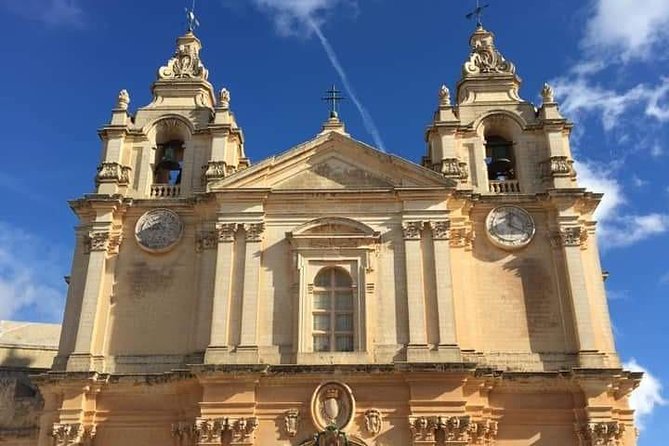
The first stop is Mdina’s main gate, a Baroque entrance that has appeared in several films. You spend about 10 minutes here, with no admission charge, before walking into the old city.
The gate is more than a photo stop. It gives you a quick lesson in Mdina’s purpose. This was a protected capital, and the formal entrance helps explain why the city feels so contained once you pass through it. Your guide can also point out the way film crews use Mdina’s stone streets and old-world appearance.
Do not expect a long architectural lecture at this point. Ten minutes is enough for an introduction and photographs, not a full study of the gate. I like this short opening because it gets you moving early, but anyone wanting extensive sightseeing inside Mdina may find the history portion brisk.
The walking itself is an important part of the experience. You will be moving through an old urban center rather than riding between attractions, so comfortable shoes are sensible. The supplied information does not specify the exact walking distance or terrain, but the format clearly involves walking through historic streets and standing at several stops.
The Cathedral of Saint Paul and Malta’s religious story
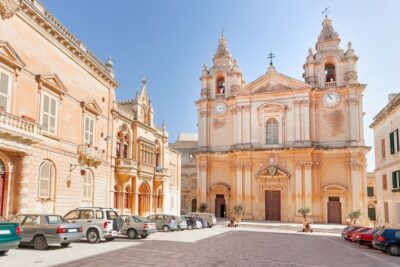
The tour pauses outside the Metropolitan Cathedral of Saint Paul for around 10 minutes. This is the mother church of the Maltese Islands, dedicated to St Paul, and the stop is intended for photographs. Entry is not included.
That distinction matters. You should think of this as an exterior visit, not a cathedral tour with guaranteed interior access. If seeing the inside is important to you, you will need to check admission arrangements separately and allow for the possibility that the group does not enter.
The stop still earns its place in the route. Saint Paul is central to Malta’s religious identity, and the cathedral connects naturally with the next visit in Rabat. The guide can explain the local tradition surrounding Paul’s arrival and stay on Malta, giving the food later in the tour a stronger sense of place.
I appreciate this kind of brief historical pause. It keeps the tour from becoming a restaurant crawl, though it will not satisfy you if your main goal is detailed church art or a long guided visit indoors.
St. Paul’s Grotto in Rabat
The next listed sight is the church built above St. Paul’s Grotto. The grotto is traditionally thought to be where St Paul lived during his three-month stay in Malta. Again, the planned stop lasts about 10 minutes, and admission is not included.
The value here is the connection between the building above ground and the story below it. Even a short stop helps you understand why Rabat carries such importance in Maltese religious history. It also shows how local belief, architecture, and food traditions share the same setting.
As with the cathedral, you should not assume that the ticket includes entrance to the church or grotto. The supplied details only promise a stop in front of the church. If you want to explore the interior, ask the operator before booking or plan a separate visit.
The historical stops are short, but that is part of the tour’s design. You get enough information to recognize the places and understand their role, then return to the main purpose of the outing: eating traditional Maltese food.
A few more Malta trips to weigh up
- Valletta: Street Food and Culture Walking Tour
★ 4.8 · 1,251 reviews - Malta: Lazy Pirate Boat Party with Drinks & Food
★ 3.8 · 788 reviews - Valletta Food Tour
★ 5.0 · 711 reviews - The Valletta Street Food and Culture Walking Tour
★ 5.0 · 711 reviews
The food begins with pastizzi and kinnie
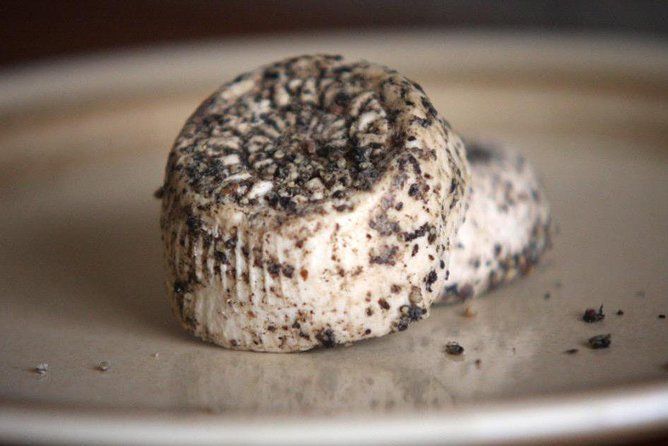
One of the early tastings is pastizzi with kinnie. Pastizzi are small Maltese pastries, commonly associated with savory fillings, and they are one of the island’s best-known quick foods. Kinnie is Malta’s local soft drink, and a glass is included.
This is a smart first tasting. Pastizzi are easy to sample, strongly connected to everyday Maltese eating, and substantial enough to start the meal. Kinnie gives you a distinctly local drink rather than a familiar international soda.
The tour also includes Maltese coffee and fresh fruit at one stage. The exact order may vary, but the progression appears designed to move from light snacks to larger plates. That matters because the full food list is generous. If you eat a large breakfast, you may have trouble doing justice to the later dishes.
Ħobż biż-żejt and the Maltese platter
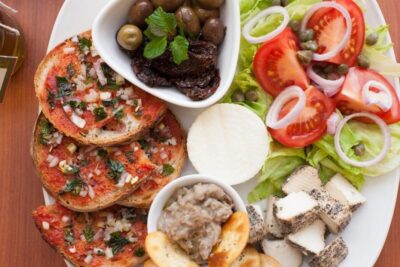
Another tasting centers on ħobż biż-żejt, Maltese bread with oil, served with sides. This is the sort of food that explains local habits better than a fancy restaurant dish. Bread, oil, toppings, and accompaniments create a simple but satisfying combination that fits Malta’s Mediterranean setting.
The Maltese platter adds more variety. The supplied details do not list every item on the platter, so you should expect an assortment rather than one fixed recipe. This is a good part of the tour for trying several flavors without ordering separate full portions.
I like that the food is not limited to the island’s most famous pastry. You get a wider picture of Maltese eating, from casual street food to home-style main dishes. The tradeoff is that the exact menu may change slightly by stop or day, so do not book this expecting a precisely fixed tasting sequence.
Rabbit, bragoli, and a full Maltese meal
The most substantial stop includes rabbit stew, bragoli, roast potatoes, vegetables, Maltese bread, wine, and imqaret. Rabbit is one of Malta’s signature traditional foods, and this is the dish to focus on if you want something more representative than a standard tourist snack.
Bragoli are Maltese beef olives, generally made with rolled beef and a filling. Served beside rabbit, potatoes, vegetables, and bread, they turn the experience into a real meal. Imqaret, a sweet pastry made with dates, provides a fitting finish.
Local craft beer and a glass of wine are included, along with a glass of kinnie and the listed food. The drinks add clear value to the $81.93 cost, particularly because you are also paying for a licensed guide and a guided walk through two historic towns.
You should still read the price in context. This is not the cheapest way to eat in Malta, and you could order individual snacks for less. The better comparison is a guided half-day outing plus a full traditional meal, drinks, and several tastings. If you would otherwise pay for both a food tour and a history walk, the combined price is reasonable.
What the guides add to the experience
The guide is important here because the route itself is compact. Chris has been described as having strong family ties to the area, with his family living there since the 1400s. He also took the time to ask about allergies before the tour and paid attention to the subjects participants were photographing, using those interests to point out related details.
Bridgette and Darrell are also named as guides associated with this experience. Bridgette led a particularly personal small-group outing, while Darrell handled both the area walk and the food explanations well. Your guide will shape the balance between history, conversation, and eating, so expect some variation rather than a fully scripted performance.
The best feature of a local guide is not simply the number of dates or names you hear. It is the ability to connect a building, a dish, and a custom in a way that makes sense. A good guide can also help with practical questions, explain unfamiliar foods, and notice when you are interested in a particular detail.
The maximum group size of 12 supports that style. One group had only six people, which allowed for an especially personal pace. A full group of 12 will feel less intimate, but it remains small enough for questions and conversation.
Festa atmosphere and local life
The timing can sometimes add an unexpected bonus. During one outing held on the eve of a festa, Rabat was being decorated with flags and lights, and local people were gathering for the celebration.
That kind of scene cannot be promised, and it should not be treated as a scheduled part of the tour. Still, it shows why walking through Rabat with a local guide can be more revealing than visiting the main monuments alone. If a festa or local event happens to be taking place, you may see the town preparing for it as part of ordinary community life.
The experience works best when you leave room for these unscripted details. The formal stops are fixed, but the atmosphere around Mdina and Rabat can change with the calendar.
Who should book this food and history walk
I would recommend this tour to you if you want three things in one outing: local food, a short historical introduction, and a small group setting. It is especially useful early in a Malta visit, when you are still learning which dishes to order and how Mdina and Rabat fit into the island’s story.
It also suits people who prefer a generous tasting menu to a series of tiny samples. Pastizzi, bread, a platter, rabbit, bragoli, dessert, and drinks add up to a filling experience. Plan your morning accordingly.
You may want a different activity if you want long interior visits at the cathedral or grotto, detailed architectural study, or a tour devoted only to food. The sightseeing stops are brief, and admission to the cathedral and grotto is not included.
The experience is offered in English. Confirmation arrives at booking, service animals are allowed, and most people can take part. The tour requires good weather. If poor weather cancels it, you can choose another date or receive a full refund. For cancellations of your own, cancel at least 24 hours before the 10:30 a.m. start time to receive a full refund.
Is the $81.93 price good value?
At $81.93 per person, this is a mid-priced Malta food experience. The strongest value comes from the combination of a professional guide, several food stops, local beer, wine, kinnie, and a substantial traditional meal.
I would not choose it only for the monuments, since the formal sightseeing time is short and the two church visits are exterior stops. I would choose it if you want an easy introduction to Maltese food while learning why Mdina and Rabat matter.
The full meal also removes the guesswork from ordering unfamiliar dishes. You can try rabbit and bragoli without committing to separate restaurant portions, then decide what you would like to eat again later in your trip.
Should you book the Mdina and Rabat Food and History Tour?
Book it if you arrive hungry, enjoy conversation with a local guide, and want traditional Maltese food presented alongside Mdina and Rabat’s religious and political past. The small group, broad menu, and guides such as Chris, Bridgette, and Darrell are the main reasons to choose it.
Skip it if you want a full monument tour, guaranteed indoor admission, or a light snack-only outing. For most people seeking an approachable first taste of Malta, though, the mix of pastizzi, kinnie, rabbit, bragoli, wine, and old-city history makes the $81.93 fare a fair buy.
FAQ
Where does the tour start?
It starts at Is-Serkin, also called Crystal Palace Bar, on Triq San Pawl in Rabat, Malta.
What time does the tour begin?
The tour starts at 10:30 a.m.
How long does the experience last?
It lasts approximately 3 hours and 30 minutes.
Where does the tour end?
The activity ends back at the meeting point.
What food is included?
The food includes pastizzi, ħobż biż-żejt with sides, a Maltese platter, rabbit, bragoli, roast potatoes, vegetables, Maltese bread, and imqaret. The tastings may also include Maltese coffee and fresh fruit.
Which drinks are included?
You receive local craft beer, a glass of wine, and a glass of kinnie, Malta’s local soft drink.
Is admission to the cathedral and St. Paul’s Grotto included?
No. The tour stops for pictures outside the Metropolitan Cathedral of Saint Paul and the church above St. Paul’s Grotto, but admission is not included.
How large is the group?
The group has a maximum of 12 participants.
More Historical Tours in Malta
- Malta: Prehistoric Temples, Limestone Heritage & Blue Grotto
★ 4.2 · 412 reviews - Maltese Islands History Audio-Visual Show and La Sacra Infermeria Tour
★ 4.0 · 344 reviews - Valletta: Self-Guided Historical Walking Tour (Audio Guide)
★ 3.7 · 251 reviews - Wonderful Valletta, gastronomy, art, and history in the Mediterranean
★ 4.5 · 72 reviews
More Food in Malta
- Valletta: Maltese Food and Drink Guided Walking Tour
★ 4.7 · 601 reviews - Valletta: Food Walking Tour with Tastings
★ 4.9 · 220 reviews - Sliema: Sailboat Party with an Open Bar, Food, and Swimming
★ 3.7 · 155 reviews - Valletta Food Tour – Eat like a local
★ 5.0 · 137 reviews
Just added around Malta
- Malta: 5 hr Vintage Bus Tour – Mdina & Blue Grotto inc. food★ 5.0 · 22 reviews
- Wakeboarding Adventure in Malta: Learn to Ride★ 5.0 · 4 reviews
- World War II Malta Full-Day Walking Tour★ 4.3 · 18 reviews
- Valletta Street Food & History Tour With Private Transfers★ 4.5 · 15 reviews
- Victoria, Gozo: Sunset Walking Food and Drink Tour★ 5.0 · 6 reviews
- Valletta & Mdina: Private Tour★ 4.5 · 16 reviews
- Valletta: Private Maltese Cuisine Walking Tour★ 4.8 · 8 reviews
- Valletta: Private Massage from a world renowned masseuse★ 4.6 · 9 reviews
Historical Tours, compared.
Prehistoric Temples, Limestone Heritage & Blue Grotto
Read our review →
Maltese Islands History Audio-Visual Show and La Sacra Infermeria Tour
Read our review →
Self-Guided Historical Walking Tour (Audio Guide)
Read our review →
Wonderful Valletta, gastronomy, art, and history in the Mediterranean
Read our review →
The Limestone Heritage Park and Gardens (Entry Ticket)
Read our review →Browse the lists this tour appears in